Skip to content

Dehydrated potato for toppings, coatings and seasonings

Visible texture and crispness after frying. ECOCORE grits and semolina for toppings, coatings and seasoning blends, and powder for thickening sauces and mixtures – with a single item on the ingredient list: potato.

  • grits 1.5–2.5 mm
  • semolina 0.01–1 mm
  • powder for thickening
  • 100% potato
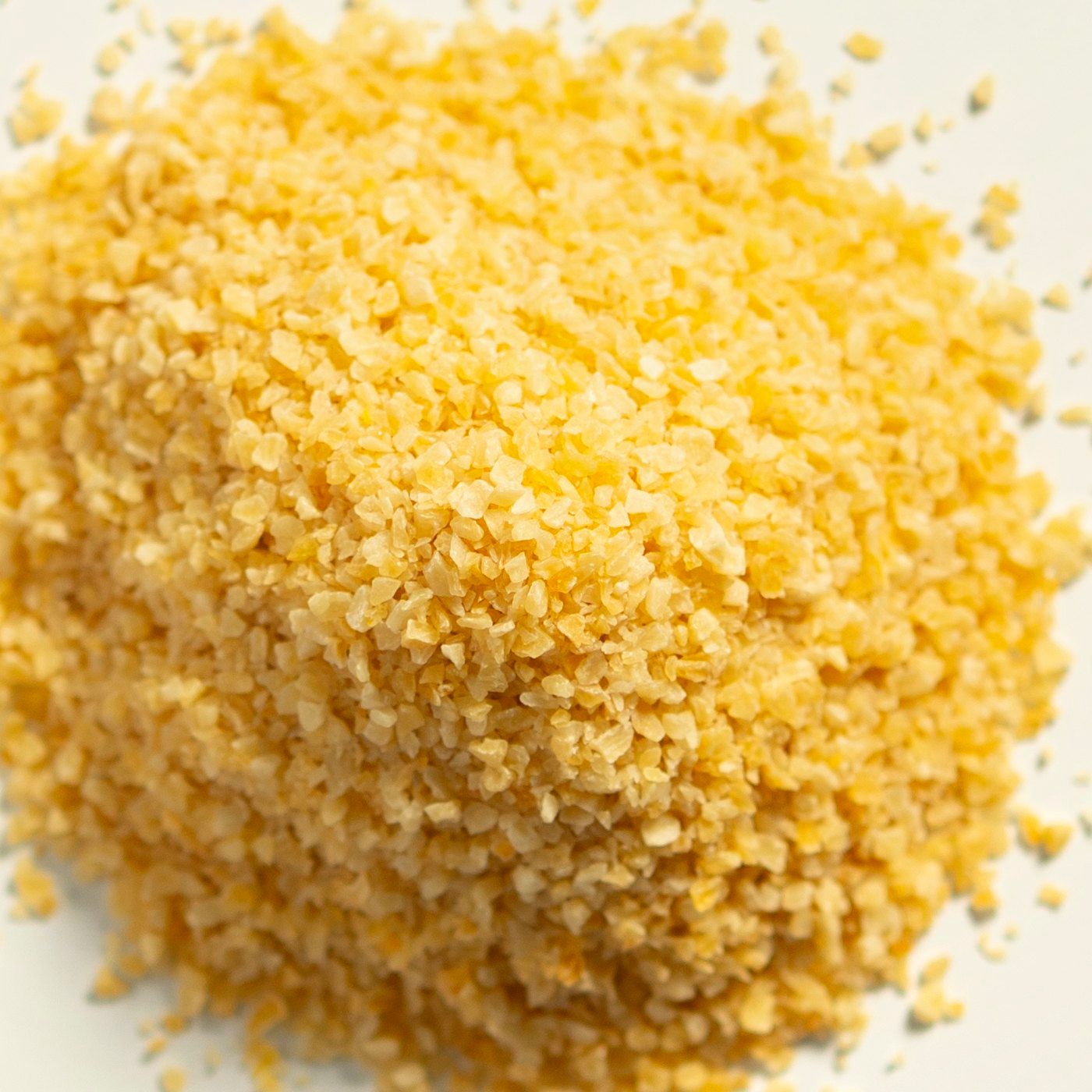
ECOCORE potato grits close up

In a topping or a coating every particle is visible. Dehydrated potato has a constant fraction, so the product looks the same in every batch.

Problem and solution

Where dehydrated potato pays for itself

Toppings and coatings

Problem

A coating should be crisp after frying, and a topping – visible on the surface of the product.

What dehydrated potato brings

Grits 1.5–2.5 mm give a visible texture and crispness after frying; semolina – a finer topping. The ingredient list keeps a single item.

Seasoning blends

Problem

In a seasoning blend every ingredient goes on the label, and the particle should be visible where it is meant to be.

What dehydrated potato brings

The potato particle stays visible on the surface of the product, and in the blend’s ingredient list it is a single item – with no additives.

Recommended products:Potato grits 1.5–2.5

Thickeners

Problem

A thickener in a sauce or filling should bind water without adding items to the label that need explaining.

What dehydrated potato brings

Powder and semolina bind water in sauces, fillings and mixtures – a thickener with a single ingredient on the label.

Selection

Choosing the fraction for the product

The final choice of fraction is confirmed by a food technologist in a trial.

Product typeProductFraction
Coatingsgrits1.5–2.5 mm
Toppingsgrits or semolina1.5–2.5 mm · 0.01–1 mm
Seasoning blendsgrits1.5–2.5 mm
Thickenerspowder or semolina0.01–0.5 mm · 0.01–1 mm
FAQ

Questions from this industry

Coarse grits of 1.5-2.5 mm where the particle should be visible and crisp after frying, and semolina of 0.01-1 mm where the topping should be finer. Bulk densities are 670 and 860 g/l, which decides the setting of volumetric dosers. The composition is one item, potato, so the coating adds a single line to the declaration.

Grits 1.5-2.5 mm when the coating should have a visible texture and crispness after frying; potato semolina when the topping should be finer and sit closer to the surface. Bulk density differs as well, 670 against 860 g/l. We confirm the choice in a trial, usually with both fractions on the same recipe, so the comparison happens on one run.

No. The dehydrated potato line has a single ingredient: potato, with no preservatives, emulsifiers or SO₂. That is possible because the pieces are dried first and milled afterwards, so there is nothing to stabilise. The 12-month shelf life comes from the reduced water content, and the status of a given item is confirmed by its specification.

Grits are 670 g/l and potato semolina 860 g/l, according to the product sheets. Full parameters are given in the specification / TDS, and the values for a batch travel with the delivery in the certificate of analysis. Where dosing is volumetric, this is the figure that decides the setting, so it is worth taking it from the specification first.

From a single bag, with no fixed MOQ. We pack in 10, 15 and 25 kg paper bags or in a big bag, on pallets of 120×100 or 120×80 cm with a maximum of 1,000 kg, and the standard lead time is 14 days. Free samples of both fractions go out within a maximum of 5 working days.

With powder of 0.01-0.5 mm, dosed at the mixing stage with the water adjusted: it binds water and builds body, and the declaration gains one item, potato. Unlike an isolated starch it also brings potato flavour and aroma, and it does not form a clear gel. The dosage is set with a technologist in a trial on your own recipe.

Knowledge base

Guides on this topic

Other applications

The same line, a different industry

Describe your process and volume and a food technologist will select the fraction and starting parameters – write to our sales team.