Potato flakes alternative
Powder and granules made from whole potatoes replace flakes in the same quantity. Below: a comparison and the three steps of switching.
- 1:1 replacement
- same dosing stage
- only the water quantity is adjusted
- ingredients of the dried potato: potato
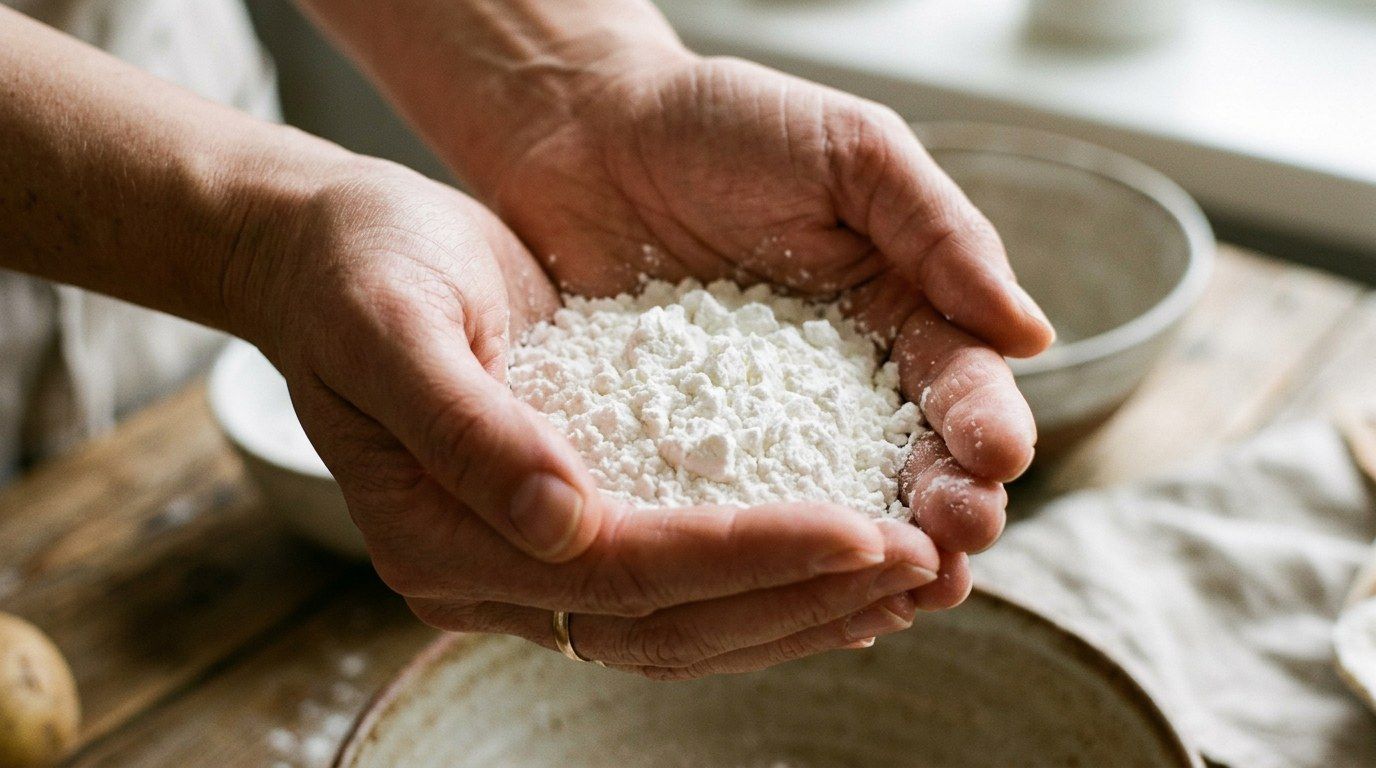
Flakes and dried potato side by side
Powder and granules replace flakes 1:1. Same dosing stage, only the water quantity is adjusted.
 100% potato, 6 forms
Indicative values for granules. What counts is the cost per kilogram of finished product, not the price per kilogram of raw material.
Three steps to switch
Fraction selection, a 1:1 trial on your line and a water adjustment – you decide after comparing with a reference batch.
We agree the product and fraction
You describe the application and what you work with today. A food technologist recommends the form: powder or granules – and if in doubt, we send two fractions at once for the same recipe.
A 1:1 trial in your process
The dried potato goes in instead of flakes, in the same quantity and at the same dosing stage. Alongside it you run a reference batch with your current raw material, on the same day and the same shift.
Water adjustment and decision
If the mixture comes out differently from the reference, we adjust the amount of water. If needed, we select a different fraction of the product.
Trial protocol with a results sheet for both batches: how to run a 1:1 replacement trial.
Two forms, one rule
Powder and granules replace flakes 1:1; what differs is the fraction.
| Product photo | Product | Fraction or dimensions | Typical applications | Product page |
|---|---|---|---|---|
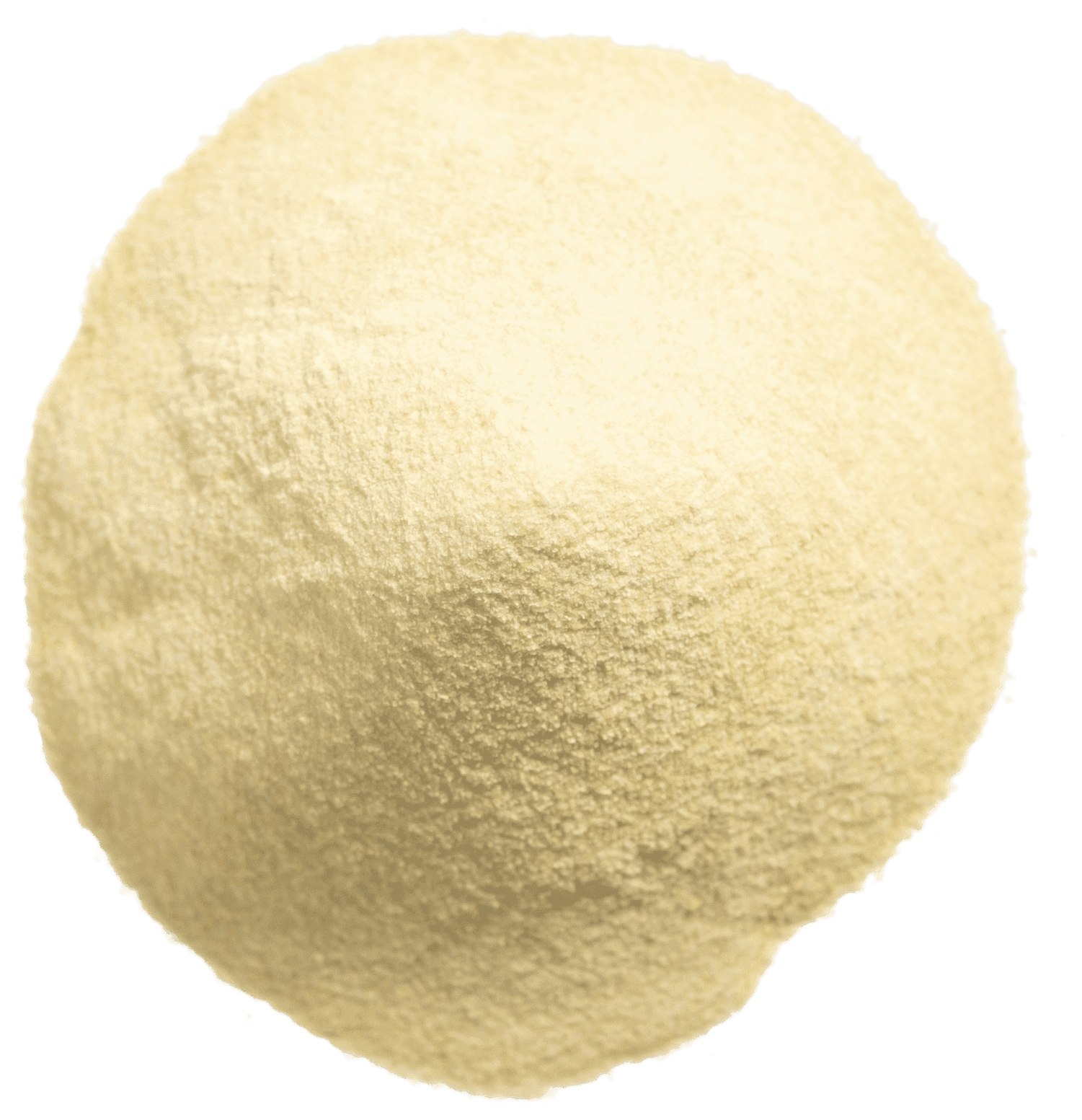 | Potato powder | 0.01–0.5 mm · 4 fractions | doughs, fillings, baked goods, snacks · standard / organic | |
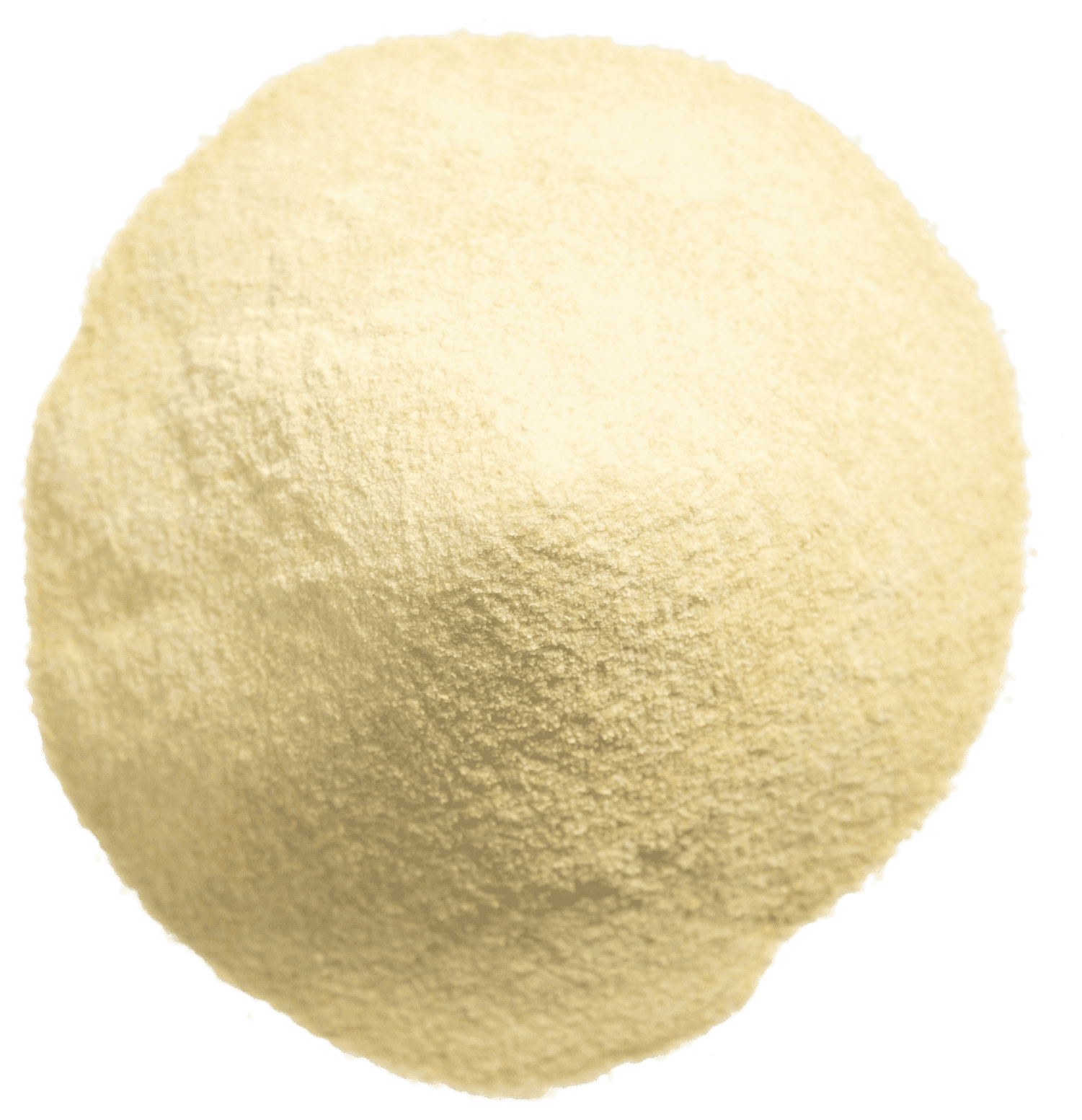 | Potato granules | 0.01–0.5 mm · 5 fractions | snacks, pellets, doughs, toppings · standard / organic |
Logarithmic scale: each successive mark is a particle ten times larger.
Questions before the first trial
Instead of potato flakes you can use potato powder or potato granules made from whole tubers: both go into the recipe in the same quantity, at the same dosing stage and with no process change, and after the first trial only the amount of water is corrected. Choose between them by fraction: powder for smooth masses, granules for extrusion and where potato flavour should stay noticeable.
Yes - powder and granules go into the recipe in the same quantity, with no change to the process. After the first trial we adjust the rehydration, and that is usually the only parameter that needs resetting. The 1:1 replacement trial protocol is available in Downloads, for filling in next to a reference batch on the same line.
Powder for a smooth mixture: dumplings, fillings, baked goods. Potato granules for extrusion: snacks, pellets, potato doughs, and wherever a noticeable potato taste is wanted. Both sit in the range up to 0.5 mm and replace flakes 1:1; they differ in fraction choice and bulk density, 930 g/l for powder and 825 g/l for granules. A food technologist confirms the choice in a trial.
Per kilogram of raw material, yes: drying whole pieces is energy-intensive, and the bag contains nothing but potatoes. The calculation is done on the cost per kilogram of finished product. ECOCORE granules bind water at up to 1:4.5 against 1:4 for flakes in the example analysed, so according to ECOCORE's table the same amount of finished product needs around 10% less dried potato than flakes. We confirm the exact difference in a trial.
Every batch is tested before dispatch, and we provide the test results in the batch certificate of analysis. Specifications and declarations can be downloaded without logging in, together with the plant certificates: IFS Food at Higher Level, organic and kosher. The batch number is on the label of every bag and is linked to the raw material supplier and the intake date.
Usually one or two trials: the first with the agreed dosage, the second after a water adjustment or a change of fraction. For a new product, your recipe approval process decides. The sample for the first trial is dispatched within a maximum of 5 working days of the request, and where the choice of fraction is open we send both on the same recipe.
Directly from the manufacturer. We sell ECOCORE powder and granules from a single bag, in 10, 15 and 25 kg bags and in big bags, with delivery across the EU and worldwide at a standard lead time of 14 days. Start with a free sample - we will match the fraction to your recipe, and the parcel includes the specification.
The dehydrated potato line has a single ingredient: potato, and gluten-containing cereals are absent from the recipe. The gluten and allergen status of a specific product is confirmed by the specification, which we send by e-mail on request. A gluten-free claim on your finished product requires testing of that product against the 20 mg/kg threshold, so it concerns your product rather than the raw material.
Guides on this topic
Have a recipe and want to know whether switching makes sense? Write to our sales team – a food technologist will answer the specifics.