Three roles, three fractions
| Product | Form | Fraction | Purpose |
|---|---|---|---|
| Coatings | coarse grits | 1.5-2.5 mm | visible structure and crunch after frying |
| Toppings | coarse grits or potato semolina | 1.5-2.5 mm · 0.01-1 mm | a speck visible on the surface |
| Seasoning blends | coarse grits | 1.5-2.5 mm | carrier and bulking agent with one label entry |
| Thickeners | powder or semolina | 0.01-0.5 mm · 0.01-1 mm | water binding in sauces, fillings and masses |
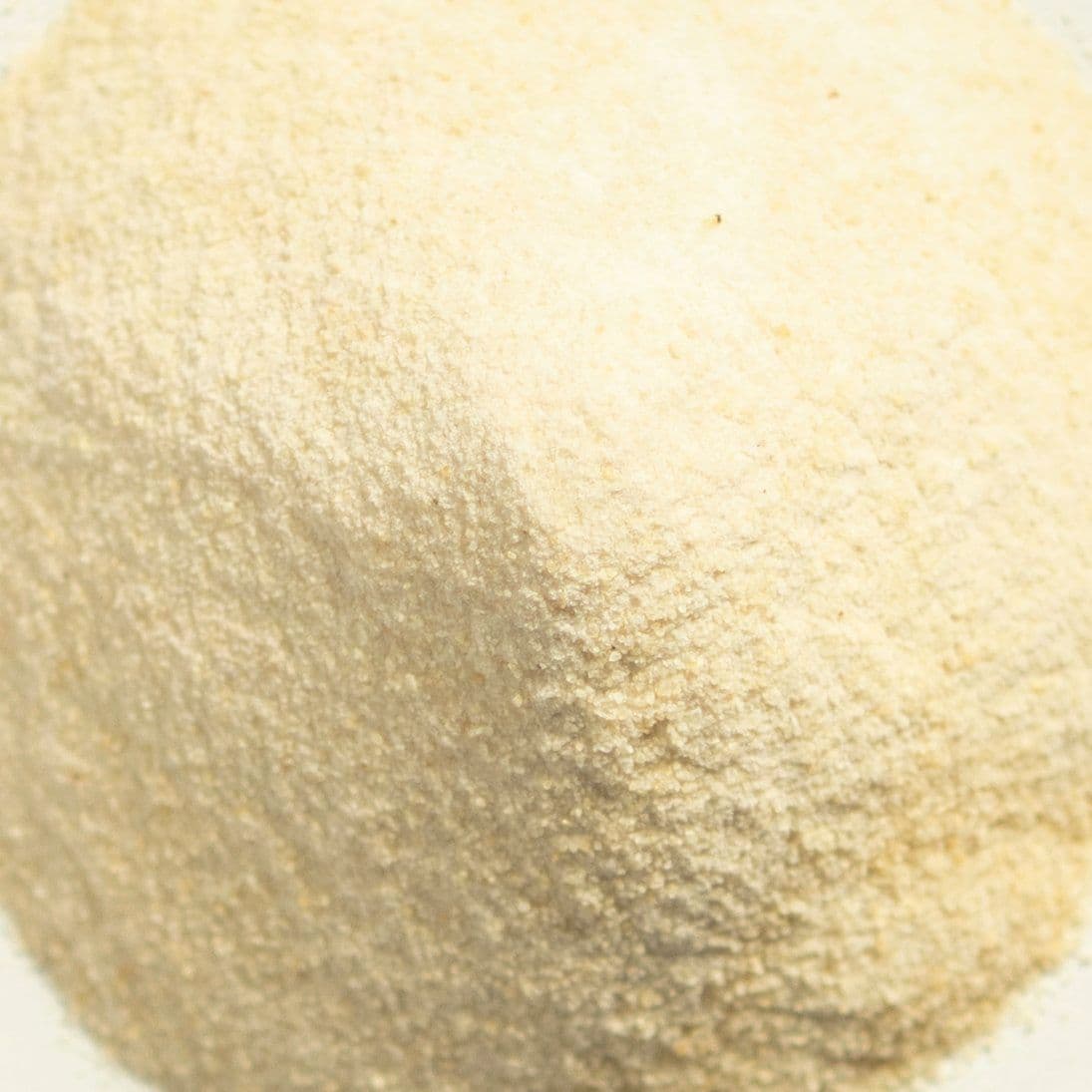
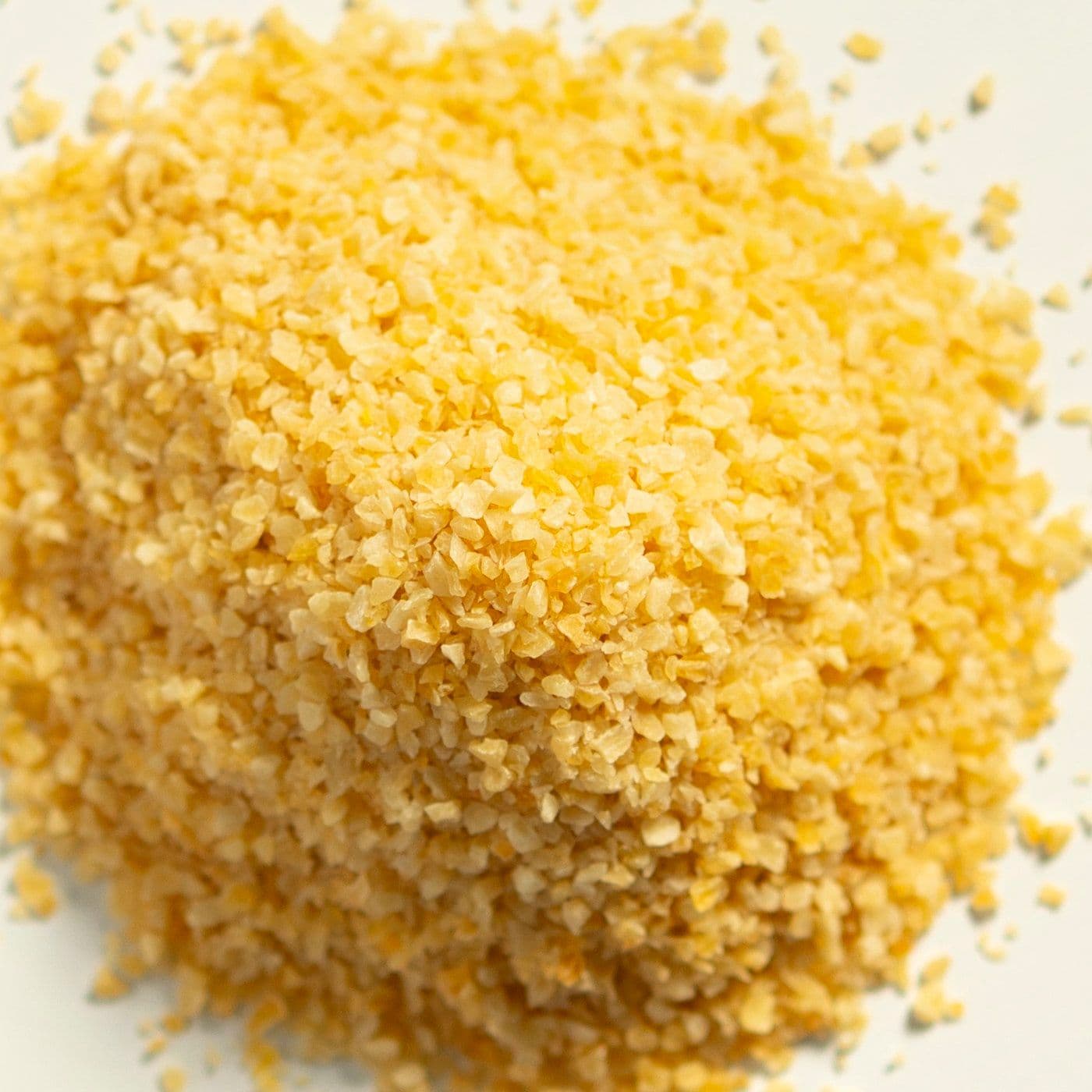
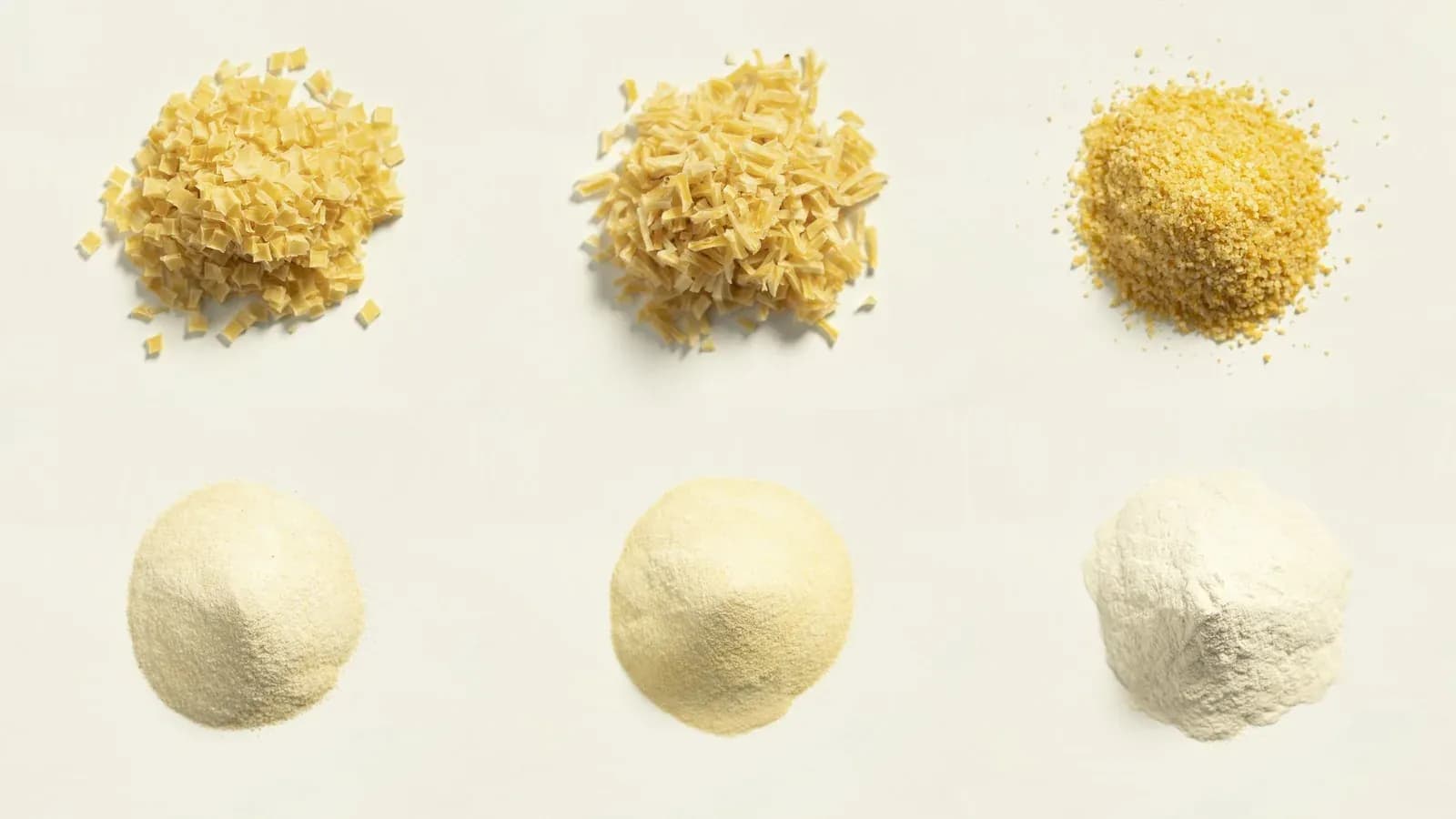
Coarse potato grits at 1.5-2.5 mm have a bulk density of 670 g/l and are the coarsest milled form of dehydrated potato - the particles stay visible after processing. Semolina covers 0.01-1 mm, at 860 g/l for that fraction, and is the first choice where the topping should be finer. Where dosing is volumetric, the density difference between the two forms translates directly into the mass in the hopper.
The full description and the selection table are on the dehydrated potato for toppings, coatings and seasonings page, and where grits sit among the other forms is covered in What are potato flakes.
Why a constant fraction is the argument here
In a topping or a coating any change in grain size shows on the product - and the customer buying the same item every week sees it too. That makes a constant fraction more important here than anywhere else: the fraction range is a parameter of the item and identical in every batch, and every batch is tested before dispatch, with the results in the certificate of analysis.
The second point is composition. In a seasoning blend every component reaches the label, and dehydrated potato is one entry there: 100% dried potato (Solanum tuberosum), with no preservatives, emulsifiers or SO₂. The recipe contains no allergens from Annex II to Regulation (EU) No 1169/2011; possible cross-contact is indicated by the product labelling. For coatings and toppings with short labels, that is a real difference from compound preparations.
Choosing the fraction in a trial
We do not publish a single dosage figure for a blend, because it depends on the recipe and on how much visible speck you want; the starting point is set by a technologist once the product is described, and the item parameters are in its specification. The sequence, though, is always the same:
- Describe the product and how it is applied - wet or dry breading, topping before or after baking, blend sprinkled or dosed volumetrically.
- Take two fractions at once. Where the choice is between coarse grits and semolina we send both for the same recipe - cheaper than one delivery that misses.
- Run a reference batch with your current carrier or coating, on the same day and the same shift.
- Judge after processing, not before. For coatings what counts is crunch and appearance after frying; for toppings, whether the speck stayed where it was meant to, including after baking and cooling.
- Record the result in the trial protocol: dosing, fraction, assessment of both batches.
The final fraction is confirmed by a technologist; if the structure comes out differently, moving one fraction up or down is usually enough. Support runs through the whole trial, samples are free once agreed with sales, and dispatch takes at most 5 working days.
The carrier in a seasoning blend
In seasoning blends coarse grits play a role that is rarely stated outright: they are a carrier and bulking agent that brings no foreign flavour of its own and adds no label entry that needs explaining. Three things decide whether they suit a particular blend.
Distribution of the grain. Grits with a constant fraction range distribute evenly, so a sachet from the start of a batch looks like one from the end. With carriers that have a wide spread of particle sizes, the finer part settles at the bottom.
Behaviour towards moisture. Dried potato is hygroscopic, so a blend containing grits should be packed and stored like any water-sensitive powder; after opening, close the pack tightly.
Behaviour in processing. The potato speck stays visible on the surface and does not lose structure in frying - the only reason to use a fraction as coarse as 1.5-2.5 mm in a coating at all. We go into more detail in the guide How to make instant mashed potatoes.
Delivery and storage
Shelf life is 12 months from the production date in closed packaging, with no refrigeration; storage in a dry room free of foreign odours, up to 30 °C, at a recommended relative humidity of 75%. For toppings and seasonings the "free of foreign odours" condition carries extra weight: dried potato takes up aromas from its surroundings, and a seasoning blend is a strongly scented neighbour in a warehouse. A separate guide covers Choosing the particle size.
Packaging: paper bags of 10, 15 and 25 kg or big bags; pallet 120×100 or 120×80 cm, maximum 1000 kg, with packaging cost included in the price of the goods. Orders from a single bag with no rigid MOQ, standard lead time of 14 days, production 12 months a year. For organic recipes there is an organic variant certified by TÜV Rheinland Polska under Regulation (EU) 2018/848.
Frequently asked questions
A potato coating is a dry breading in which the visible particle is dried potato rather than cereal crumb. The usual material is coarse grits of 1.5-2.5 mm, which stay visible and crisp after frying, with a bulk density of 670 g/l. The composition is one item: dried potato, with no preservatives, emulsifiers or SO₂, so the coating adds a single line to the declaration.
Coarse grits at 1.5-2.5 mm where the coating should have visible structure and crunch after frying; semolina at 0.01-1 mm where the topping should be finer and sit closer to the surface. Bulk density differs as well, 670 against 860 g/l, which changes the doser setting. The choice is confirmed in a trial, usually with both fractions on the same recipe.
Coarse grits are 670 g/l and semolina 860 g/l, according to the product data sheets. Full parameters are in the item specification, and the values for a batch travel with the delivery in the certificate of analysis. In volumetric dosing this is the figure that decides the setting, so it is worth taking it from the specification before the first run.
No. The dehydrated line has one entry in its composition: potato, with no preservatives, emulsifiers or SO₂. That is possible because the pieces are dried first and milled afterwards, so there is nothing to stabilise. The 12-month shelf life comes from the reduced water content, and the status of a particular item is confirmed by its specification, sent by e-mail on request.
From a single bag, with no fixed MOQ. We pack in paper bags of 10, 15 and 25 kg or in big bags on pallets of 120×100 or 120×80 cm with a maximum of 1,000 kg. Standard lead time is 14 days, and free samples go out to companies within a maximum of 5 working days of the request.
Because a topping is dosed by volume and judged by eye: if the particle size moves between deliveries, the coverage and the look of the product move with it. The fraction range is a parameter of the item rather than of the batch, so it is identical in every delivery, and each batch is tested before dispatch. The results come with the batch certificate of analysis.
Keep them in closed packaging in a dry room free of foreign odours, up to 30 °C, at a recommended relative humidity of 75%, with no refrigeration. Shelf life is 12 months from the production date in unopened packaging, and the date is on the bag label with the batch number. After opening, close the bag tightly, because the material is hygroscopic.
Want to compare two fractions on your own coating? Request a free sample - we send coarse grits and semolina for the same recipe, with the specification in the parcel.