
How potato flakes are produced
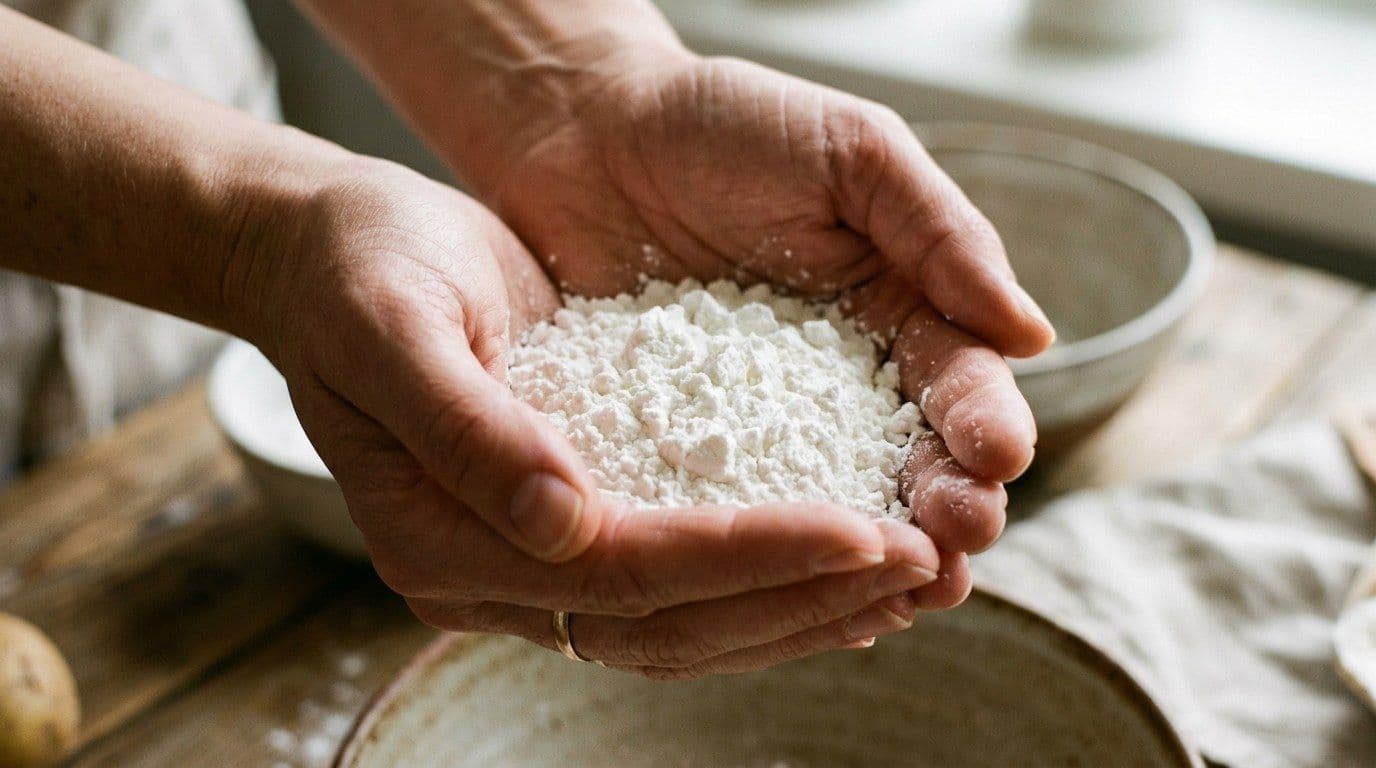
The flake is a drum-dryer product. Potatoes are peeled, cooked and mashed, and the mash is spread in a thin layer onto a heated drum where the water evaporates in seconds. The dried sheet is scraped off and broken up - hence the flaky form and the very fast rehydration: the starch is already gelatinized during cooking, so the mass reforms almost immediately on contact with water.
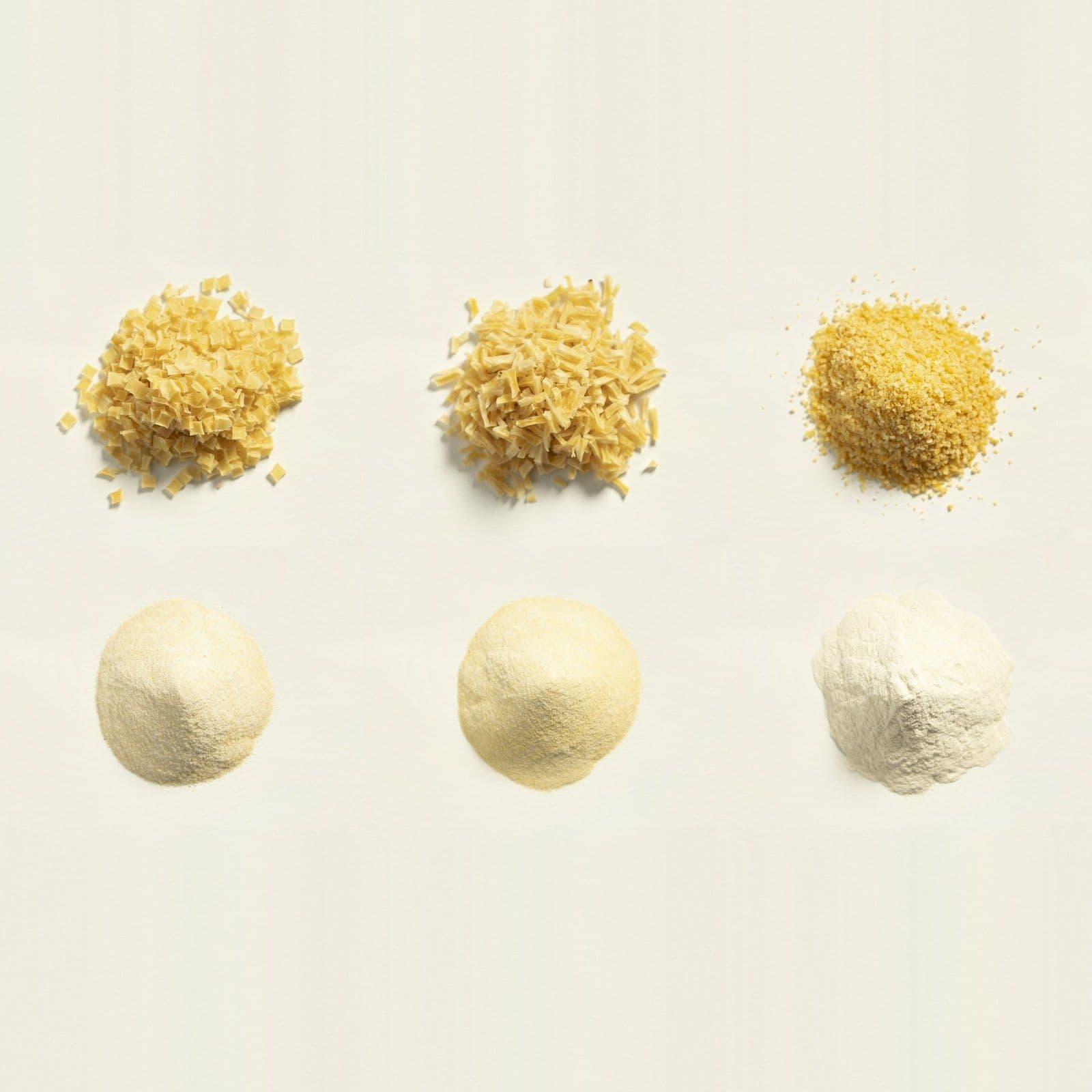
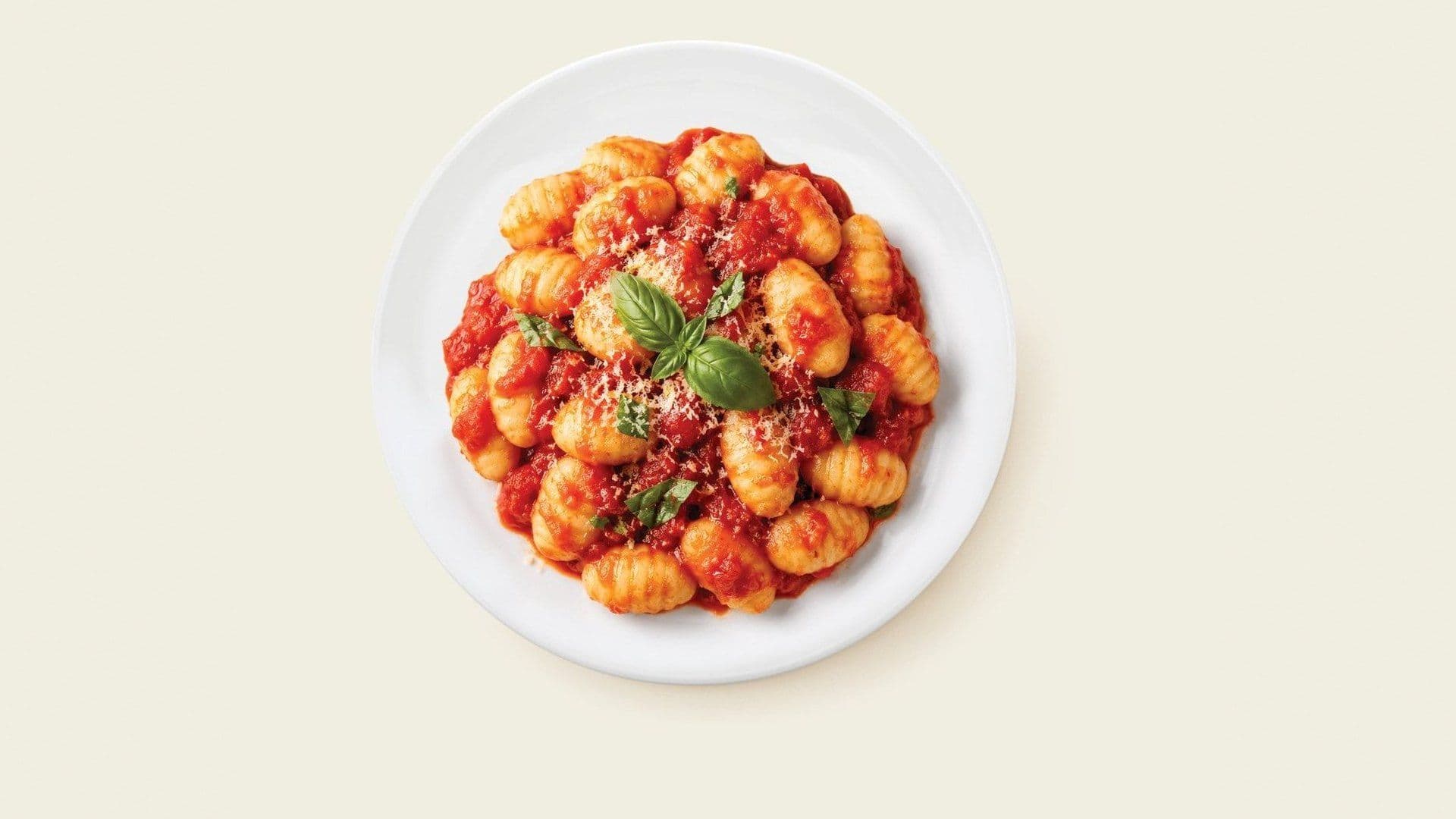
Dehydrated whole potato is made the other way round: cut pieces are dried first and milled into fractions afterwards. The cost of that sequence is energy, because drying whole pieces takes longer than drying a thin layer of mash. The gain is the ingredient list, plus forms a drum cannot produce: cubes, sticks and grits. The details are in the guide Gnocchi and potato dumplings from instant mix.
What the ingredient list can hold
A flake is potato. Commercial products differ in what the manufacturer adds to stabilize colour and texture after rehydration. Ingredient lists of food-grade flakes most often include:
- emulsifiers (for example mono- and diglycerides of fatty acids) to prevent a gluey mass;
- antioxidants to protect the colour;
- sulphur dioxide (SO₂) to stabilize the raw material before drying;
- fortification, such as vitamins in consumer products.
Not every flake contains them - but the composition has to be checked in the specification of the specific item, because it determines your own label. In the ECOCORE dehydrated potato line that list is empty by design: one ingredient, potato, with no preservatives, emulsifiers or SO₂. Details and allergen statuses are on the quality and certificates page. We go into more detail in the guide How to make instant mashed potatoes.
Flakes and dehydrated potato side by side
| Parameter | Potato flakes | Dehydrated potato (ECOCORE) |
|---|---|---|
| Production | cooked, mashed, drum-dried | cut, dried, then milled |
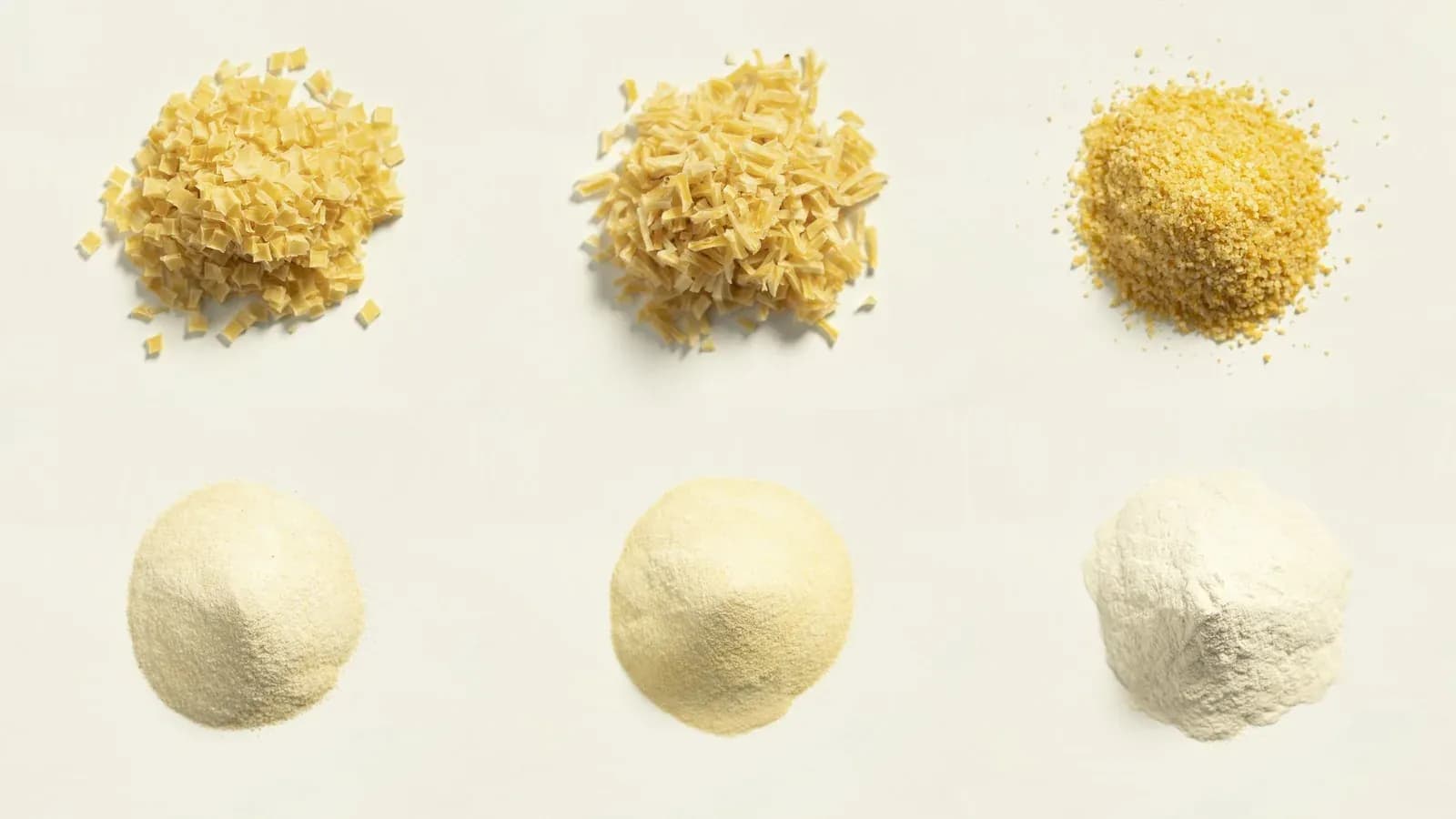
| Form | thin flakes from a drum | cubes, sticks, grits, semolina, powder, granules - 0.01-2.5 mm |
| Composition | depends on the item, often with additives | 100% potato, no additives |
| Replacement in a recipe | the reference | 1:1, adjusting the amount of water |
| Water absorption | typically 1:4 | up to 1:4.5 (granules) |
| Yield after rehydration | 1 kg + 4 l water = approx. 5 kg of mass | 1 kg + 4.5 l water = approx. 5.5 kg of mass |
| Organic version | depends on the supplier | for every form of dehydrated potato |
| Availability | seasonal at the supplier | production 12 months a year |
The figures in the flakes column are indicative values for the item compared, not a catalogue parameter; the exact difference is confirmed by a trial on your own recipe.
What replaces potato flakes
In an industrial recipe the role of the flake is taken over by potato powder or potato granules: the same quantity, the same dosing step. After the first trial you adjust the amount of water, which is usually the only parameter that changes; if that is not enough, the technologist proposes a different fraction. A separate guide covers Potato flour substitute.
- Potato powder - 0.01-0.5 mm, for smooth masses, fillings, bakery and snacks.
- Potato granules - five fractions in the same range, for snacks, pellets, masses and toppings.
- Potato semolina - 0.01-1 mm, when the mass should keep a perceptible potato grain.
The full comparison table and the three steps of the switch are on the potato flakes substitute page; fraction selection for bakeries is covered on the dehydrated potato for bakery page.
Buying flakes or their replacement in bulk
Three questions decide more than the price per kilogram:
- What is in the ingredient list - one entry or four, and how that reads on your own label.
- How much finished product one kilogram gives - at a water absorption of 1:4.5 instead of 1:4 you need roughly 10% less raw material for the same mass, according to the ECOCORE comparison table.
- Whether supply depends on the season - our production runs 12 months a year, so the contract price does not depend on the month you call.
Packaging is paper bags of 10, 15 and 25 kg or a big bag; a pallet of 120×100 or 120×80 cm takes a maximum of 1000 kg. Minimum order is one bag with no fixed MOQ, and the standard lead time is 14 days.
Frequently asked questions
Potato flakes are cooked and dried potato: the mash is dried in a thin layer on a heated drum, then scraped off and broken into flakes, which rehydrate instantly. Because of that process their ingredient lists often carry emulsifiers or antioxidants. ECOCORE does not sell flakes; our dehydrated potato is dried first and milled afterwards, and powder and granules replace flakes 1:1 in a recipe.
Potatoes are peeled, cooked and mashed; the mash is dried in a thin layer on a heated drum, then scraped off and broken into flakes. Dehydrated potato is made in the opposite order: the potato is cut, dried and only then milled into fractions, with no cooking before drying. That is why its composition stays at a single item: potato.
Flakes are used where a potato component has to rehydrate quickly: instant mash, doughs, fillings, snack masses and bakery. The same jobs are done by potato powder and potato granules, which go in 1:1 at the same dosing stage with the water adjusted. Which fraction fits a given recipe is confirmed in a trial, usually with two fractions sent on the same recipe.
Not quite. Potato flakes are a raw material; instant potatoes are a finished mix that gives a dish once water is added, and flakes or other dried potato are what it is built from. Our instant mashed potato, for example, contains potatoes, salt and turmeric, with 780 g of potatoes per 100 g of mix, based on our own dehydrated potato.
Sequence, form and composition. Flakes are pre-gelatinized and rehydrate instantly; ECOCORE dehydrated potato is the same potato without the water, available in six forms from 10×10×7 mm cubes to 0.01 mm granules, with one entry in the ingredient list. Powder and granules replace flakes 1:1, and granules bind water up to roughly 1:4.5.
Potato contains no gluten, but the status depends on the composition of the specific item and on production conditions at the supplier, so the specification of that item is binding rather than the category. In our dehydrated potato line, gluten-containing cereals are absent from the recipe, and the status of an item is confirmed by its specification, sent by e-mail on request.
Only approximately. Cooked mash can be spread thin and dried, but it will not match the layer thickness or the even rehydration of a drum-dried product. For production that is not a route, because constant particle size and batch documentation are what a recipe needs: a fraction range fixed per item, and a certificate of analysis for every batch.
Directly from a manufacturer. We sell potato powder and potato granules from one bag upwards, in 10, 15 and 25 kg paper bags and in big bags, with delivery across the EU and worldwide. Start with a free sample, agreed with sales and dispatched within a maximum of 5 working days, and we will match the fraction to your recipe.
Want to compare flakes with dehydrated potato on your own recipe? Request a free sample - we will select the fraction and include the specification.