Knowledge base: the technologist's guides
Practical guides on choosing dried potato forms, dosing and preparing instant mixes.
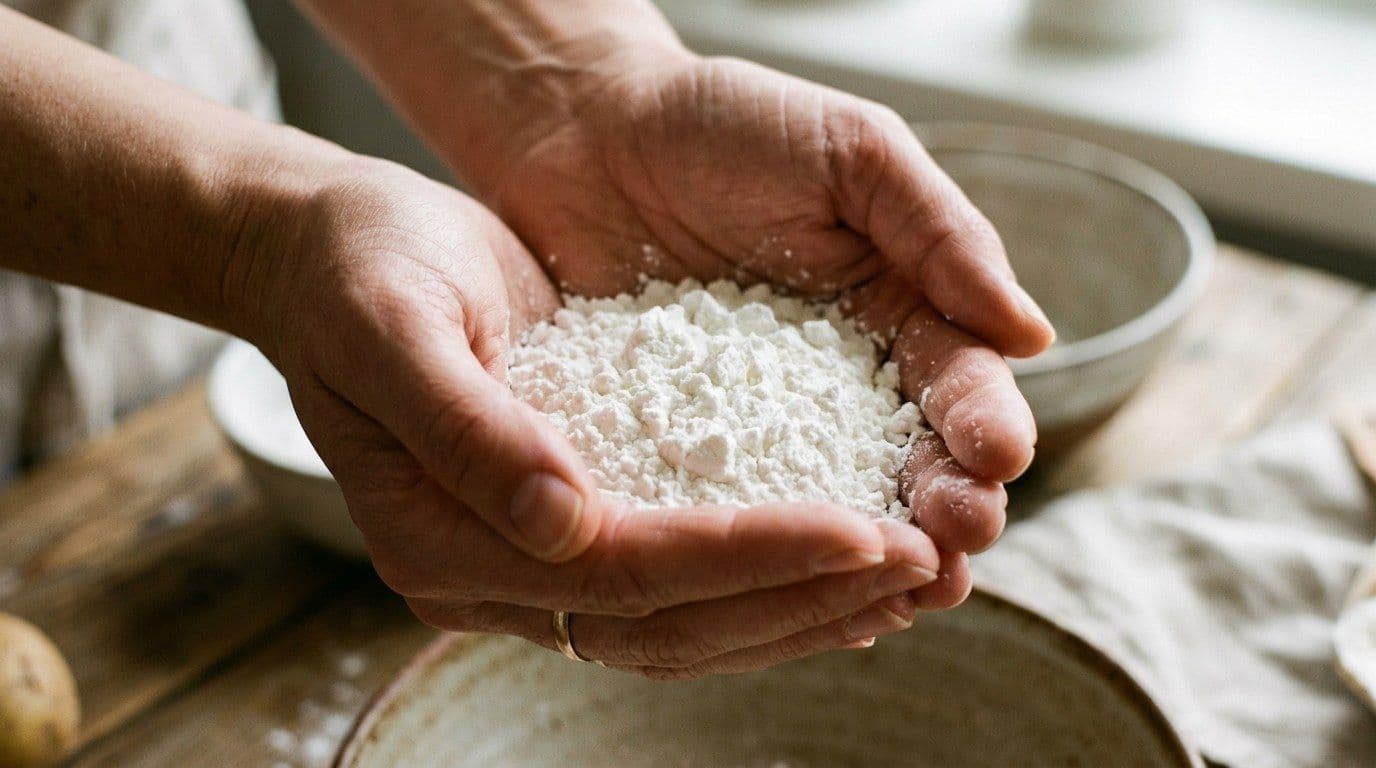
Potato flour vs potato starch: the difference in a recipe
Potato flour and potato starch are two different raw materials, not two names for one. Potato flour is the whole potato, dried and milled, with the colour, flavour and water binding of potato. Potato starch is the starch washed out of the tuber: white, neutral, a thickener. Confusing them is the most common sourcing error in this category.
Read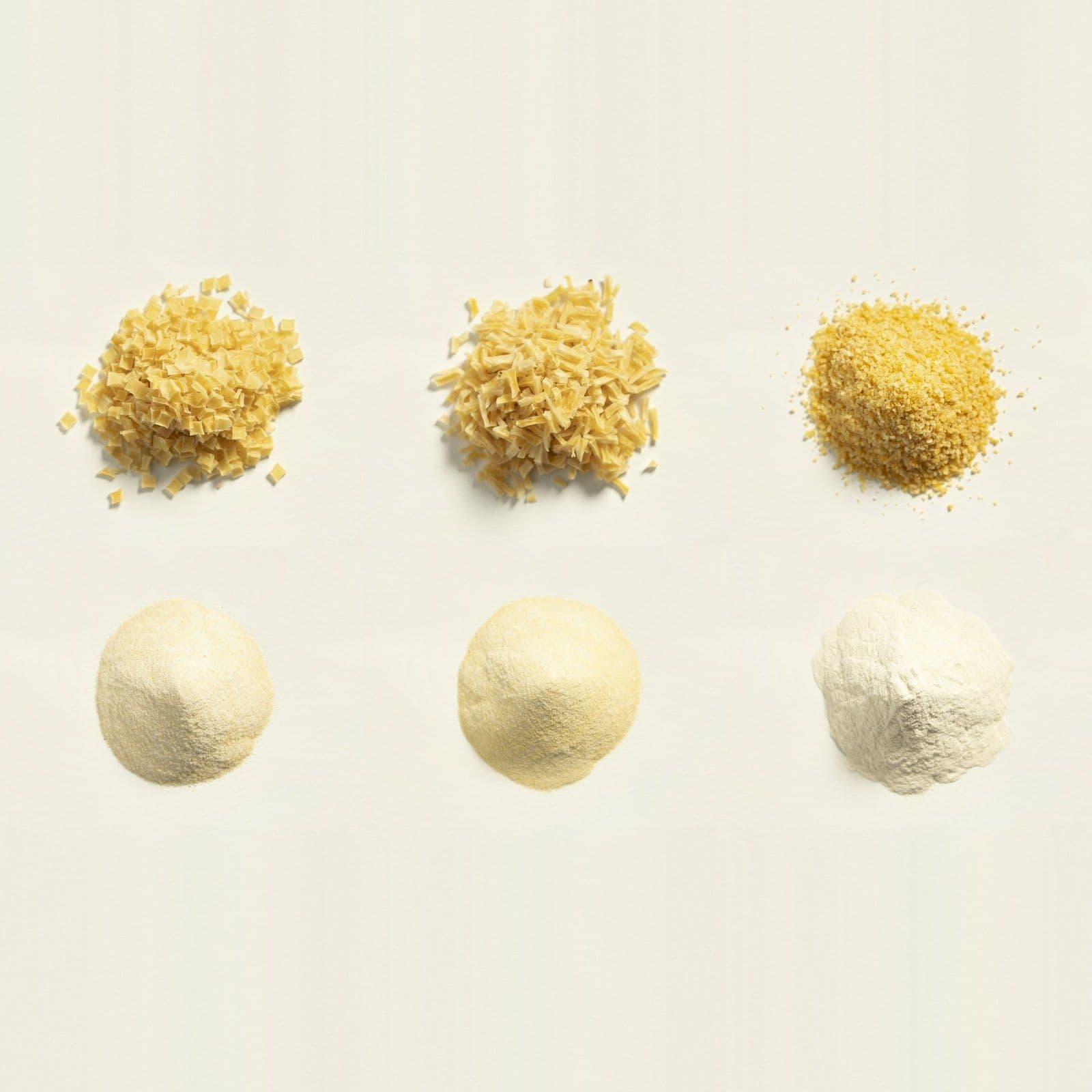
Glossary of dehydrated potato terms used in specifications
In enquiries about dehydrated potato the same thing goes by several names: potato flour, potato powder, potato granules. Below are the terms that most often need clarifying in a sourcing conversation and in a specification, grouped into four sets: forms and particle size, composition and quality, recipe, ordering and logistics.
Read
Choosing the particle size: potato grits, semolina or granules
Dehydrated potato comes in fractions from 0.01 mm to 2.5 mm, and choosing between them comes down to one question: should the potato grain stay noticeable in the finished product. A smooth mass needs powder or granules up to 0.5 mm, a textured mass needs semolina at 0.01-1 mm, and a visible speck needs coarse grits at 1.5-2.5 mm.
Read