Forms and particle size
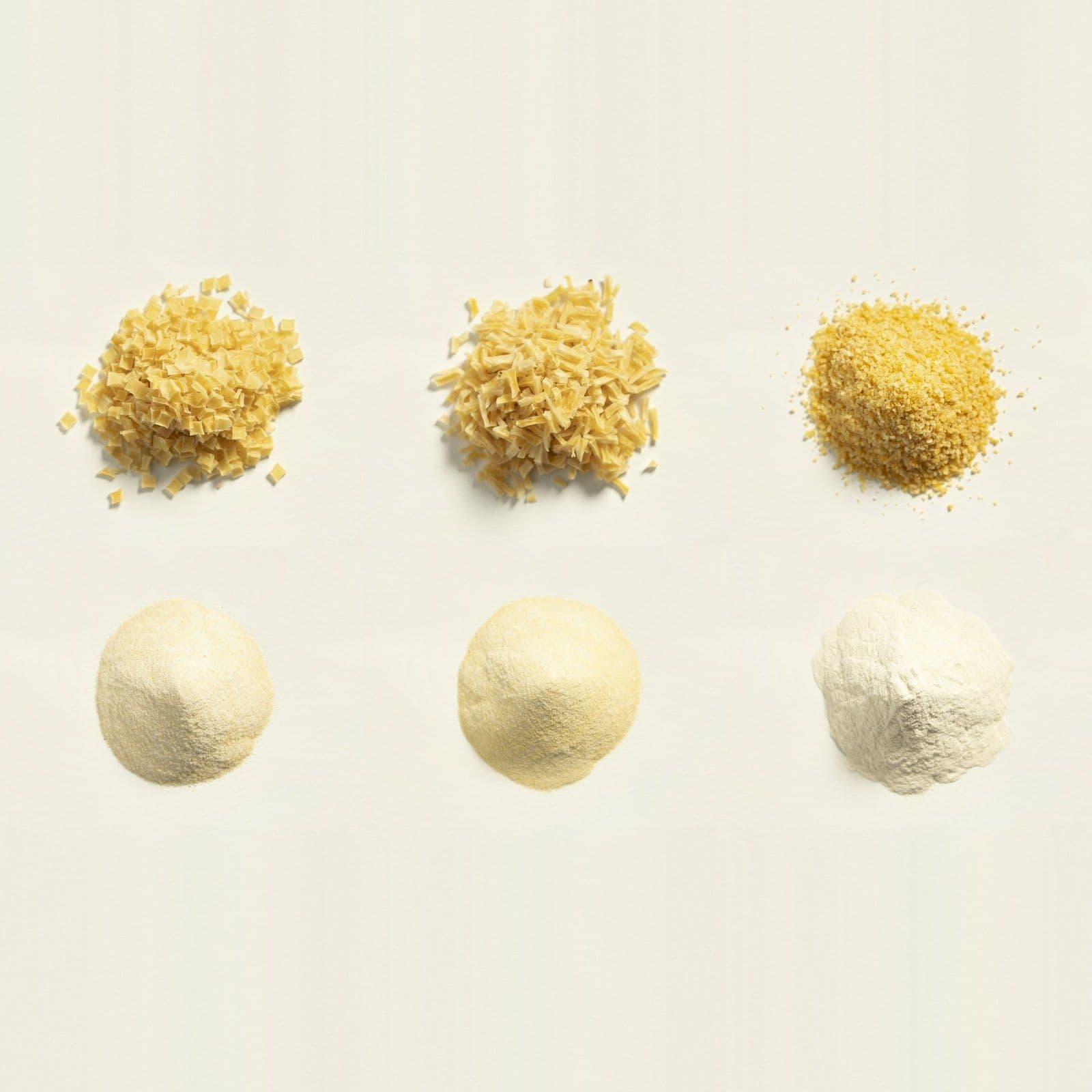
Every form comes from the same raw material: the potato is cut, dried and - except for cubes and sticks - milled into fractions only afterwards. What differs is particle size, and that is what drives the choice.
| Term | What it means in practice |
|---|---|
| Dehydrated potato | The whole category: six forms of dried potato, from 10×10×7 mm cubes to 0.01 mm granules. |
| Fraction (particle size) | The size range of particles after milling, given in millimetres - 0.01-0.5 mm for potato powder, 1.5-2.5 mm for coarse grits. |
| Potato powder | Fractions 0.01-0.5 mm, four ranges to choose from; replaces potato flakes 1:1. |
| Potato granules | Fractions 0.01-0.5 mm, five ranges; the form used in extrusion, also a 1:1 flake replacement. |
| Potato semolina (fine grits) | 0.01-1 mm, five ranges - the mid fraction for doughs with a noticeable texture. |
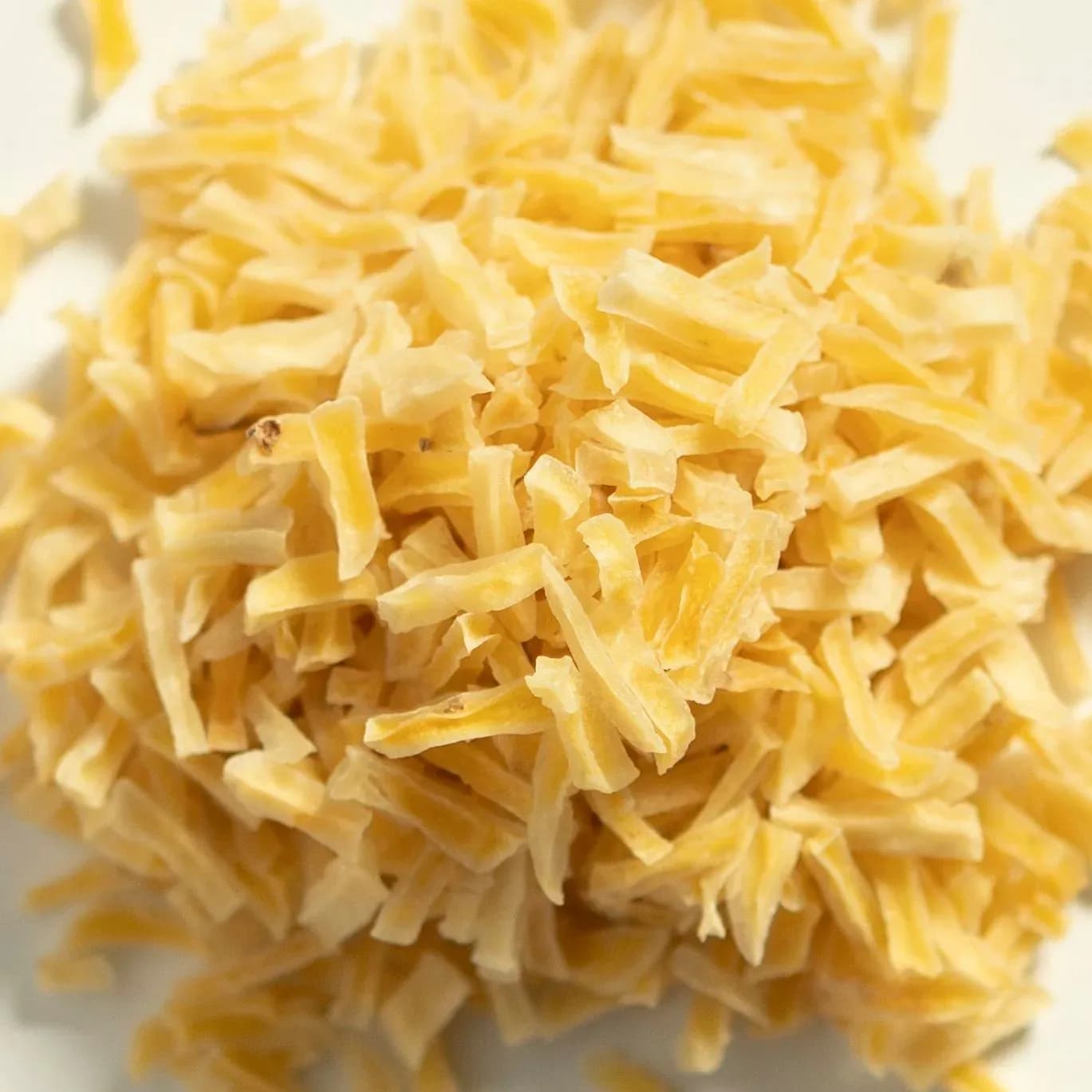
| Potato grits (coarse) | 1.5-2.5 mm, the coarsest milled form; visible potato specks in bread, coatings and toppings. |
| Cubes and sticks | Pieces of dried potato: cubes 10×10×2 and 10×10×7 mm, sticks 15×2×2, 20×3×2 and 3×3×6 mm. |
| Potato flour | In English this is our product: dried whole potato milled to 0.01-0.5 mm. It is not potato starch. |
| Potato flakes | Potato cooked, mashed and drum-dried into thin flakes; the reference point when changing raw material. |
| Bulk density | Mass per unit of volume in g/l - relevant wherever dosing is volumetric. Coarse grits 670 g/l, semolina 860 g/l, powder 0.01-0.5 mm 930 g/l, granules 0.1-0.5 mm 825 g/l. |
What to use when a recipe calls for potato flour only as a thickener is covered by the guide Potato flour substitute. The full comparison of flour and starch is in the guide Potato flour vs potato starch; how flakes are made is covered in What are potato flakes. We go into more detail in the guide Shelf life of dehydrated potatoes.
Composition and quality
- Clean label - for us a specific, verifiable composition rather than a claim. In the dehydrated potato line it is one entry: 100% dried potato (Solanum tuberosum), with no preservatives, emulsifiers or SO₂. In the instant line the list is longer, because a mix needs a recipe - every ingredient appears in the specification.
- SO₂ (sulphur dioxide) - a preservative common in potato processing; we do not add it in any line, and the raw potato is not sulphited.
- Allergens - the dehydrated line contains no allergens from Annex II to Regulation (EU) No 1169/2011; for instant mixes the status depends on the variant (the potato pancake mix and the gnocchi mix contain egg). The specification of the individual item is always binding.
- Organic - an organic variant certified by TÜV Rheinland Polska under Regulation (EU) 2018/848, available for the dehydrated forms.
- IFS Food - a food safety standard; the plant in Przykona is certified at Higher Level, with granule production and packing in scope.
- Kosher - Strictly Kosher, Pareve, confirmed by the Union of Jewish Religious Communities in Poland.
- Specification / TDS - the technical data sheet of an item: composition, fraction, parameters, packaging, shelf life. We send it by e-mail on request; certificates and declarations are available to download with no sign-in.
- Certificate of analysis - the test result for a specific delivery. Every batch is tested before dispatch, and this document cannot be downloaded in advance because it is created with the goods.
- Traceability - each batch number carries the raw material supplier and the intake date; the number is printed on every bag label.
Recipe and process
- Rehydration - water returning to the dried material. Cubes rehydrate in a soup or sauce, powder and granules bind water in the mass. Times and water ratios for a given item are stated in its specification.
- Water absorption - how much water one kilogram of material takes up. For granules, indicatively up to 1:4.5: 1 kg of granules and 4.5 l of water give about 5.5 kg of product. For flakes, in the example analysed, 1 kg and 4 l gave about 5 kg.
- 1:1 replacement - powder and granules enter the recipe in the same quantity, at the same dosing stage. Only the water is adjusted.
- Reference batch - the batch made with the current raw material, run on the same day and shift as the trial batch so that both can be judged side by side.
- Starting moisture - the water content of the material entering the recipe. In dehydrated potato it is the same in every batch, which is why the mass behaves predictably.
- Production trial - a test on your own line, not in a laboratory. The sheet for recording results: 1:1 trial protocol.
Ordering and logistics
- MOQ - minimum order quantity. A first order may be a single bag; thresholds apply only to an annual contract, where they lower the price per kilogram.
- Bag and big bag - dehydrated potato is packed in 10, 15 and 25 kg paper bags or in big bags; instant mixes in foodservice packaging. Packaging cost is included in the price of the goods.
- Pallet - 120×100 or 120×80 cm, maximum 1000 kg; the stacking pattern is agreed individually with the consignee.
- Lead time - 14 days as standard. The date for a specific order is confirmed with the quotation.
- Incoterms - rules allocating cost and risk in a delivery. We work with four: EXW, FCA, FOB, DAP.
- Year-round availability - production runs 12 months a year, so the goods are fresh whatever the month and the contract price does not depend on when you ask.
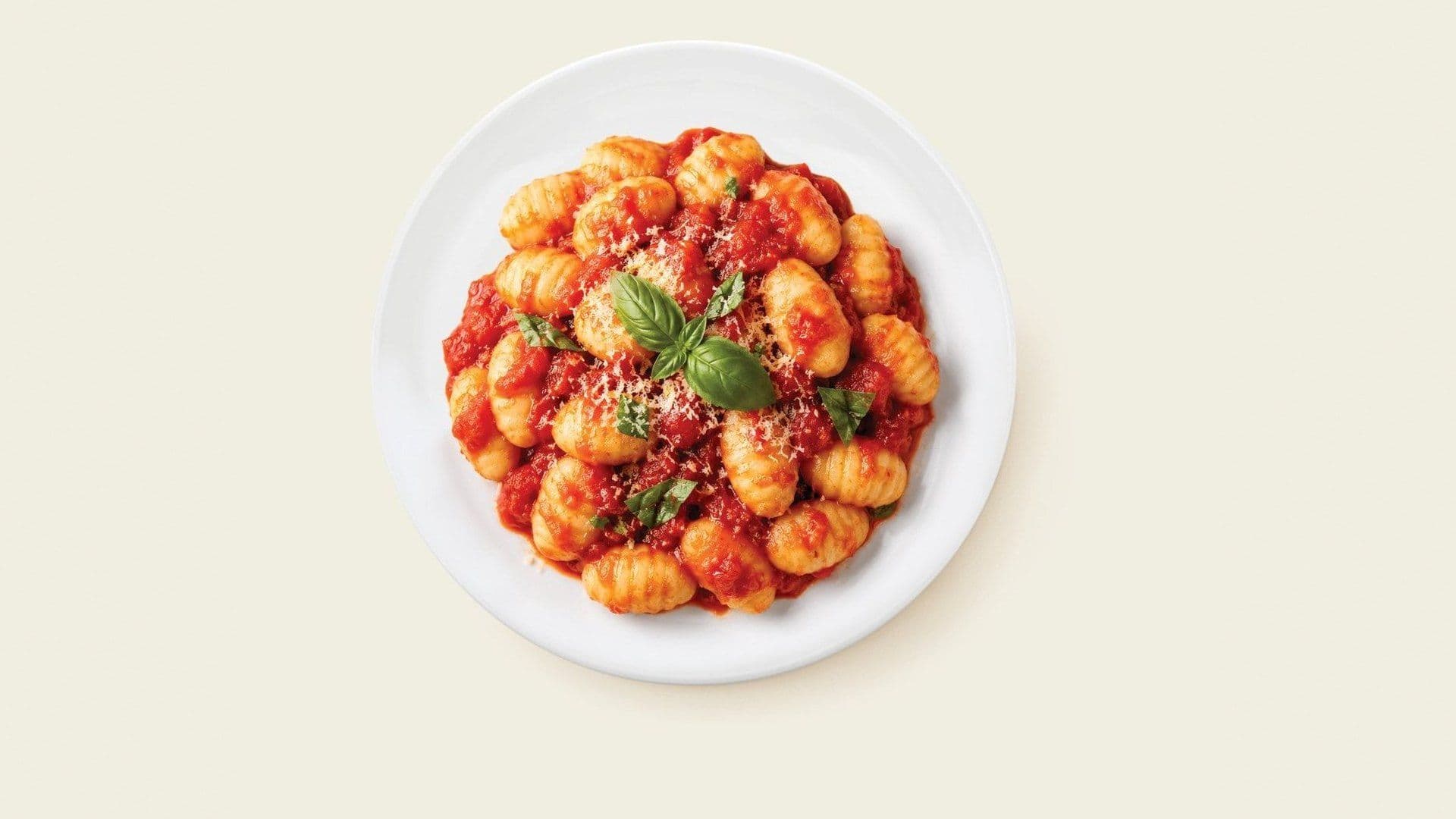
The forms most conversations start from are potato powder for smooth masses, potato granules for extrusion and potato semolina where the grain should stay noticeable - for instance in dumplings and gnocchi. A separate guide covers Fresh or instant mashed potato.
Frequently asked questions
In a specification dehydrated potato means dried potato with no other ingredient: one entry in the composition, with no preservatives, emulsifiers or SO₂. It is a category rather than a single item, covering six forms from 10×10×7 mm cubes to 0.01 mm granules. The specific item is identified by its fraction range and bulk density, both given in the specification / TDS.
The choice of fractions and the typical use. Powder has four ranges within 0.01-0.5 mm, a bulk density of 930 g/l, and goes where the mass has to be smooth. Granules have five ranges in the same interval at 825 g/l and are the first choice in extrusion. Both replace potato flakes 1:1, with the water adjusted after the first trial.
Not necessarily. Some retail packs labelled "potato flour" contain starch washed out of the tuber, which is a different material from milled dried potato. In our naming, potato flour means the dried whole potato milled to 0.01-0.5 mm, with potato as the label entry. For that reason a specification should state the composition rather than the shop name.
Bulk density is the mass of material in a unit of volume, given in g/l: 930 for powder, 860 for semolina, 825 for granules and 670 for coarse grits. It matters whenever dosing is volumetric, because the same volume carries a different mass depending on the fraction. Take the value from the specification / TDS before the first run and confirm the setting on your own dosers.
A reference batch is a production run to your current recipe, kept as the point of comparison. A technological trial is the run alongside it with the new material dosed in, on the same line and preferably the same day, with the water adjusted. Comparing the two is what settles the fraction and the dosage; our technologist works through the trial with you.
Certificates and declarations are available to download, with no sign-in and no form: IFS Food, the organic certificate under Regulation (EU) 2018/848, the kosher certificate and the GMO declaration. Specifications and TDS go out by e-mail on request, and the certificate of analysis travels with the delivery, because it is created together with the batch.
The organic variant applies to the dehydrated forms: powder, granules, semolina, coarse grits and cubes. For instant mixes the organic version is available on request. The scope for a specific item is confirmed by the certificate together with its specification, and the certificate itself is issued by TÜV Rheinland Polska under Regulation (EU) 2018/848.
Straight from the producer. We pack into paper bags of 10, 15 and 25 kg or big bags, and a first order may be a single bag, because thresholds only start with an annual contract. Standard lead time is 14 days, we deliver across the EU and worldwide, and the specification with the batch certificate of analysis travels with the delivery.
Not sure which form fits your recipe? Describe the process and request a free sample - if the choice is close, we send two neighbouring fractions for the same trial.