What each one actually is
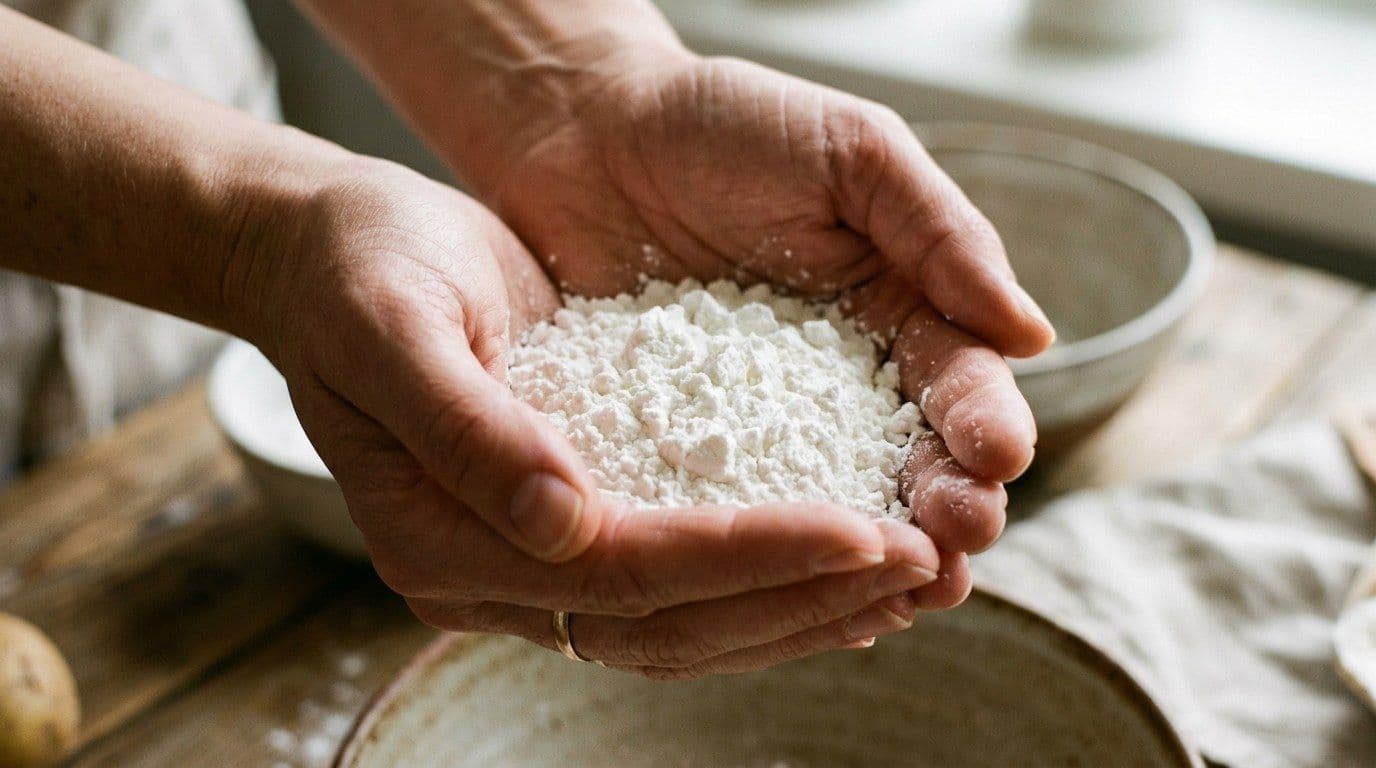
Potato starch is made by disintegrating tubers and washing out the starch granules, which are then dried. It is an isolated component: white, with no potato flavour or aroma, used to thicken and stabilize. In some markets it is sold at retail under the name "potato flour", which is where the confusion starts.
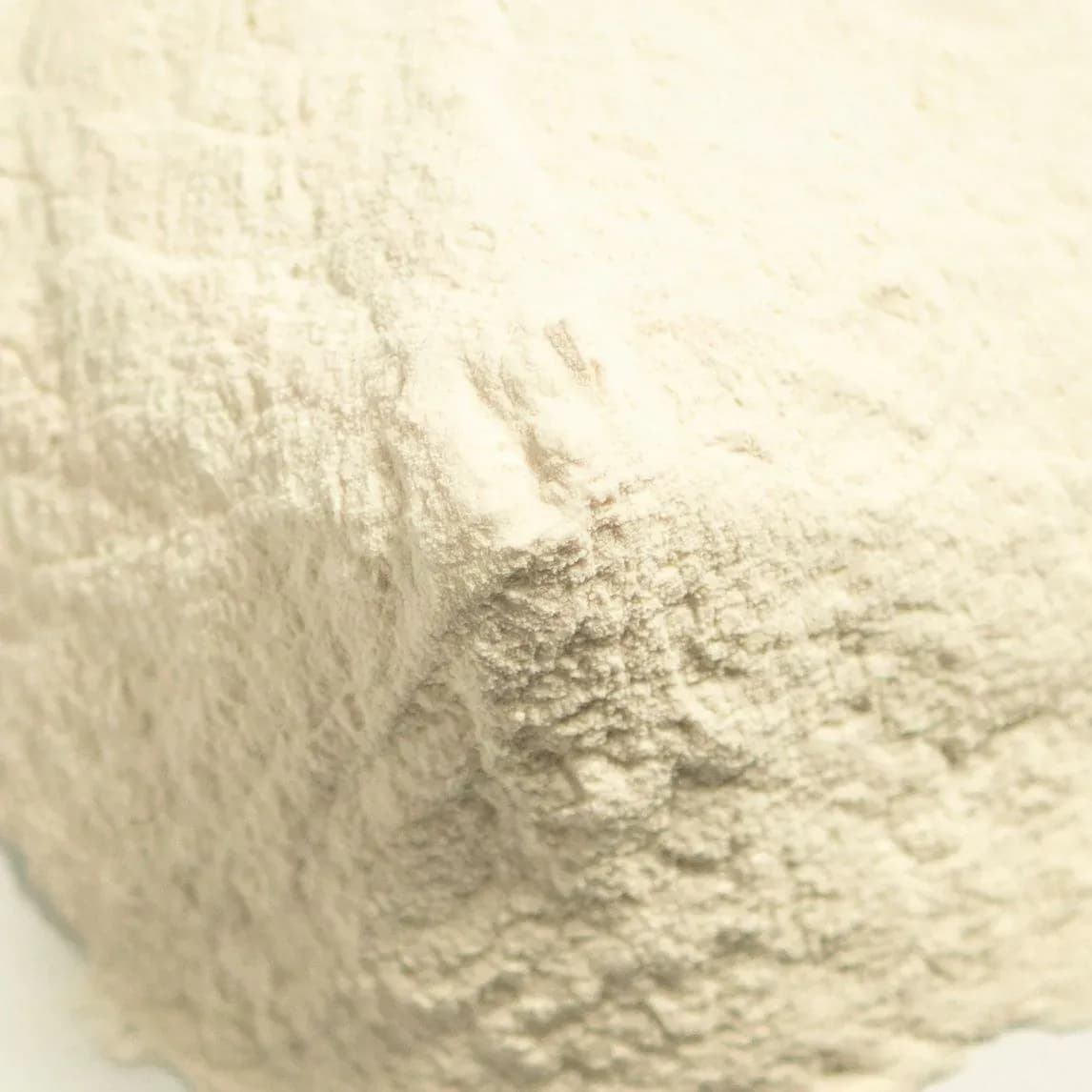
Potato flour is the whole potato without the water. ECOCORE dries cut pieces of potato and only then mills them into fractions, so the bag holds everything the tuber had - starch, protein, fibre - minus the moisture. The ingredient list has one entry: 100% dried potato (Solanum tuberosum), with no preservatives, emulsifiers or SO₂.
The practical test is the ingredient list of your finished product. Starch appears there as "potato starch". Dried whole potato appears as "potato".
Side by side
| Parameter | Potato starch | Potato flour / powder (ECOCORE) |
|---|---|---|
| What it is | starch washed out of the tuber | whole potato, cut, dried and milled |
| Composition | potato starch | 100% dried potato, no additives |
| Colour | white | creamy yellow |
| Flavour and aroma | neutral | characteristic of dried potato |
| Function | thickener, stabilizer, carrier | base for potato masses, flake replacement, water binding |
| Entry on the label | potato starch | potato |
| Gel on heating | clear, cohesive gel | no gel; binds water and builds body |
Which fraction for which job
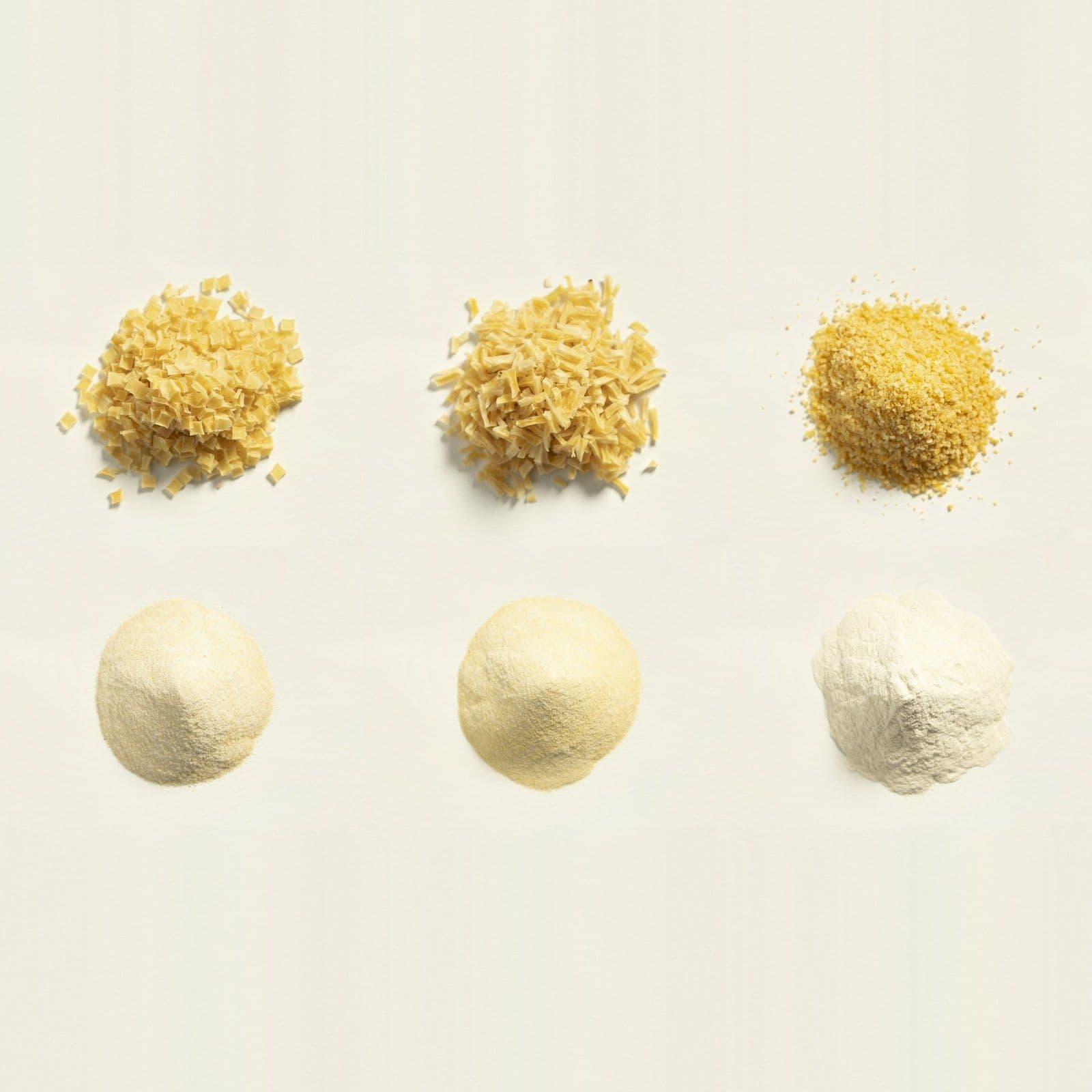
In our range three fine fractions are bought under the name "potato flour". They share one composition and one drying technology; they differ in particle size and bulk density.
| Product | Fraction | Bulk density | Typical applications |
|---|---|---|---|
| Potato powder | 0.01-0.5 mm, 4 fractions | 930 g/l (0.01-0.5 mm) | masses, fillings, bakery, snacks |
| Potato granules | 0.01-0.5 mm, 5 fractions | 825 g/l (0.1-0.5 mm) | snacks, pellets, masses, toppings |
| Potato semolina (fine grits) | 0.01-1 mm, 5 fractions | 860 g/l (0.01-1 mm) | dumplings, gnocchi, fillings, pancakes |
Choosing between them is choosing texture, not composition: a smooth mass calls for potato powder, controlled water uptake in extrusion for potato granules, and a perceptible potato grain for potato semolina. The details are in the guide Potato bread.
When you need starch, and when you need flour
Starch does one thing very well: it thickens. It gelatinizes in water and sets a clear, cohesive gel, and dried potato will not replace it there, because it also carries protein and fibre and therefore binds water differently.
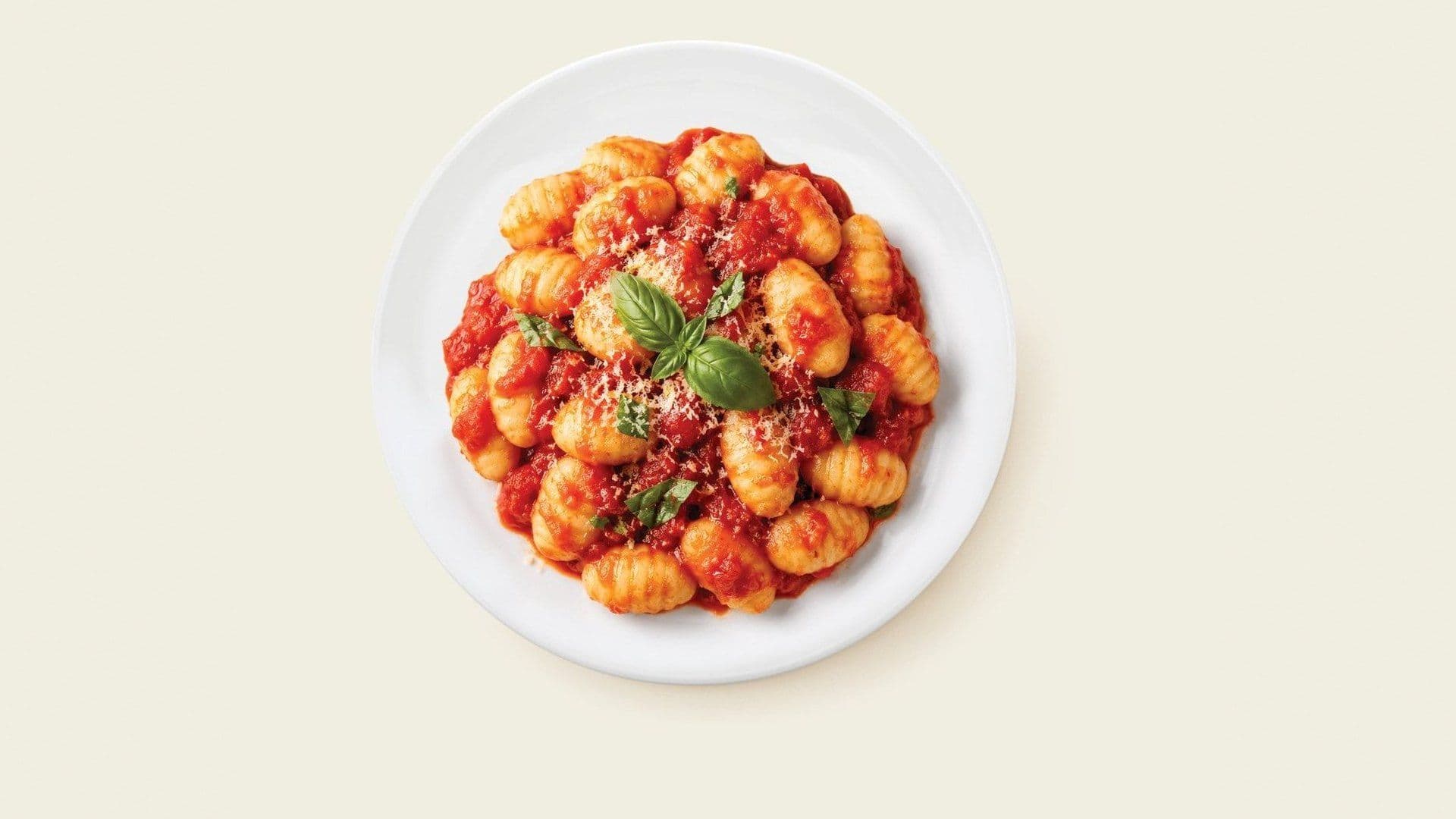
Potato flour belongs where the product should taste and behave like potato: dumpling and gnocchi doughs, fillings and croquettes, potato bread and rolls, snacks and pellets, coatings and toppings. In those applications it also replaces potato flakes - at a 1:1 ratio, at the same dosing step, adjusting only the amount of water after the first trial. The comparison and the three steps are on the potato flakes substitute page.
The third and most common case is a recipe that uses both: starch as the thickener, dried potato as the base of the mass. Which fraction suits which industry is set out on the application pages, for example dumplings and gnocchi. We go into more detail in the guide Choosing the particle size.
What to put in the enquiry
An enquiry for "potato flour" can easily return a quote for the wrong product. These five lines prevent it: A separate guide covers Glossary of dehydrated potato terms.
- function in the recipe - thickening or building the mass;
- what you use today - starch, potato flakes, fresh potatoes;
- target texture - smooth, perceptible grain, visible potato piece;
- dosing step and temperature - cold, into the dough, into the extruder;
- label requirement - whether the ingredient list has to stay at one entry.
On that basis our technologist names the form and the fraction, and when the call is close we send two fractions for the same recipe. Free samples go to companies within a maximum of 5 working days of the request, outside Poland as well, with the specification and the technologist's contact details in the parcel.
Frequently asked questions
No. Potato flour is the dried whole potato, milled; potato starch is the starch washed out of the tuber. They differ in composition, colour, flavour and in what they do in a recipe. Some retail packs labelled "potato flour" contain starch, so always state the composition in your specification rather than the shop name of the ingredient.
Only where the ingredient works purely as a thickener and the taste should stay neutral; then starch is the closer match, and we do not sell it. Where the ingredient may bring potato flavour and should appear on the label as potato, milled dried potato is the route. The two are not interchangeable by weight, so the share is set in a trial on the actual recipe.
Yes, as a share of the dough rather than as a replacement for wheat flour, because milled dried potato builds no gluten network. It goes into the flour at the mixing stage and only the water is adjusted; hydration parameters are in the item specification. Powder of 0.01-0.5 mm gives an even, moist crumb, and coarse grits of 1.5-2.5 mm leave visible potato particles.
It depends on what the layer has to do. Starch gives a thin, smooth, neutral coating and forms a clear gel; milled dried potato brings potato flavour and, in the coarse grits of 1.5-2.5 mm, a visible particle that stays crisp after frying. We supply the second of these, and which one fits your product is settled in a trial.
Partly, and not in every recipe. It binds water and builds body, but it does not form the clear gel that is the point of starch in sauces and fillings. The practical route is a trial on the actual recipe, with the dosage set by a technologist. The label gain is that the declaration carries one item: potato.
Potato powder or potato granules replace flakes 1:1, at the same dosing step, with no process change; you adjust the amount of water after the first trial. Granules bind water up to approximately 1:4.5, so 1 kg plus 4.5 l of water gives about 5.5 kg of finished mass. The 1:1 replacement trial protocol is available in Downloads.
Potato is not a cereal, so the raw material carries no gluten. In our dehydrated potato line, gluten-containing cereals are absent from the recipe, and the status for a specific item is confirmed by its specification. A gluten-free claim on a finished product needs testing of that product against the 20 mg/kg threshold, so it concerns your product rather than the raw material.
One bag, with no fixed MOQ. Paper bags of 10, 15 and 25 kg or big bags on pallets of 120×100 or 120×80 cm with a maximum of 1,000 kg; standard lead time is 14 days, and production runs 12 months a year. Free samples go out to companies within a maximum of 5 working days of the request.
Not sure whether your recipe needs starch or dried whole potato? Request a free sample - describe the application and our technologist will select the form and fraction.