Ratios and times for three mixes
Each mix in the instant potato products line is a dry base made from our own dehydrated potato. The figures below come from the product data sheets and are the starting point in a kitchen or a plant.
| Mix | Mix and water | Resting | Cooking | Yield |
|---|---|---|---|---|
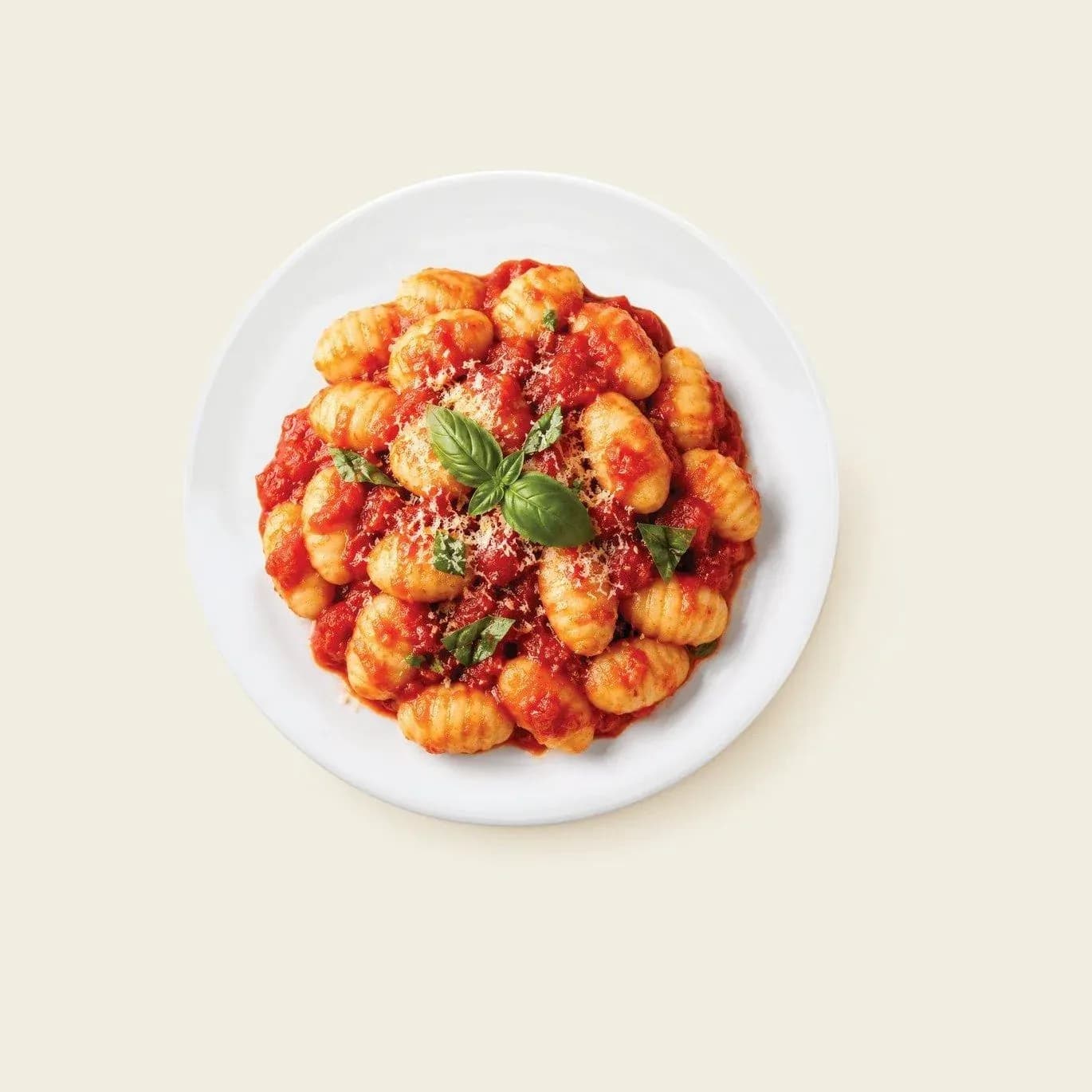
| Gnocchi | 200 g + 500 ml | 10-15 minutes | 1-1.5 min after floating | approx. 70 pieces |
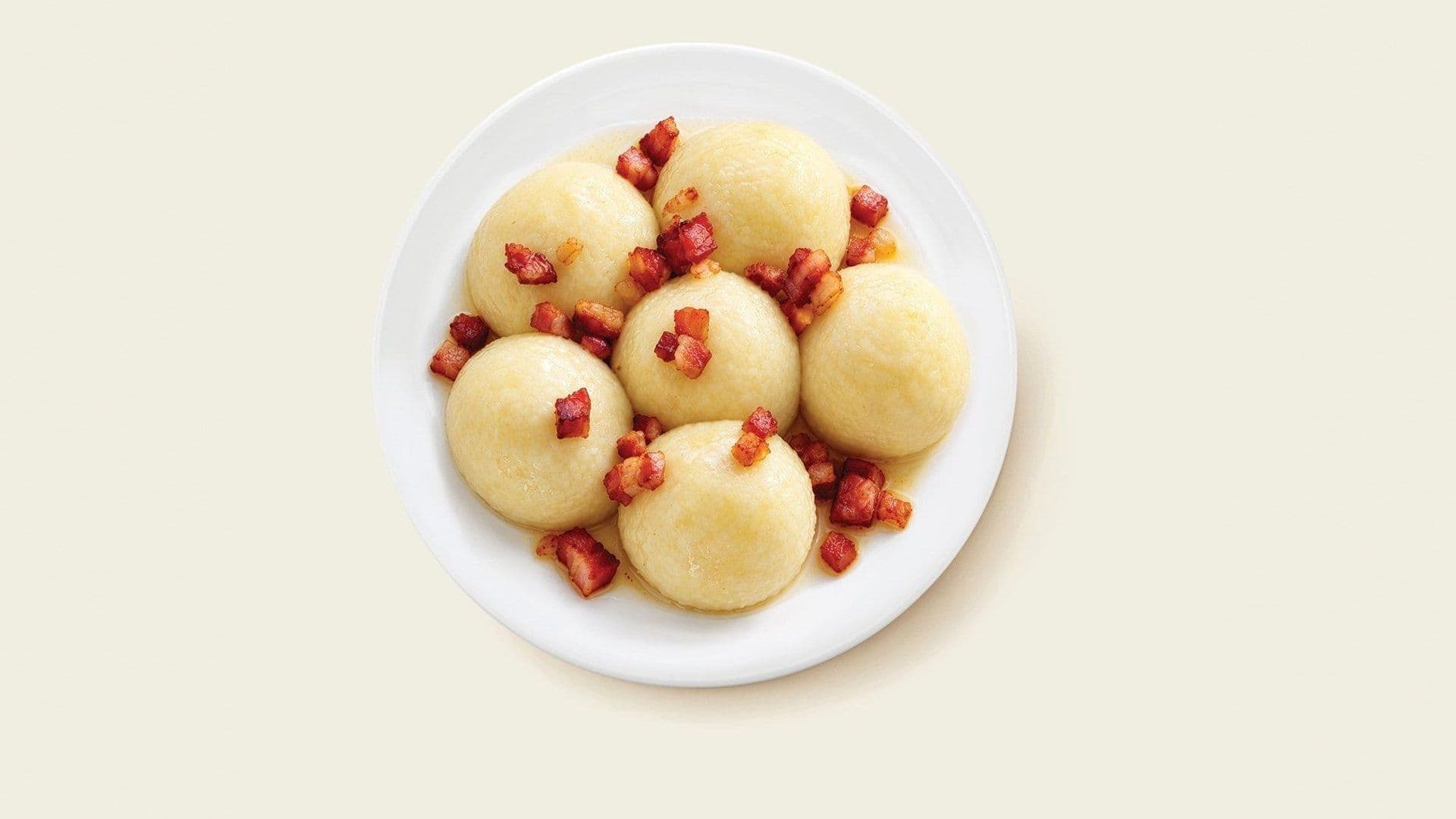
| Potato dumplings | 309 g + 750 ml | 10 minutes | 2-3 min after floating, without boiling | mass for shaping dumplings |
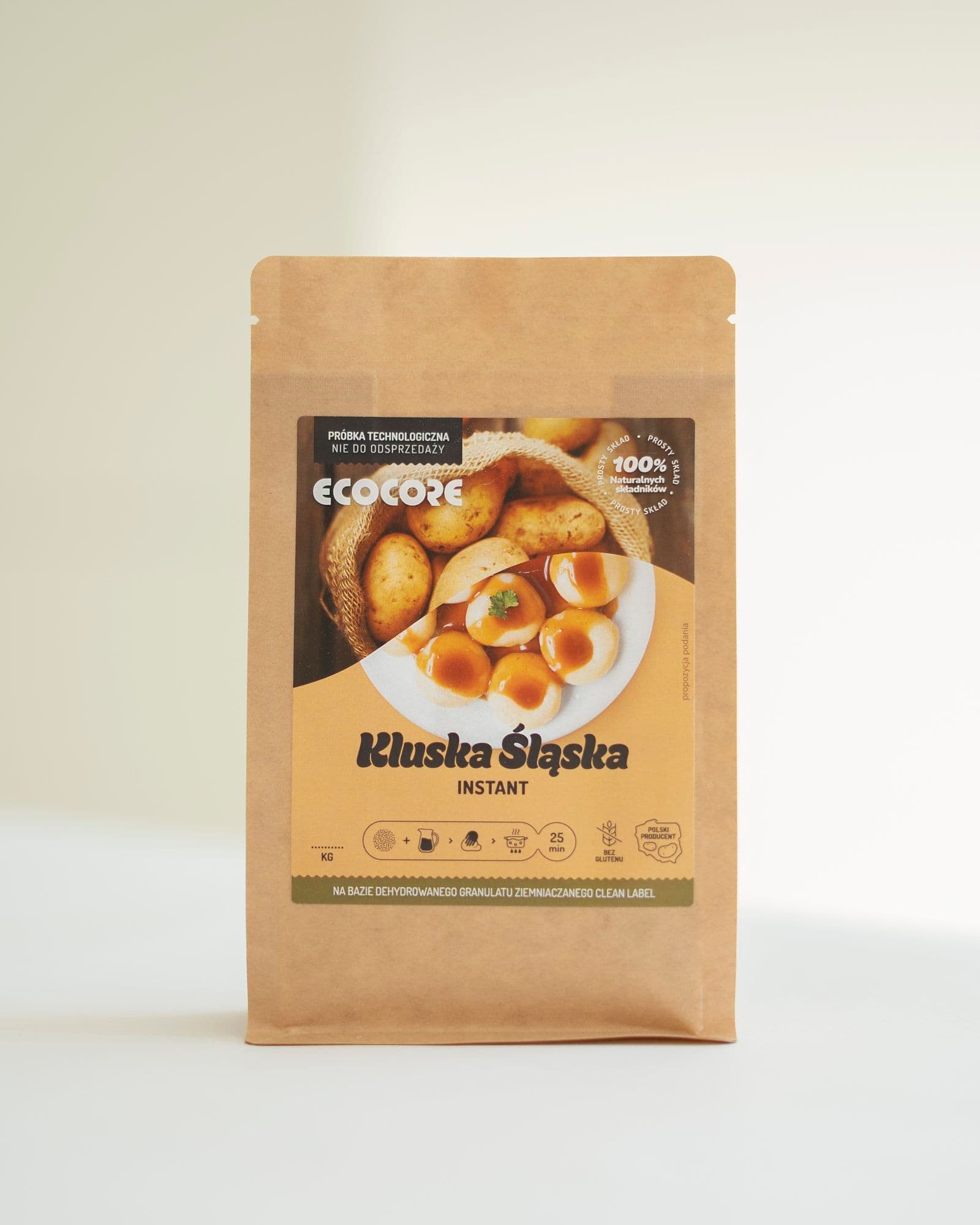
| Silesian dumplings | 220 g + 500 ml | 10 minutes | in salted water until they float | approx. 30 dumplings |
The 10 kg gnocchi pack is made up with 25 l of water - the ratio stays the same and only the scale changes. The number of portions per foodservice pack goes out with the quotation, because it depends on the pack weight and on the portion size in your kitchen.
Compositions are short and differ by mix: gnocchi are potatoes, potato starch, egg powder and salt (523 g of potatoes per 100 g of mix, QUID declaration); potato dumplings are potatoes, potato starch and salt (617 g); Silesian dumplings are potatoes including potato starch, with no added salt (517 g). Product pages with full parameters: gnocchi mix, potato dumplings mix and Silesian dumplings mix.
Step by step
- Measure the water rather than guessing the mix. The data sheet ratio applies to the whole batch: 200 g per 500 ml for gnocchi, 309 g per 750 ml for dumplings, 220 g per 500 ml for Silesian dumplings.
- Stir the mix into the water. The order matters as it does with mashed potato: the mix goes into the liquid, not the other way round.
- Rest for 10 minutes (gnocchi 10-15). This is when the dried potato takes up the water and the mass stops sticking - stirring will not shorten it.
- Shape with moistened hands. For filled dumplings this is what keeps the seam closed.
- Cook briefly and off the boil. Dumplings 2-3 minutes after floating in water that is not boiling; gnocchi 1-1.5 minutes after floating; Silesian dumplings in salted water until they float.
For service this gives a short, predictable chain: heat the water, make up the mix, use the ten minutes for other work, shape, cook. No pre-cooking the day before, no cooling and ricing, and the mass waits dry in the store until it is needed.
The mass is made without boiling, peeling or ricing potatoes, so it does not change with the variety or the season. The same logic sits behind mashed potato from powder: milled dried potato behaves differently from starch in a dough. The details are in the guide Ordering dehydrated potato.
What spoils the mass
Too little resting. Shaped after five minutes, the mass sticks to your hands and falls apart in water, because the dried potato has not taken up the water yet. Ten minutes is a minimum, not a suggestion. We go into more detail in the guide Supplier qualification for dehydrated potato.
A rolling boil under the dumplings. A dumpling in boiling water splits at the seam. The water should be hot but calm.
Adding water to a finished mass. Once hydrated, the mass has its structure; water added later sits on the surface and the mass stops holding its shape. If the mass is too soft, adding more mix is the easier fix.
Shaping with dry hands. The mass sticks and the seam opens. Moistened hands or a moistened spoon solve it immediately.
In catering, one more thing matters that a single portion will not show: make up the mass in batches the size of one pot load. The longer a shaped piece waits, the more it sticks to the tray and the bench. For two services it is easier to make up two portions of mix a quarter of an hour apart than to hold one large mass at the same consistency.
Mix or your own recipe from semolina
An instant mix pays off where time and consistency between shifts are what count. If you have your own recipe and want to keep control of it, potato semolina plays the same role: 0.5-1 mm is the starting fraction for dumplings, 0.1-1 mm for gnocchi, 0.01-1 mm for dumpling dough. The full selection table is on the dumplings and gnocchi page.
The fraction is confirmed by a technologist in a trial; when the choice is close we send two neighbouring fractions for the same mass. The two approaches combine well: some plants run the mix for daily production and semolina for frozen lines, because masses made from dehydrated potato withstand freezing and thawing - parameters are confirmed in a trial on your own line. A separate guide covers Coatings and toppings with potato grits.
Allergens belong to the dish: gnocchi contain egg, while the dumpling and Silesian dumpling mixes contain no allergens from Annex II to Regulation (EU) No 1169/2011. Ingredients added in preparation - butter, breadcrumbs, filling - enter the declaration of the dish, not of the raw material. Shelf life for all mixes is 12 months from production in unopened packaging, with no refrigeration; after opening, close the pack tightly, because the mix is hygroscopic.
Frequently asked questions
In each case the order is the same: pour water over the mix, let the mass stand for 10 minutes, then shape and cook. The ratios differ per product and come straight from the data sheet: 220 g of mix to 500 ml of water for Silesian dumplings, 309 g to 750 ml for knedle, 200 g to 500 ml for gnocchi. Cook in water that is not boiling.
750 ml of water for 309 g of mix. After 10 minutes of resting the mass can be shaped, and cooking takes 2-3 minutes after the dumplings float, in water that is not boiling. Shaping the mass before the resting time is up, or letting the water boil, is what usually makes dumplings split.
About 70 pieces from 200 g of mix. The 10 kg pack is made up with 25 l of water, in the same ratio as a kitchen portion, and the gnocchi are boiled for 1-1.5 minutes from the moment they float. For a different piece size, convert proportionally; the number of portions per foodservice pack comes with the quote.
Masses made from dehydrated potato withstand freezing and thawing well, as stated on the application page, and they keep their light colour through the process. Parameters for a specific line are confirmed in a trial, because the freezing method and the packaging also matter. The composition is the same in every batch, so the result does not move with the variety or the season.
Usually for one of two reasons: the water is boiling rather than just steaming, or the mass was shaped before the 10 minutes of hydration had passed. The data sheet calls for 2-3 minutes after floating, without boiling. If both are right and the mass still breaks up, it is worth checking the water ratio against the sheet before changing anything else.
The Silesian dumplings mix contains potatoes, including potato starch, with no allergens from Annex II to Regulation (EU) No 1169/2011 in the recipe; salt goes into the cooking water. The knedle mix likewise carries no Annex II allergens. The gnocchi mix contains egg. Possible cross-contact is indicated by the product labelling, and the full composition is in each item specification.
Make up the quantity you will shape within the shift, because the mass can be prepared in advance without darkening. Measure water by the data sheet ratio rather than by eye, let it stand the full 10 minutes, and keep the cooking water just below boiling. The mixes are dry and need no refrigeration, so a part-used pack goes back on the shelf tightly closed.
Want to test the mass in your own kitchen? Request a free sample - the parcel carries the mix and the specification; for foodservice packs, ask for a quotation.