Three options and what separates them
| Option | What you get | What sits with you |
|---|---|---|
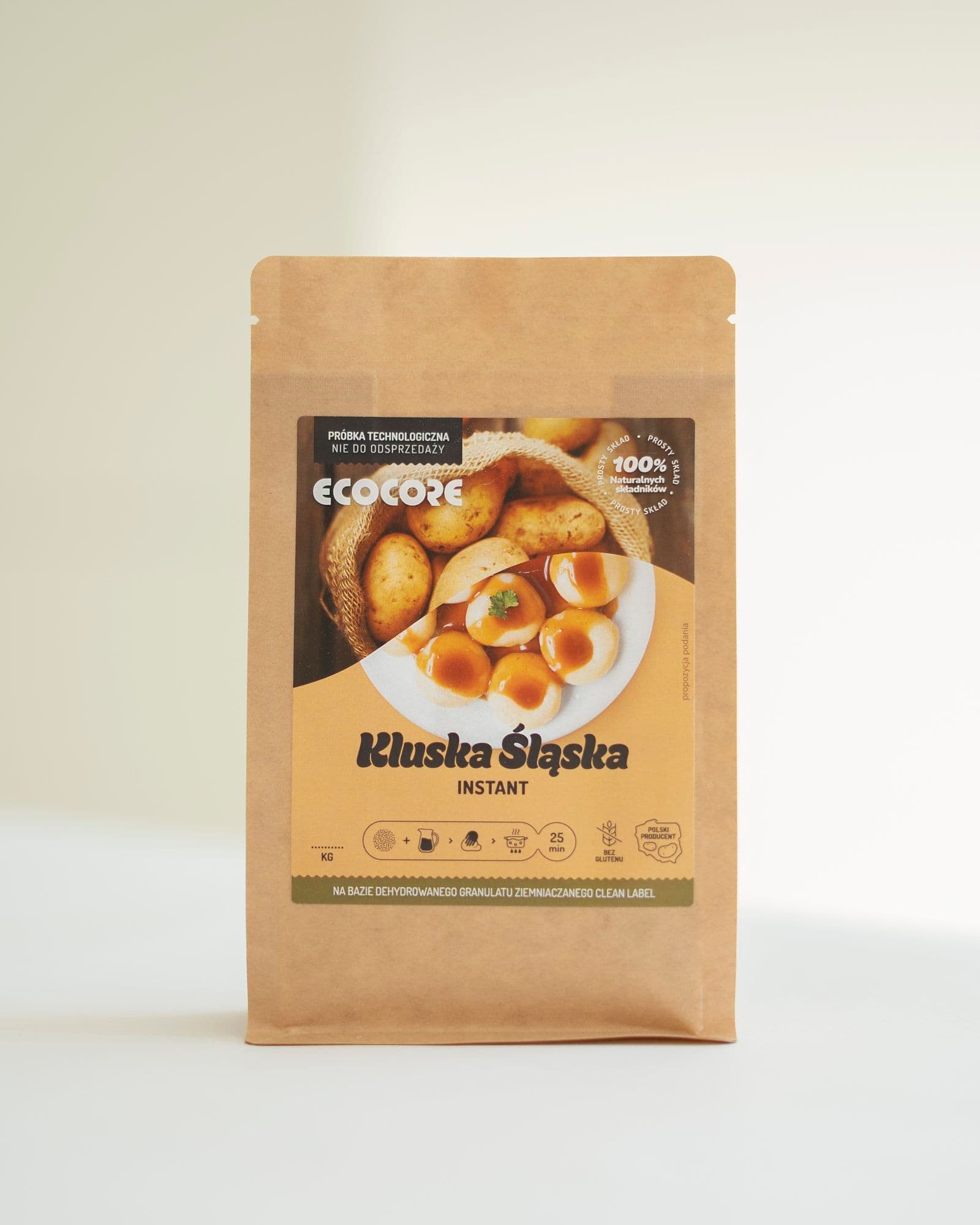
| Our mix, your packaging | an existing instant line item in packaging printed for you | artwork, label copy, pack weight decision |
| Our mix, adapted for you | a different pack weight or a recipe adjustment for the target market | the same plus assessment of the trial |
| Your recipe on our line | your recipe reproduced; the recipe stays your property | the recipe, an NDA, assessment of the trial |
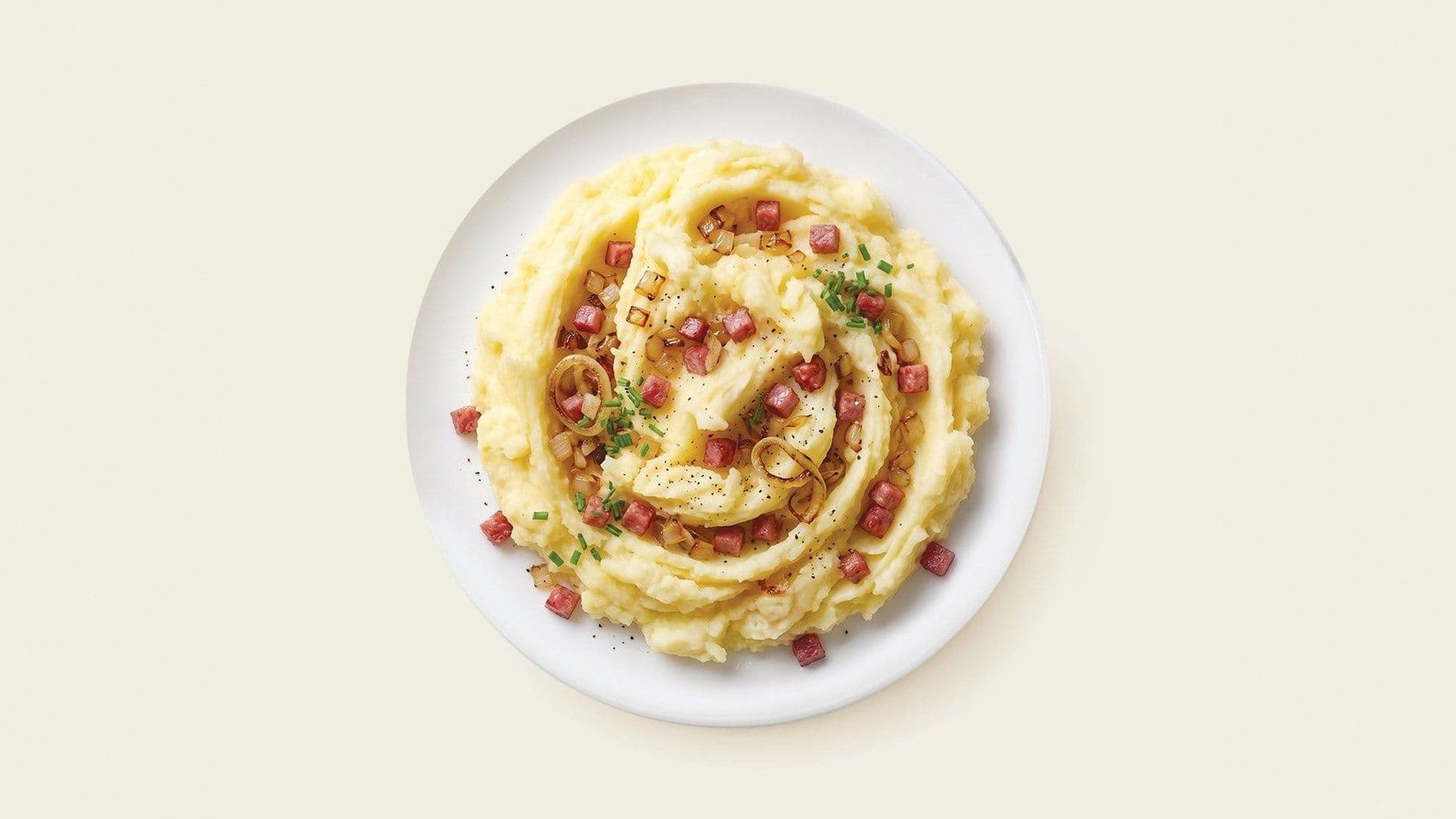
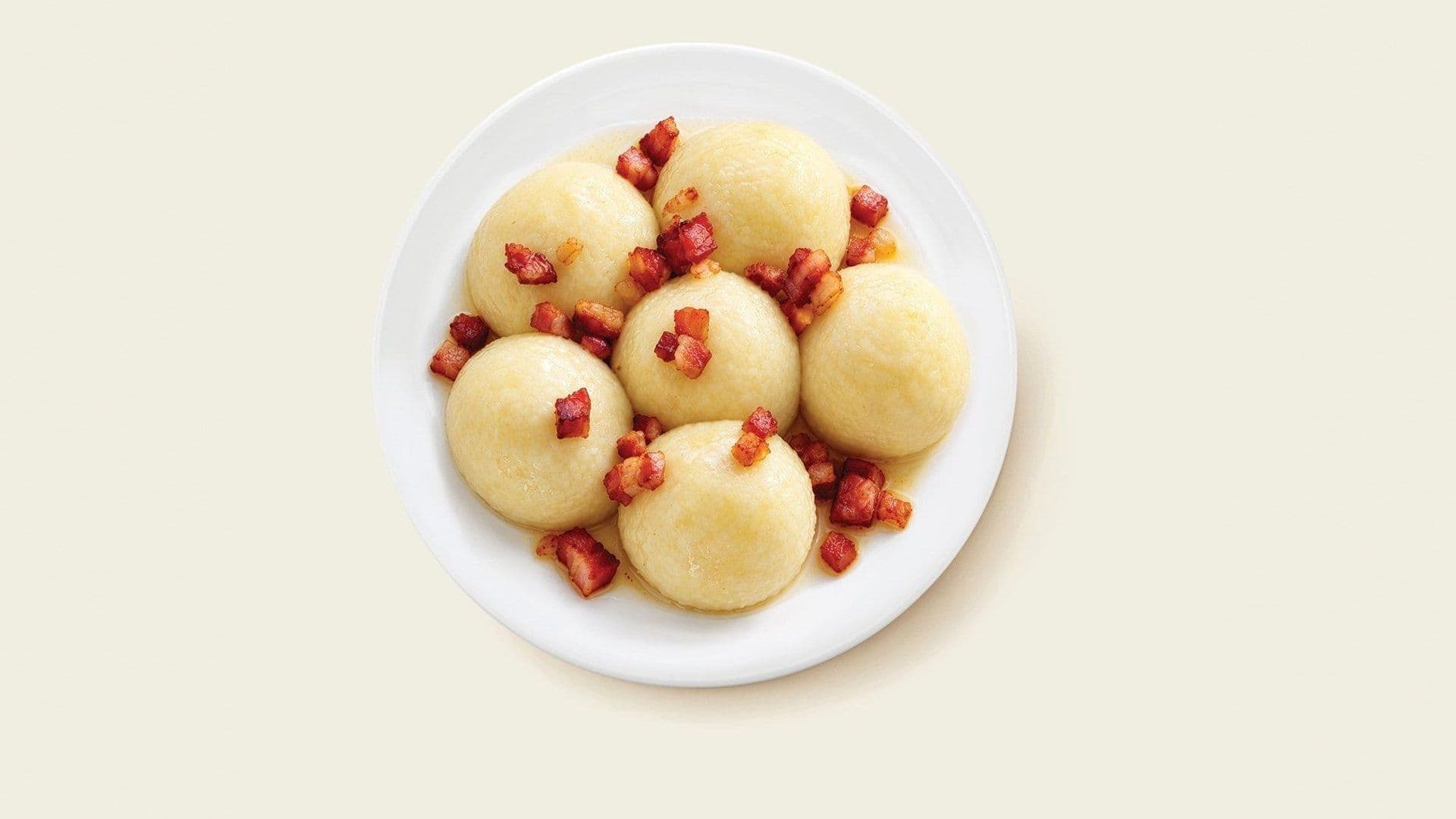
The first option is the fastest, because there is no recipe development stage. The third starts with an NDA. The available dishes are the instant line items: instant mashed potatoes, potato pancake mix, potato dumplings, gnocchi mix, potato sausage mix and potato cake mix.
One boundary is firm: under a customer brand we pack instant mixes only. Dehydrated potato is sold under the ECOCORE brand. We go into more detail in the guide Gnocchi and potato dumplings from instant mix.
Four steps
- Brief. Product, pack weight, sales channel, estimated annual volume, label and documentation requirements. The form on the private label instant potato products page takes ten minutes and commits you to nothing.
- NDA and technical conversation. We sign an NDA whenever your recipe or market data is involved - before the conversation, even if you do not ask for one. In the conversation we establish what our line can and cannot do.
- Trial and quotation. The trial batch is made in the target packaging, and the quotation goes out with the sample rather than a week later. A sample against a brief is prepared like any other: dispatch within at most 5 working days of agreement.
- First production batch. After the trial and the print artwork are approved. The batch comes with a full documentation pack under your brand.
Pack weights, packaging formats and the minimum batch are set by the salesperson in the technical conversation - those figures are not published here, because they depend on the product and the pack. The date of the first batch comes with the quotation.
What you prepare
- packaging artwork in a print-ready format,
- label copy compliant with the rules of the target market,
- the decision on pack weight and packaging type,
- the estimated annual volume - the quotation depends on it,
- the details of the responsible operator to appear on the label.
We do not design packaging and do not write label copy - that belongs to your team or your agency. We do check that the declared composition matches what is actually in the product. We pack in materials that meet food contact requirements and print to the artwork supplied.
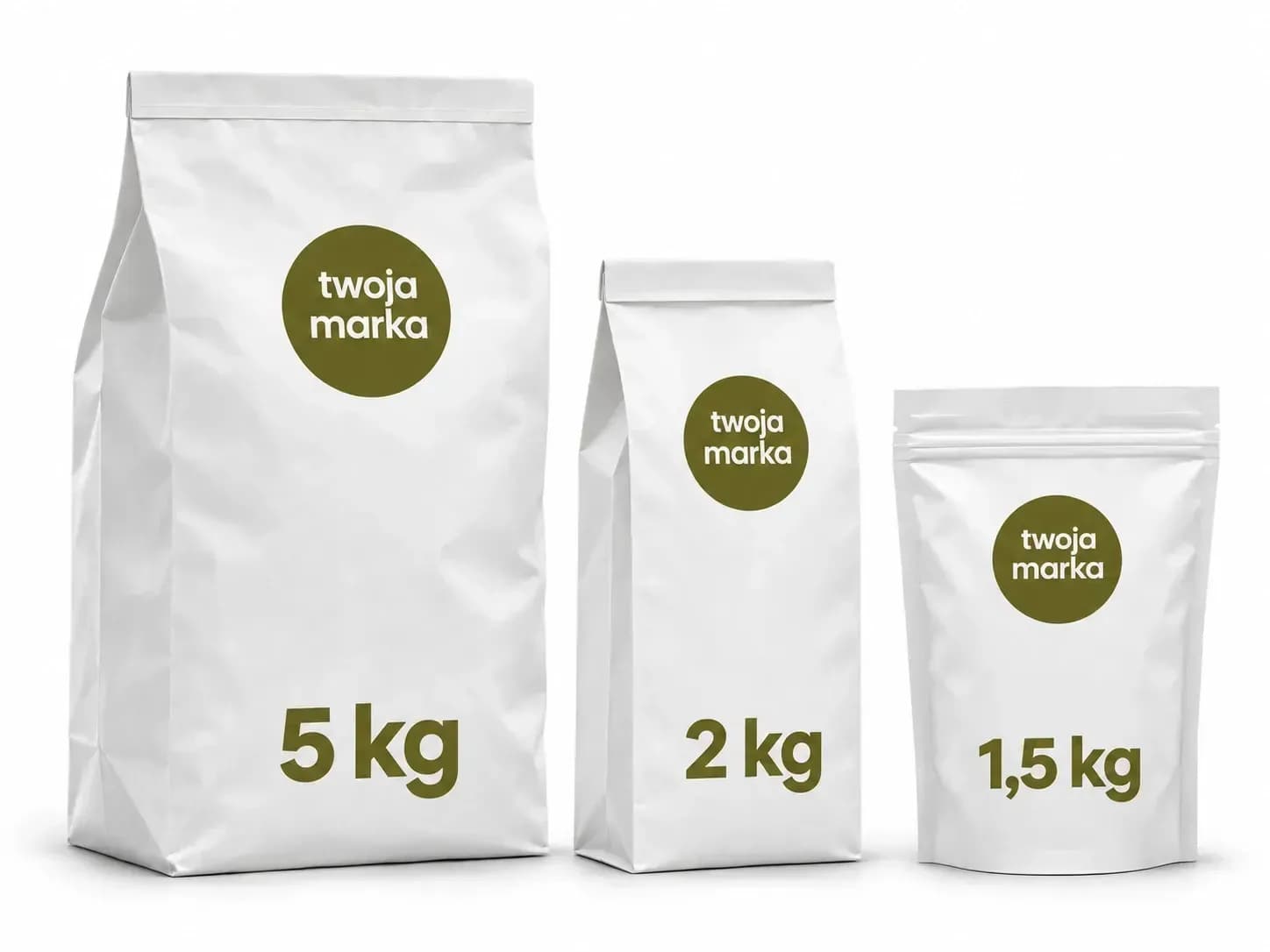
The formats available are cups, sachets and paper bags, shown with a "your brand" label, including 5 kg, 2 kg and 1.5 kg bags.
When own brand pays off
Private label is a commercial decision rather than a technical one - the line handles all three options; the real question is whether printed packaging earns back the changeover. Three situations make it worthwhile straight away.
First, you have your own sales channel and a brand that already means something to your customer - then the mix under your logo stays in your catalogue, not ours. Second, you sell into a market with different label requirements or different pack sizes from the line standard; that is the typical case for the second option. Third, you have a recipe currently made by somebody else and want to move it without changing the composition - then we start with an NDA and a trial that shows how faithful the reproduction is.
We advise against private label when the price per kilogram is the only criterion and the volume cannot carry the printing cost. It is simpler then to buy an item under our brand and come back to the conversation once sales are running.
Useful to know before the brief
The composition is short and open. Mashed potato is potatoes, salt and turmeric, with no emulsifiers or preservatives, and a QUID declaration of 780 g of potatoes per 100 g of mix. The pancake mix contains egg, as does the gnocchi mix - the allergen status of a variant is stated in its specification. For the label you design, that is the key information.
Shelf life and storage. Every mix keeps for 12 months from production in unopened packaging, with no refrigeration. For a distributor that means an ordinary dry store rather than cold storage.
Preparation at the end customer. The data sheet ratios are what goes on the pack: mash 130 g to 500 ml of water and 250 ml of milk (or 750 ml of water), about 5 minutes, a portion for 4; pancakes 200 g to 500 ml of water, 10 minutes of resting, 10-12 pancakes; gnocchi 200 g to 500 ml of water, about 70 pieces. The full table is on the foodservice and catering page, and the quality documents behind the label are covered in Is potato flour gluten-free. A separate guide covers How to make instant mashed potatoes.
Confidentiality. What you put in the brief stays with the sales team and does not leave the company. The recipe you bring remains yours.
Frequently asked questions
It runs in three steps: an NDA before the technical conversation, then the brief with the mix, the pack weights and the artwork, then a sample and the quotation. Under a customer brand we pack mixes from the instant line only. The minimum batch, pack weights and packaging formats are set by the salesperson in that technical conversation.
The minimum batch, pack weights and packaging formats are set by the salesperson in the technical conversation. The economics start to work once the cost of print preparation and line changeover spreads across a sensible number of packs. If the volume does not reach that point, buying the item under our brand first and returning to the subject later is the simpler route.
No. Under a customer brand we pack instant line mixes only: mashed potato, pancakes, Silesian dumplings, potato dumplings, gnocchi, potato sausage and potato cake. Dehydrated potato is sold under the ECOCORE brand, from a single bag upwards. That is the one hard limit of private label; all three variants of cooperation work within the instant line.
The recipe you bring remains your property. We sign the NDA before the technical conversation - the only point at which we ask for a signature before work begins. What is in the brief stays with the sales team and does not leave the company. Where a recipe is to be reproduced, the trial shows how closely that can be done.
A sample against the brief is dispatched within at most 5 working days of agreement, and the quotation goes out with the sample. The date of the first production batch depends on the packaging and the artwork, and comes with the quotation. The fastest variant is our existing mix in your packaging, because nothing in the recipe has to be developed.
Three things: the brief with the mix, the pack weight and the format; the print artwork, including the label text required by the target market; and the packaging decision, since we print on material that meets food-contact requirements. We do not produce the graphic design. We do check that the composition declaration matches what is in the pack.
That the limit is the instant line, that the NDA comes before the technical conversation, and that the minimum batch follows from the print and changeover cost rather than from a fixed rule. It also helps to know which pack weights your customers buy, because that decides the format. A sample of the existing mix is the cheapest way to start the conversation.
Have an outline of the product? Send the brief - an outline is enough, the rest comes out in the technical conversation; if you would rather start with a trial, request a free sample.