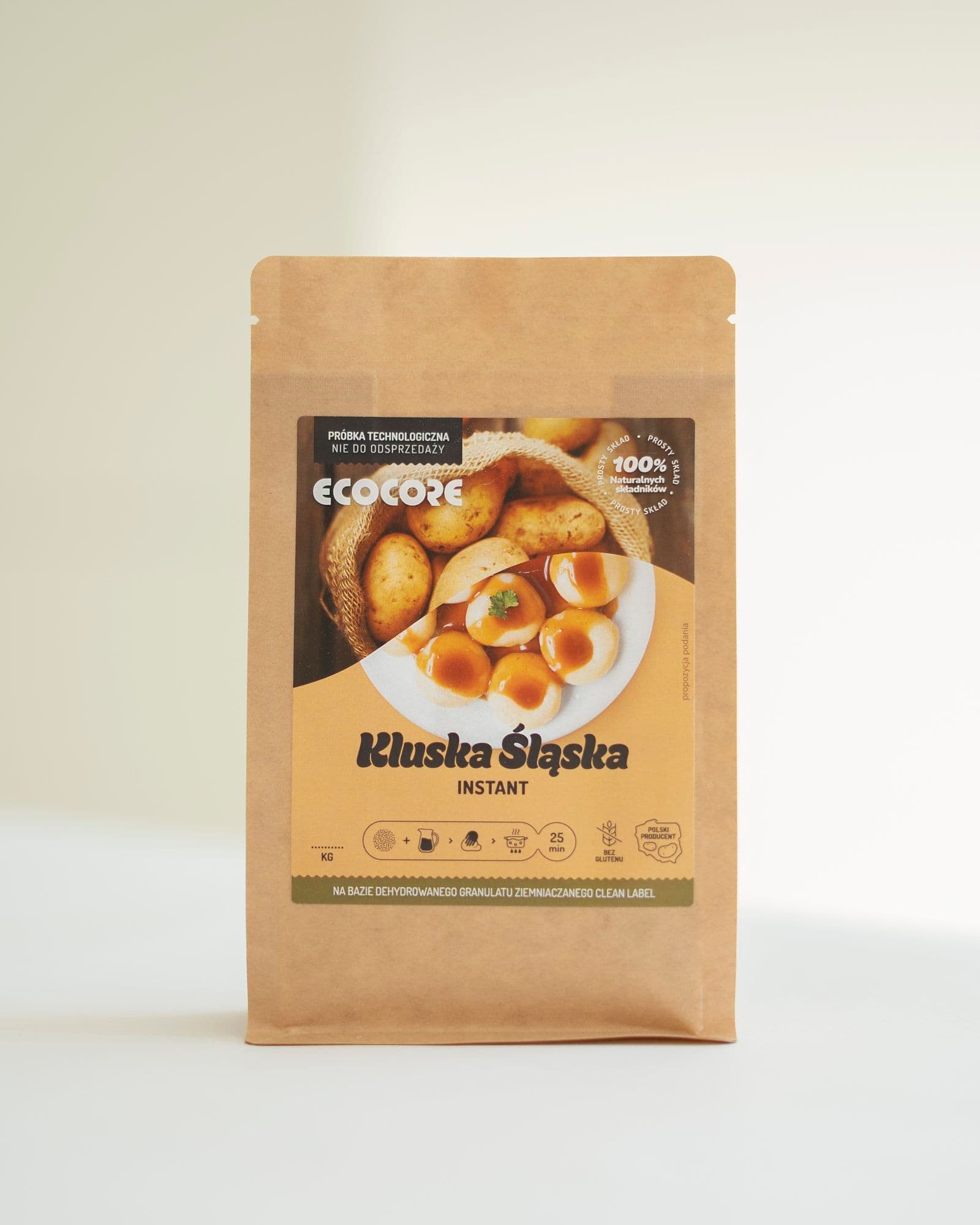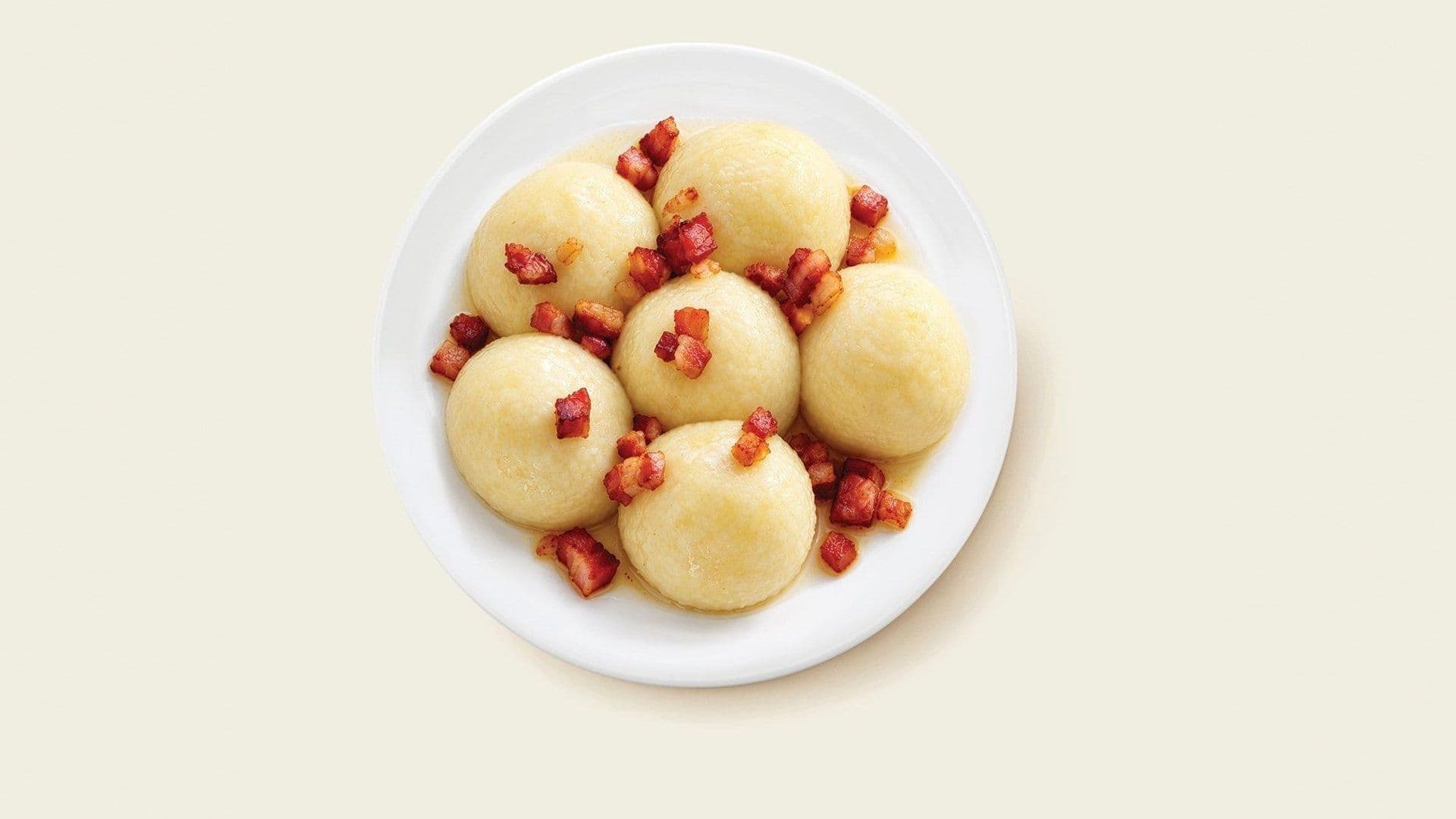
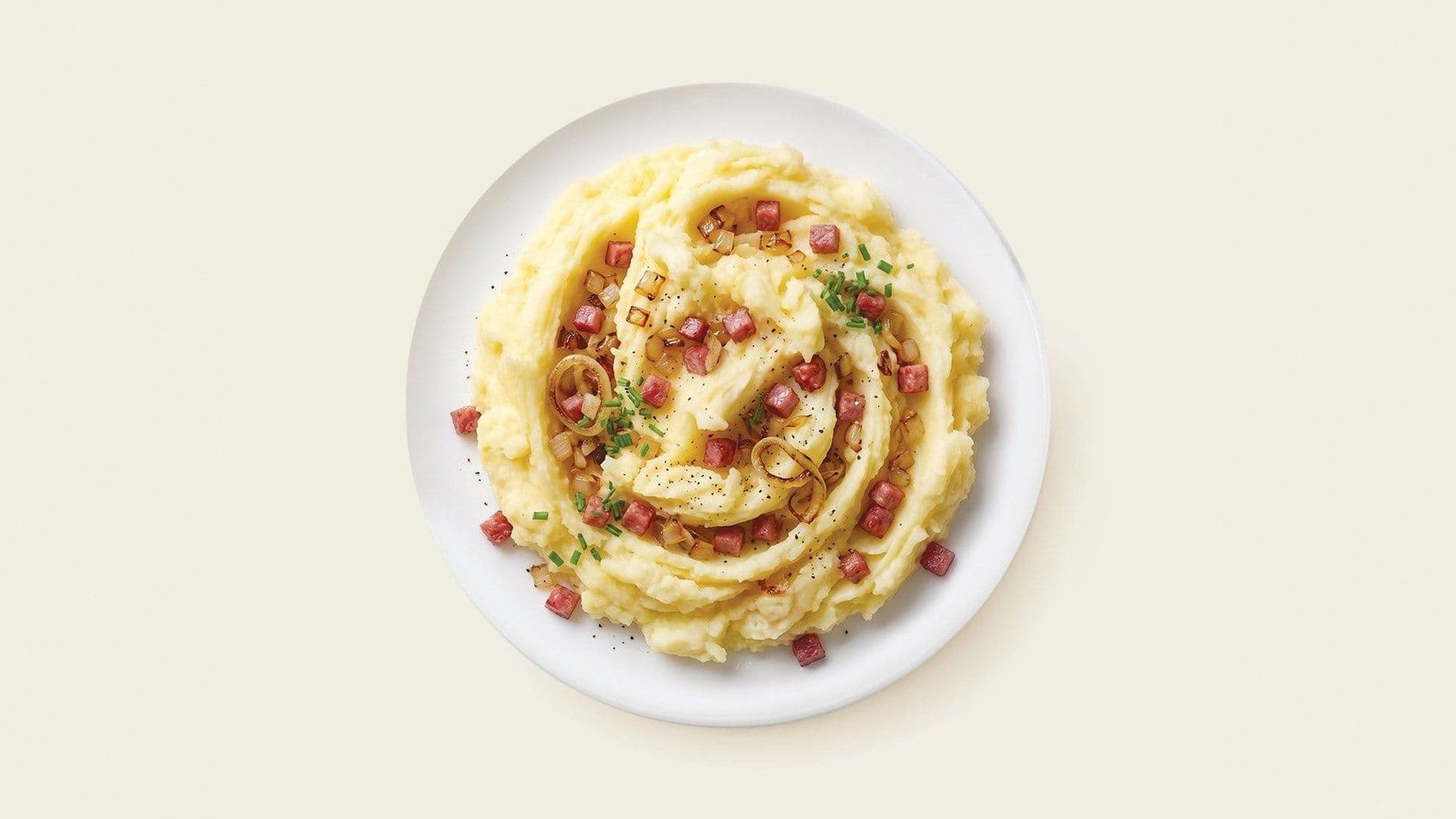
Ratios and preparation time
Instant mashed potato is a dry base made from our own dehydrated potato: potatoes, salt and turmeric, with no emulsifiers or preservatives. Every 100 g of mix contains 780 g of potatoes (QUID declaration).
| Variant | Mix | Liquid | Time | Portions |
|---|---|---|---|---|
| With milk | 130 g | 500 ml boiling water + 250 ml milk | approx. 5 min | 4 |
| Without milk | 130 g | 750 ml boiling water | approx. 5 min | 4 |
The order matters: liquid first, then the powder. Stir the mix into the hot water, stir firmly, let it stand for about five minutes and stir once more. The mash is then ready to serve.
Milk can be replaced by the same volume of water. Mash made with water only contains no milk allergen - the mix itself contains no allergens from Annex II to Regulation (EU) No 1169/2011, and the milk used in preparation brings the allergen into the dish rather than into the raw material.
Yield per kilogram
The starting figure comes from the product data sheet: 130 g of mix serves 4 people. Everything else follows from it:
- 1 kg of mix makes about 7.7 such batches, so mash for roughly 30 people;
- 1 kg of mix takes about 5.8 l of liquid (water and milk in a 2:1 ratio).
That is a conversion of the data sheet figures rather than a separate yield declaration. The number of portions per foodservice pack and the cost per portion go out with the quotation, because both depend on the pack weight and on the portion size in your kitchen.
Nutrition per 100 g of mix, for recipe cards and allergen sheets: energy 1452 kJ / 342 kcal, fat 0.59 g of which saturates 0.21 g, carbohydrate 78.8 g of which sugars 0.65 g, protein 7.31 g, fibre 3.8 g, salt 1.52 g.
Four mistakes that spoil the mash
Liquid that is not hot enough. The mix is designed for boiling water. At a lower temperature the mass binds more slowly and stays grainy - adding hot water later does not repair it.
Pouring liquid onto the powder. The reverse order is the shortest route to lumps. The mix goes into the liquid, not the other way round.
Skipping the second stir. After resting, the mass needs stirring again; otherwise a firmer layer stays at the bottom and a looser one on top.
Holding it uncovered. Mash loses water and firms up. On a service line it is held covered, and the consistency is adjusted with hot milk or water just before serving.
Holding and service on a line
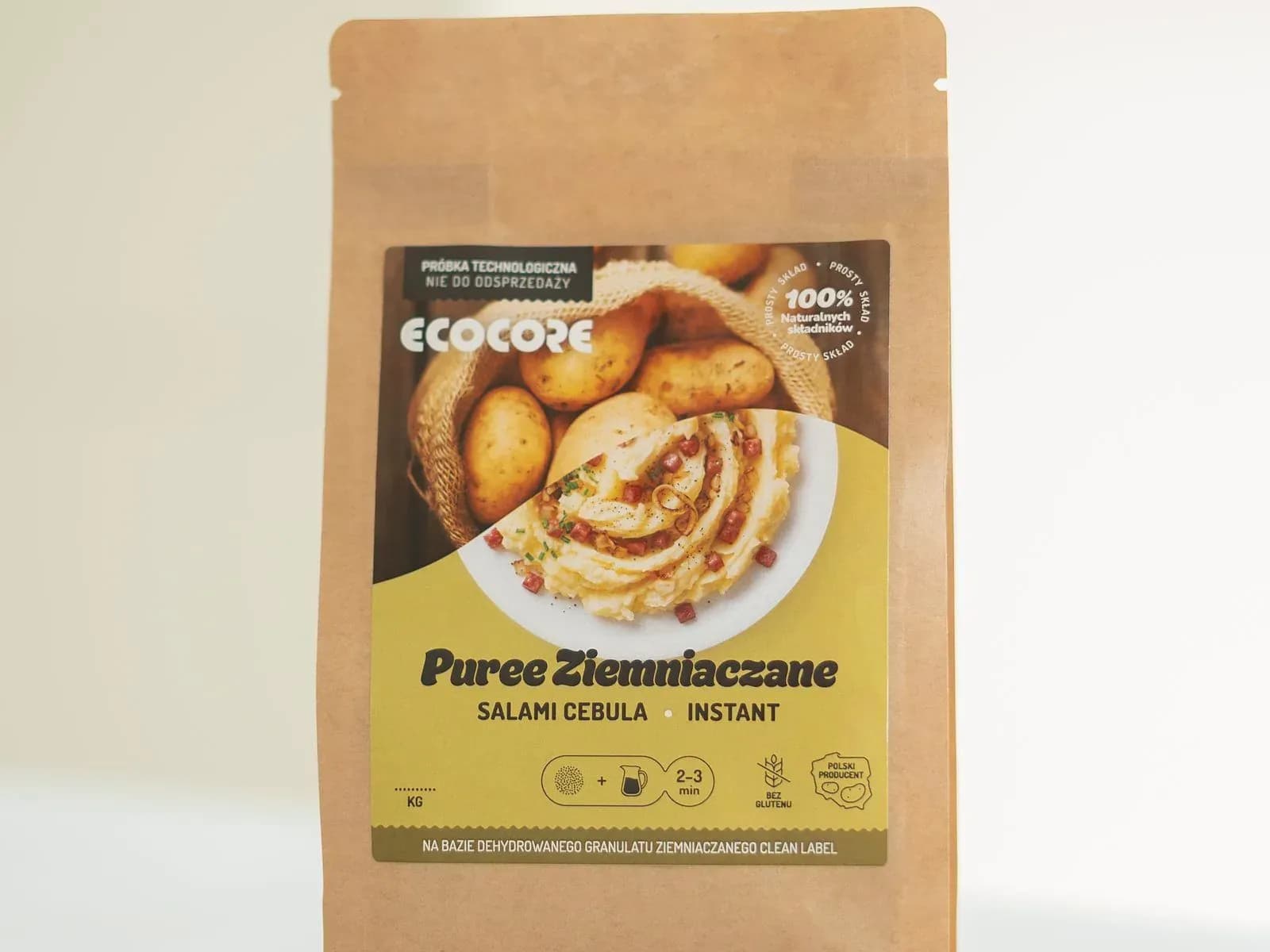
For a kitchen serving in waves, two things decide whether mash looks the same at 11:30 and at 13:00. The first is covering it: an open container loses water from the surface, and that is what makes mash stiffen rather than any property of the powder. The second is topping up the liquid at the end rather than at the start - a small amount of hot milk or water stirred in just before service brings the consistency back without making the batch watery.
Because the mix is dry, a second batch is a matter of minutes rather than planning: there is no peeling, boiling or mashing, and no half-prepared potato waiting in a chiller. For a peak that turns out larger than expected, that is usually the difference between serving and running out.
The same logic runs through the other instant potato products, with different figures from the data sheets: the potato pancake mix is 200 g to 500 ml of water, 10 minutes of resting and 10-12 pancakes, and the potato dumplings mix is 309 g to 750 ml of water. Gnocchi are 200 g to 500 ml of water, giving about 70 pieces. The full overview for professional kitchens, with the ratios for all seven mixes, is on the foodservice and catering page. We go into more detail in the guide Potato snack pellets.
Storage, variants and private label
Keep the mix in a dry, cool, dark place free of foreign odours. After opening, protect the pack from moisture and seal it tightly - the product is hygroscopic. Shelf life in unopened packaging: 12 months from the production date, with no refrigeration.
Variants: with milk, and with salami and onion - composition and allergens according to the specification of each variant. Organic is available on request. For caterers, chains and distributors we produce the mixes as private label: our mix in your packaging. The first commercial order may be a single bag, with no rigid MOQ.
What the mix is made from - dried whole potato rather than starch - and why that matters on a label is covered in Potato flour vs potato starch. A separate guide covers Water binding in fillings and meat products with potato.
Frequently asked questions
Stir 130 g of mix into 500 ml of boiling water combined with 250 ml of milk, mix vigorously, leave to stand for about 5 minutes and stir again. Without milk, use 750 ml of water in the same total volume. That batch serves four, so 1 kg of mix gives about 7.7 batches. The ratios come from the product data sheet.
For 130 g of ECOCORE mix: 500 ml of boiling water and 250 ml of milk, or 750 ml of water without milk. That batch serves four and is ready in about five minutes. For a whole foodservice pack, scale the same ratio; the number of portions per pack and the cost per portion come with the quote.
No. Milk is replaced by the same volume of water, so 130 g of mix to 750 ml of water, and the preparation time is unchanged. Mash made with water only contains no milk allergen, while the mix itself carries no allergens from Annex II to Regulation (EU) No 1169/2011. Any ingredient you add goes into the declaration of the dish.
Yes. Milk is replaced by the same volume of water, so 130 g of mix to 750 ml of water. Mash made with water only contains no milk allergen. The mix contains potatoes, salt and turmeric, with 780 g of potatoes per 100 g, so the potato character does not depend on the milk being there.
About 7.7 batches, so mash for roughly 30 people at the data sheet portion size of 130 g of mix for four. For a different portion size, convert proportionally. The number of portions per foodservice pack and the cost per portion come together with the quote, calculated on your volumes and pack sizes.
Three recur: water that is not boiling when the mix goes in, a volume measured by eye rather than by the sheet, and stirring again before the five minutes of standing are up. The sheet gives 130 g of mix to 500 ml of boiling water and 250 ml of milk, then about five minutes, then a second stir. Correcting those three is usually enough.
12 months from the production date in unopened packaging, with no refrigeration: a dry, cool, dark place free of foreign odours, up to 30 °C. After opening, seal the pack tightly and protect it from moisture, because the mix is hygroscopic. The date for the batch is on the pack label together with the batch number.
No. The composition is potatoes, salt and turmeric, with 780 g of potatoes per 100 g of mix, based on our own dehydrated potato. The 12-month shelf life comes from the reduced water content rather than from additives. The full composition of the item is stated in its specification, which goes out by e-mail on request.
Want to test the mash in your own kitchen? Request a free sample - the parcel carries the mix and the specification; for foodservice packs, ask for a quotation.