Sizes and where they are used
Both forms come from the same raw material as the rest of the line: the potato is cut and dried, simply not milled. The composition is 100% dried potato (Solanum tuberosum), with no preservatives, emulsifiers or SO₂, in standard and organic versions.
| Form | Dimensions | Character in the dish |
|---|---|---|
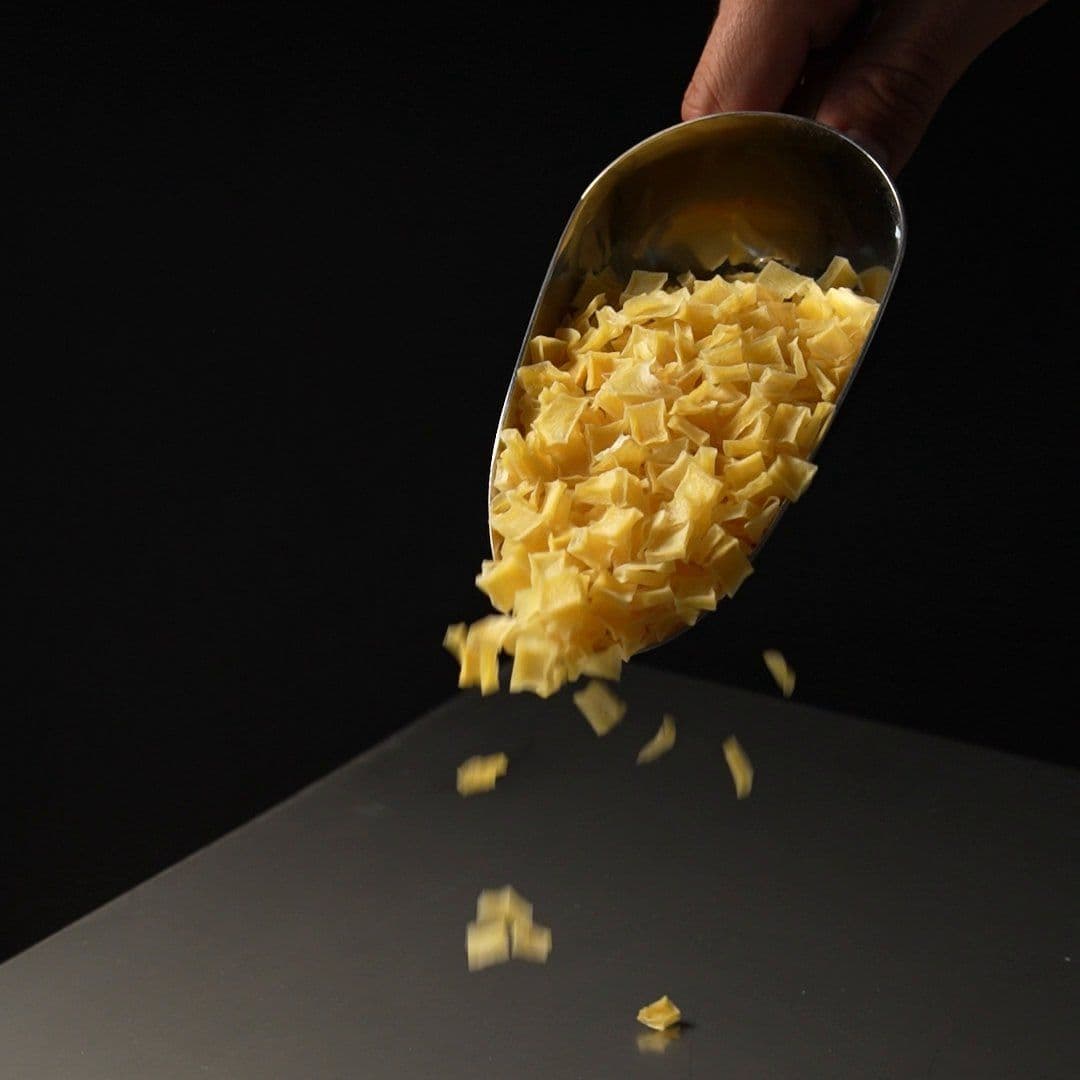
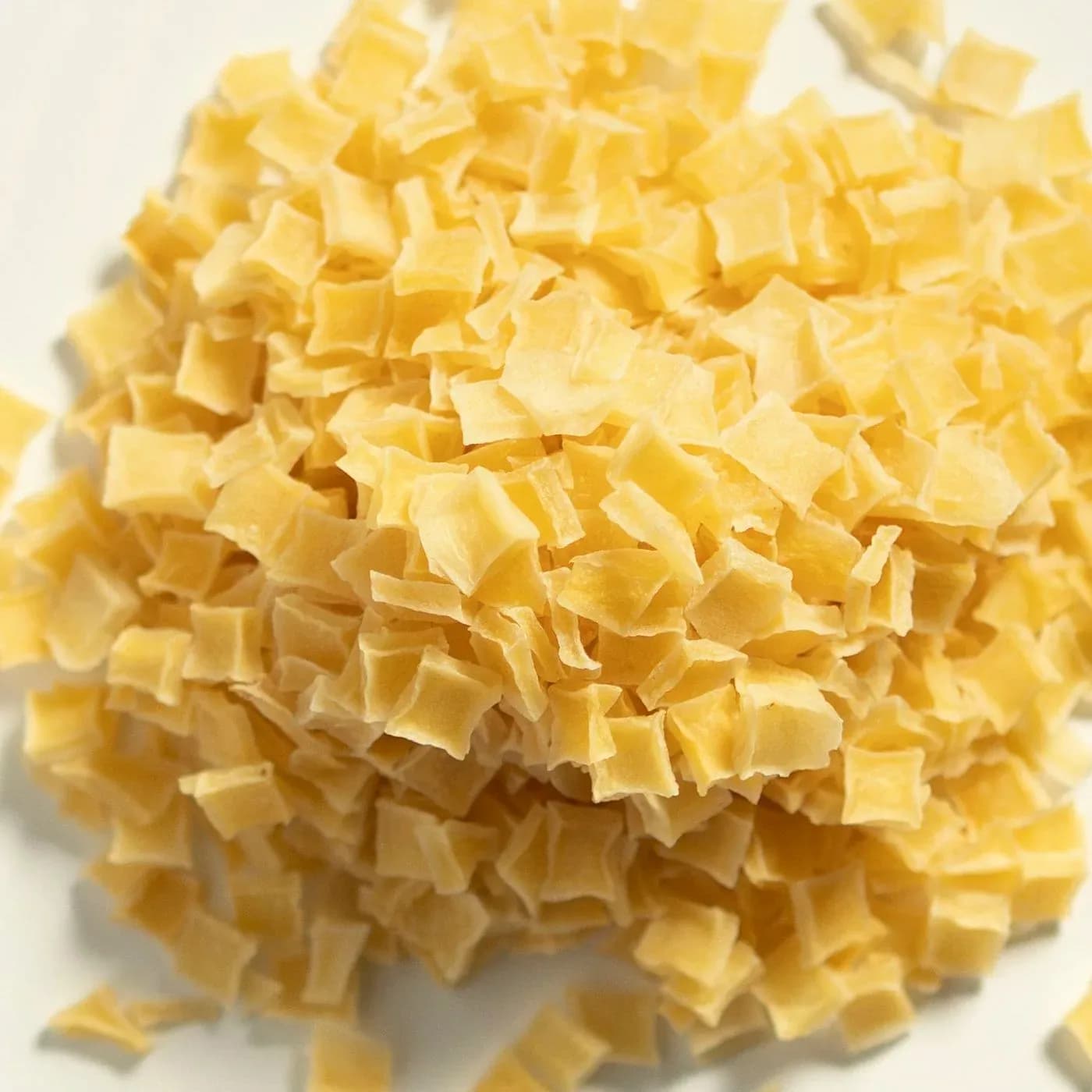
| Potato cubes, thin | 10×10×2 mm | softens faster - instant soups, salads |
| Potato cubes, thick | 10×10×7 mm | holds shape through heat treatment - ready meals, soups in jars, tortilla |
| Potato sticks | 15×2×2 · 20×3×2 · 3×3×6 mm | an elongated piece of potato in the dish |
Dehydrated potato cubes and dehydrated potato sticks differ in the shape of the piece, not in the technology: composition and drying are the same. The selection table for specific dishes is on the ready meals and soups page, and where both forms sit among the four milled ones is covered in What are potato flakes.
Rehydration: what is known and what you measure
The direction is certain: the thin 10×10×2 cube rehydrates faster than the thick 10×10×7, and both forms rehydrate in the soup or the sauce with no separate soaking step. Times and water ratios for a specific item are stated in its specification - which is why we publish no blanket figure "for cubes": it depends on the size, the temperature and whether the piece rehydrates in water, in sauce or during pasteurisation.
Measuring it on site costs one run and works like this:
- Weigh the dry charge and note the size and the batch number from the label.
- Add the target liquid - water, stock or sauce at the temperature used in your process, not tap water if production runs differently.
- Take samples at fixed intervals (every 2 minutes, say) and judge two things: softness at the cut and whether the piece holds its edge.
- Record the point where the piece is soft but not yet breaking up - that is your rehydration time for this size and this liquid.
- Repeat in the target thermal process. Behaviour in pasteurisation is confirmed in a trial, because the whole treatment profile decides it, not the raw material alone.
The measurement is worth doing once and then belongs in the product specification - the cube has the same dimensions in every batch, so the result does not move with the delivery.
What belongs in the product specification
Cubes and sticks enter the recipe dry, so two figures appear in the specification that fresh potato never required: the dry charge and the amount of liquid the piece takes from the dish. The second matters more than it looks - in a soup or sauce the cube draws water from the recipe, so after a change of raw material the liquid has to be rebalanced, otherwise the dish comes out thicker than the reference. The details are in the guide Potato snack pellets.
The practical order is this: first fix the dry charge that gives the number of pieces you want per portion, then measure how much liquid it binds, and finally adjust the stock or sauce. For pasteurised and MAP products, check that balance on the full treatment profile rather than on boiling in a pot, because a piece behaves differently in a sealed jar than in an open kettle.
Where cubes pay off
Fresh potato for a ready meal has to be peeled, cut and blanched, and pieces from different deliveries take heat treatment differently. The cube goes in dry, has the same dimensions in every batch and starts from a known moisture level. We go into more detail in the guide how private label works.
- Soups in jars and pasteurised meals - thick cube 10×10×7 mm or sticks; the cube is used in meals packed under modified atmosphere (MAP) and in soups in jars.
- Instant soups - thin cube 10×10×2 mm, because it softens faster.
- Potato salads - thin cube or sticks: an even piece instead of hand-cut potato, with no peeling and no losses.
- Tortilla - the thick cube, which holds its shape.
- Masses and mash within a dish - here potato granules take over, because the goal is a smooth mass rather than a visible piece.
In catering the storage argument is added: cubes are portioned from the bag and kept at ambient temperature, with no cold store and no peeling waste.
Conditions common to both forms
Shelf life is 12 months from the production date in closed packaging, with no refrigeration; storage in a dry room free of foreign odours, up to 30 °C, at a recommended relative humidity of 75%. Both forms are hygroscopic, so the bag should be closed after opening. A separate guide covers Shelf life of dehydrated potatoes.
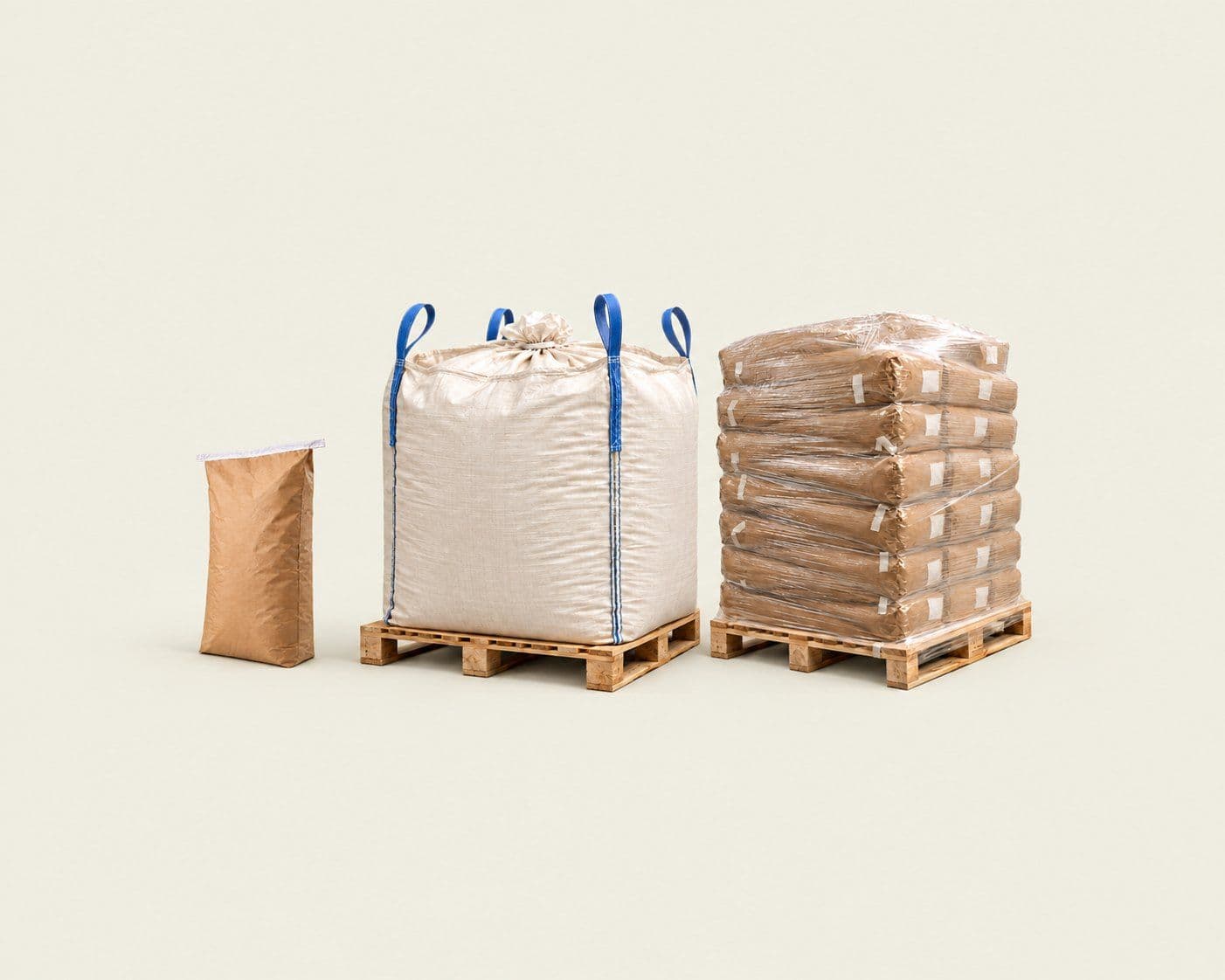
Packaging: paper bags of 10, 15 and 25 kg or big bags; pallet 120×100 or 120×80 cm, maximum 1000 kg. Orders from a single bag with no rigid MOQ, standard lead time 14 days, production 12 months a year. Every batch is tested before dispatch and the results come in the certificate of analysis.
Frequently asked questions
Dehydrated potato dices rehydrate in the process itself: in the soup, in the sauce or in the dish before pasteurisation, with no separate soaking step. Times and water ratios are given in the item specification, and in your target process it is best to measure them on your own run, because they depend on the liquid and the temperature. The thin cube takes up water faster than the thick one.
The thin 10×10×2 mm cube rehydrates faster than the thick 10×10×7 mm one, because the path water has to travel into the piece is shorter. Times and water ratios are given in the item specification; in your target process it is best to measure them on your own run, because they depend on the liquid and the temperature. Sticks of 15×2×2 mm behave like the thin cube.
Thin for instant soups and salads, because it softens faster. Thick for ready meals, soups in jars and tortilla, because it holds its shape through heat treatment. Composition and technology are the same in both: 100% potato, with no preservatives, emulsifiers or SO₂. Samples of both formats go out free of charge on the same recipe, so the piece can be judged in your own dish.
In the shape of the piece in the dish: the 15×2×2 mm stick is an elongated piece of potato, also available as 20×3×2 and 3×3×6 mm. Composition and technology are the same as for cubes: 100% potato, with no preservatives, emulsifiers or SO₂. Both forms take heat treatment, so what decides is the look on the plate rather than the process.
Yes - cubes are used in ready meals packed under modified atmosphere and in soups in jars. For heat treatment the thick 10×10×7 mm cube is the first choice, because it holds its shape. Behaviour in your specific thermal process is confirmed in a trial on your own line, since pasteurisation time and the liquid decide the structure of the piece.
A cube takes up the water it needs to rehydrate, so the liquid in the recipe has to be increased by that amount; the ratio for the item is given in the specification / TDS. In a soup or a sauce that is usually a correction to the water rather than a change to the process. Measure it on your own run, because temperature and the liquid used both move the figure.
No. Shelf life is 12 months from the production date in closed packaging, with no refrigeration: a dry room free of foreign odours, up to 30 °C, at a recommended relative humidity of 75%. Both forms are hygroscopic, so close the bag after opening and portion from it as you go. The date for the batch is on the bag label with the batch number.
Want to measure rehydration in your own process? Request a free sample - when the choice is close we send thin and thick cubes for the same recipe.