What dried potato does in the mass
Boiled potato for a filling changes with the variety and the season. Dehydrated potato goes in dry and takes up water within the mass, so the correction applies to the liquid in the recipe rather than to the raw material. Three things follow straight away:
- Repeatable starting moisture - identical in every batch, because the fraction and the parameters are properties of the item.
- A short label - the dehydrated line has one entry: 100% dried potato (Solanum tuberosum), with no preservatives, emulsifiers or SO₂, and the recipe contains no allergens from Annex II to Regulation (EU) No 1169/2011.
- Potato flavour and aroma - noticeable in the filling, which isolated starch cannot deliver, being neutral in taste and smell.
That last point is usually what starts the conversation: potato starch thickens but adds no flavour; dehydrated potato binds water and is, at the same time, potato on the label. The difference between starch and milled whole potato is covered in Potato flour vs potato starch.
Fraction by product
| Product | Form | Fraction |
|---|---|---|
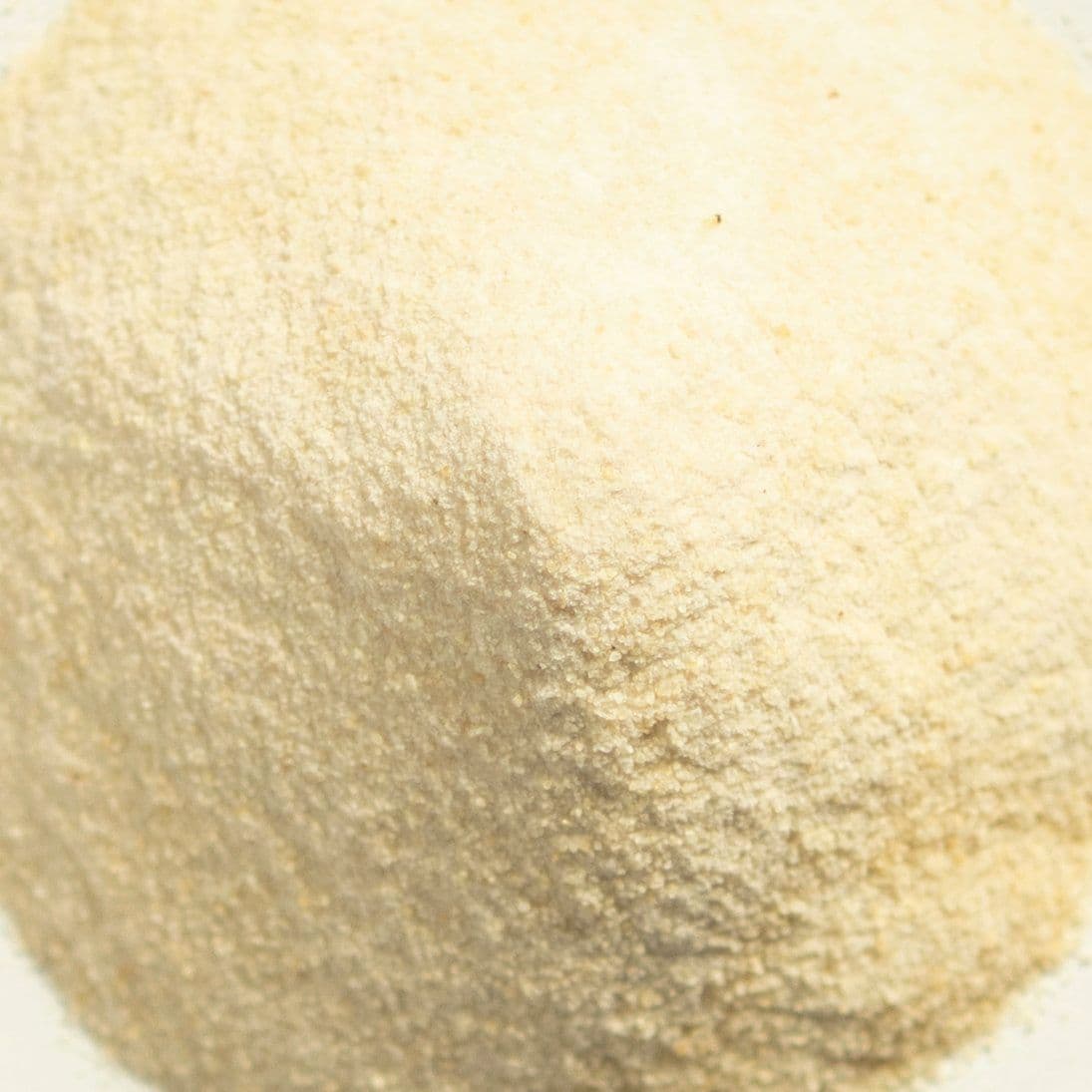
| Smooth dumpling filling | powder | 0.01-0.5 mm |
| Textured filling, croquettes | semolina | 0.01-1 mm |
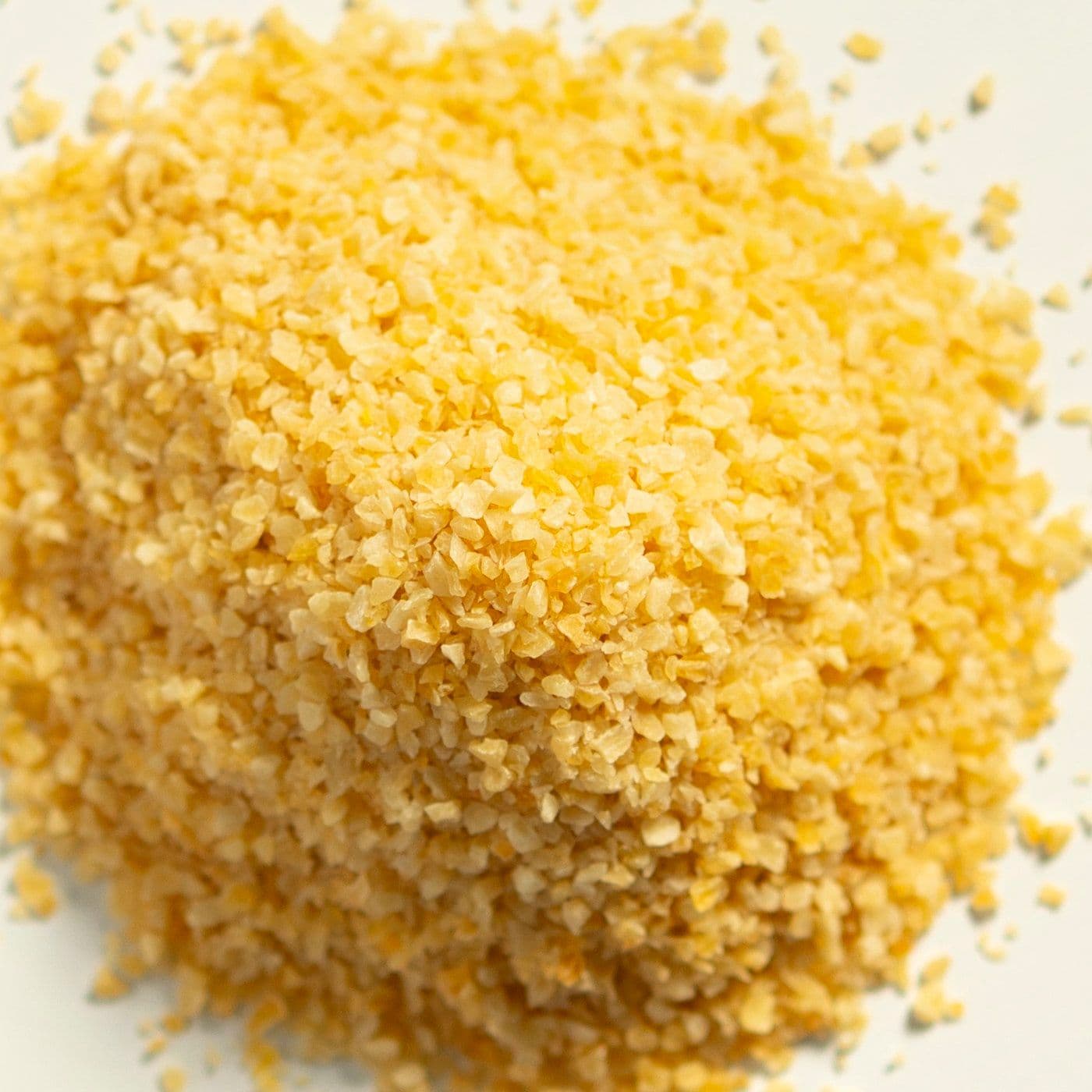
| Fillings with a visible speck | coarse grits | 1.5-2.5 mm |
| Meat products | powder or semolina | per trial |
| Thickening sauces and masses | powder or semolina | 0.01-0.5 mm · 0.01-1 mm |
The choice comes down to one question: should the potato texture be noticeable in the filling. Potato semolina gives a filling with a noticeable texture, powder gives a smooth mass; coarse grits at 1.5-2.5 mm stay in the mass as a visible speck. For meat products we confirm the choice in a trial, usually with two fractions at once. The full description is on the dehydrated potato for fillings and meat products page. The details are in the guide Ordering dehydrated potato.
Addition level and water
We do not publish a single dosage figure for your own recipe - it depends on how much water has to be bound and what consistency the mass needs. The starting point is set by a technologist once the process is described, and the hydration parameters of an item are in its specification.
Two figures serve as reference points. Potato granules bind water indicatively up to 1:4.5 - 1 kg of granules and 4.5 l of water give about 5.5 kg of product; for potato flakes, in the example analysed, 1 kg and 4 l gave about 5 kg. If you work with flakes today, powder and granules take their place 1:1, at the same dosing stage, with only the water adjusted.
For clarity: the 1:4.5 conversion applies to granules and is an indicative value from the data sheet, not a dosage for fillings. In a meat mass part of the water is bound by protein and the other ingredients, so the right level is always established by a trial rather than carried over from another product.
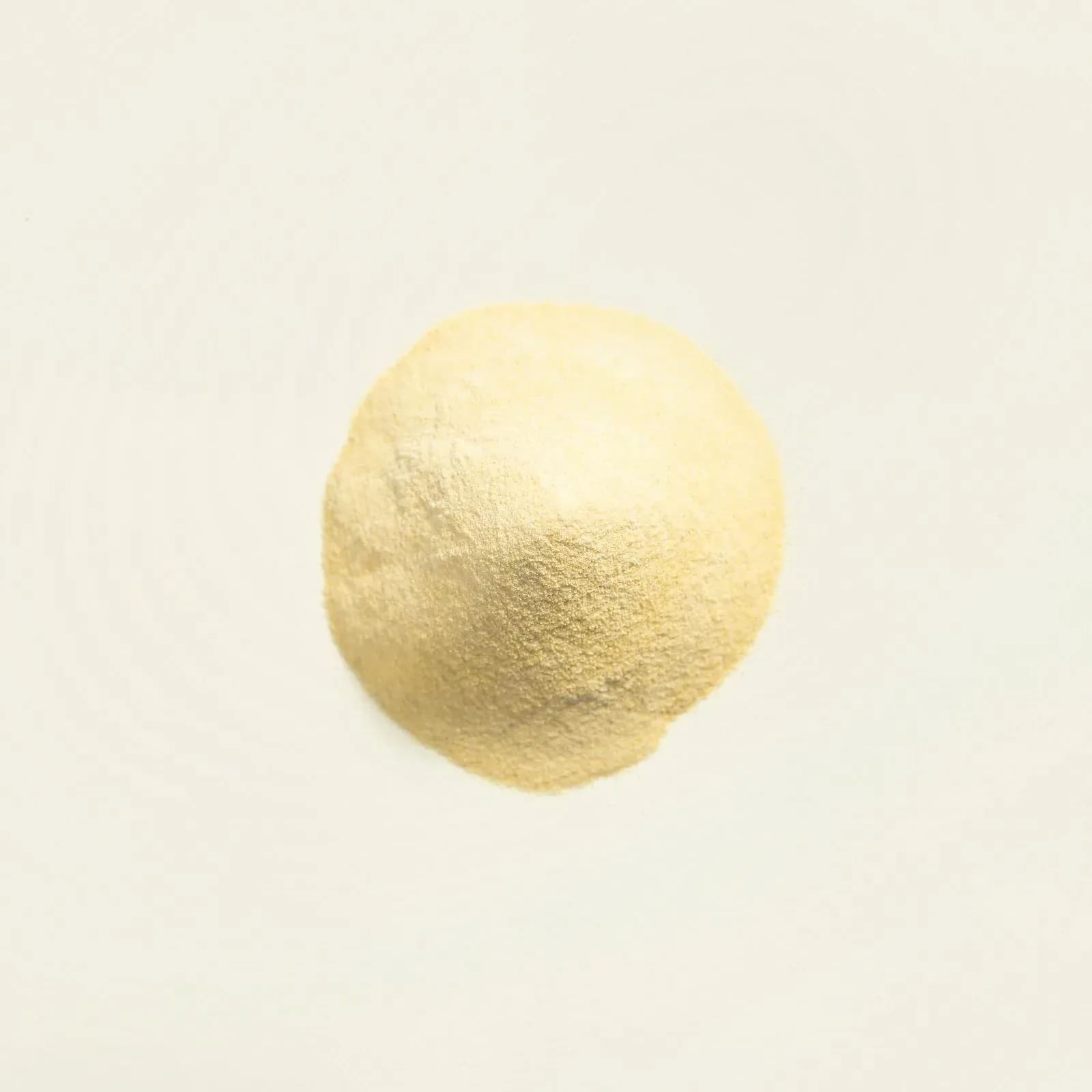
Where dosing is volumetric, the bulk density of the chosen fraction is worth knowing: coarse grits 670 g/l, semolina 860 g/l, powder 0.01-0.5 mm 930 g/l and 0.1-0.5 mm 825 g/l. With gravimetric dosing it does not matter. We go into more detail in the guide Coatings and toppings with potato grits.
What changes on the label and in the documents
For a technologist, changing the binding ingredient is a question of a trial; for quality assurance it is a question of paperwork. In both cases it is simpler than with compound preparations.
On the label, dehydrated potato appears as potato: the line has no fillers, emulsifiers or preservatives, so no entries are added that later need explaining. In the supplier documentation you receive the item specification and TDS, the GMO declaration, the allergen status and, with every delivery, the certificate of analysis; the plant in Przykona is certified to IFS Food at Higher Level, with granule production and packing in scope. A separate guide covers Rehydrating dehydrated potato dices.
For organic products there is an organic variant certified by TÜV Rheinland Polska under Regulation (EU) 2018/848; the scope for an item is confirmed by the certificate together with the specification. The document set for supplier qualification is described on the quality and certificates page.
The trial in a meat product
- Describe the product and what binds water today. The technologist names the fraction and the starting parameters.
- Run a reference batch with the current ingredient, on the same day and the same shift.
- Run the trial batch - dehydrated potato at the same dosing stage, in the same quantity if you are replacing flakes.
- Assess both side by side: purge after treatment, consistency at the cut, flavour and aroma, behaviour after chilling.
- Adjust the water and record it in the trial protocol.
For products going to freezing or further pasteurisation the same measurement is worth repeating on the full treatment profile - how the mass behaves in the thermal process is confirmed in a trial on your own line.
Frequently asked questions
You bind water in a filling with milled dehydrated potato: semolina of 0.01-1 mm or powder of 0.01-0.5 mm, dosed at the mixing stage with the water adjusted. Unlike an isolated starch it binds water and brings potato flavour and aroma at the same time, and the label entry is potato. The starting dosage is set with a technologist in a trial on your own recipe.
A binder in a meat product is an ingredient that holds added water in the structure during mixing and heat treatment. Milled dehydrated potato does that and keeps the ingredient list at one item: potato, with no preservatives, emulsifiers or SO₂. Which fraction suits the product, and at what dosage, is established in a trial, because the answer depends on the recipe and the process.
Semolina where the filling should have a noticeable potato texture, powder where a smooth mass matters. Semolina covers 0.01-1 mm at 860 g/l, powder 0.01-0.5 mm at 930 g/l, which also changes the doser setting. The choice is confirmed in a trial, usually with two fractions at once, and samples of both go out on the same recipe.
Yes - potato powder goes in 1:1 in place of the flake, at the same dosing stage, with the water adjusted after the first trial. The ingredient list keeps a single item: potato. The three steps of the switch are described on the potato flakes alternative page, and the 1:1 replacement trial protocol is available in Downloads for filling in next to a reference batch.
Starch is an isolated component, neutral in taste and smell, and it forms a gel. Dehydrated potato is the whole potato without the water, so it binds water and brings flavour and aroma at the same time, and the label entry is potato rather than starch. In a recipe that needs a clear gel, starch still does something the dried potato does not.
The dehydrated potato line has one entry in its composition: potato. According to the data sheets the recipe contains no allergens from Annex II to Regulation (EU) No 1169/2011, and possible cross-contact is indicated by the product labelling. Allergens of the meat and of any additions go into the declaration of your finished product, and the status of a specific item is confirmed by its specification.
Run the trial against a reference batch: one batch to your current recipe, one with the dried potato dosed 1:1 in place of the previous binder, on the same line and the same day. Record the water added, the yield after heat treatment and the texture. That is usually enough to see whether only the water needs resetting or whether a different fraction fits better.
Describe the product and the dosing point and a technologist will choose the fraction - request a free sample of two fractions and compare them in the same mass.