Two forms, two outcomes
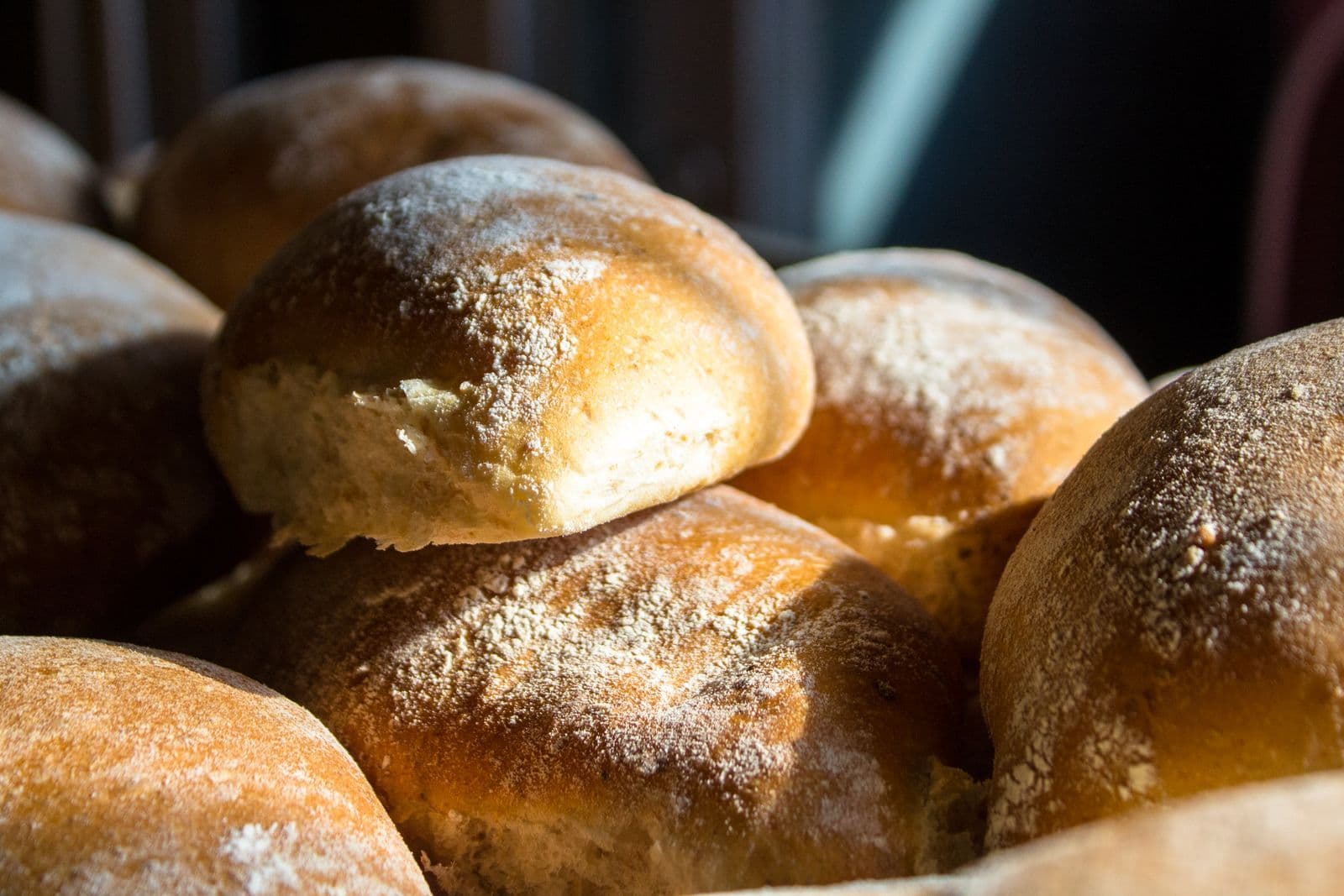
Potato bread sells on how moist the crumb is on the second day. Dehydrated potato is added to the flour at the mixing stage and does not change the process - only the water is adjusted.
| Product | Form | Fraction | Purpose |
|---|---|---|---|
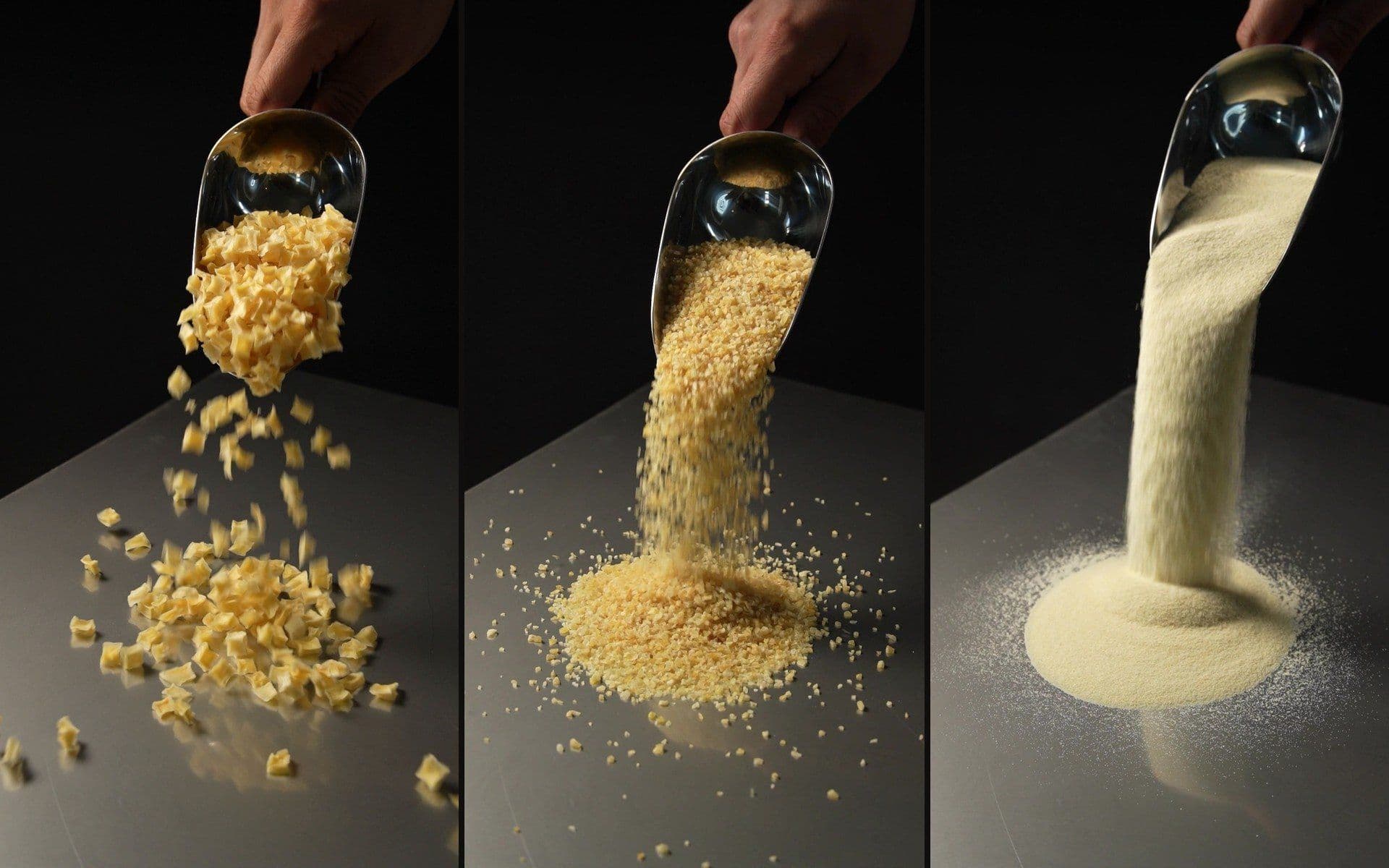
| Potato rolls | coarse grits | 1.5-2.5 mm | visible specks and a moist crumb |
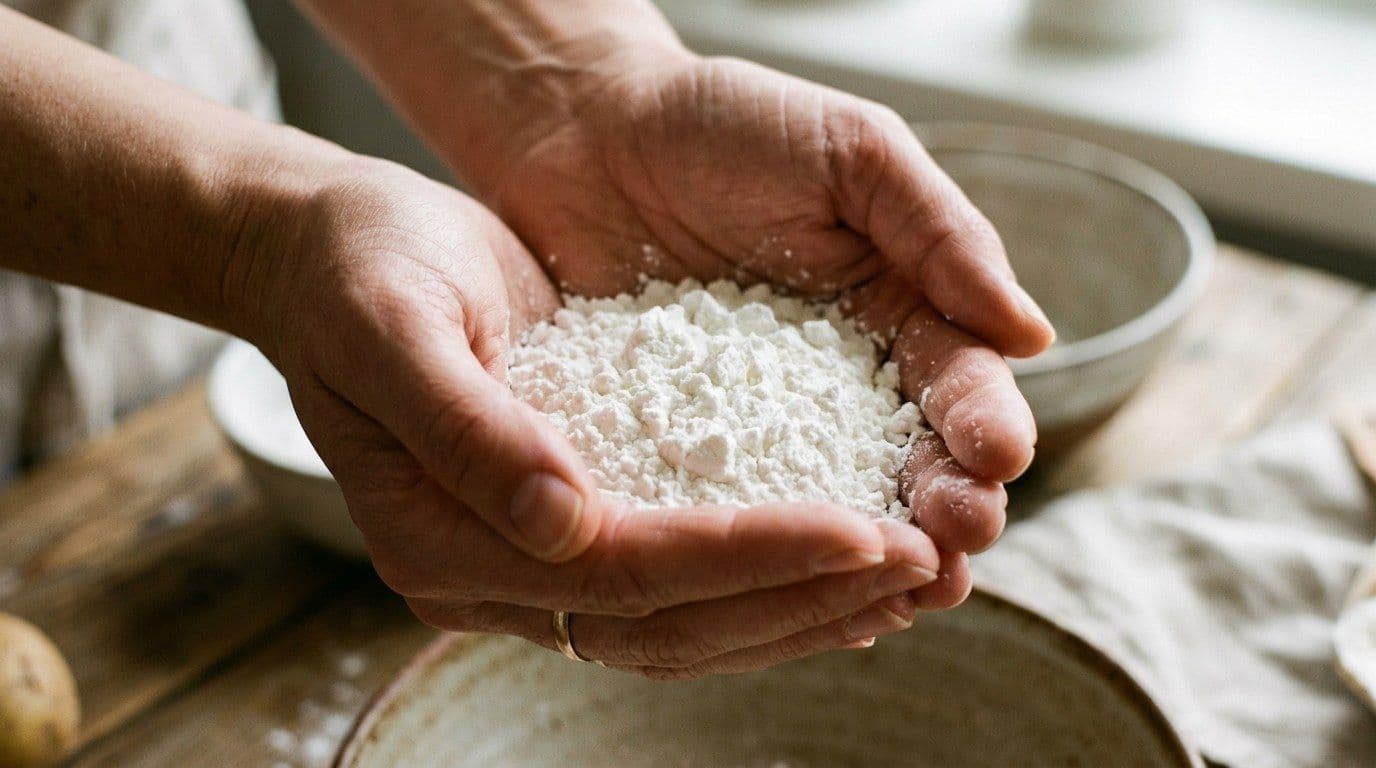
| Moist potato bread | powder | 0.01-0.5 mm | even crumb with no visible particles |
| White bread | powder | 0.01-0.5 mm | moisture without changing the structure |
| Organic bakery | organic variants | by product | the same result in an organic recipe |
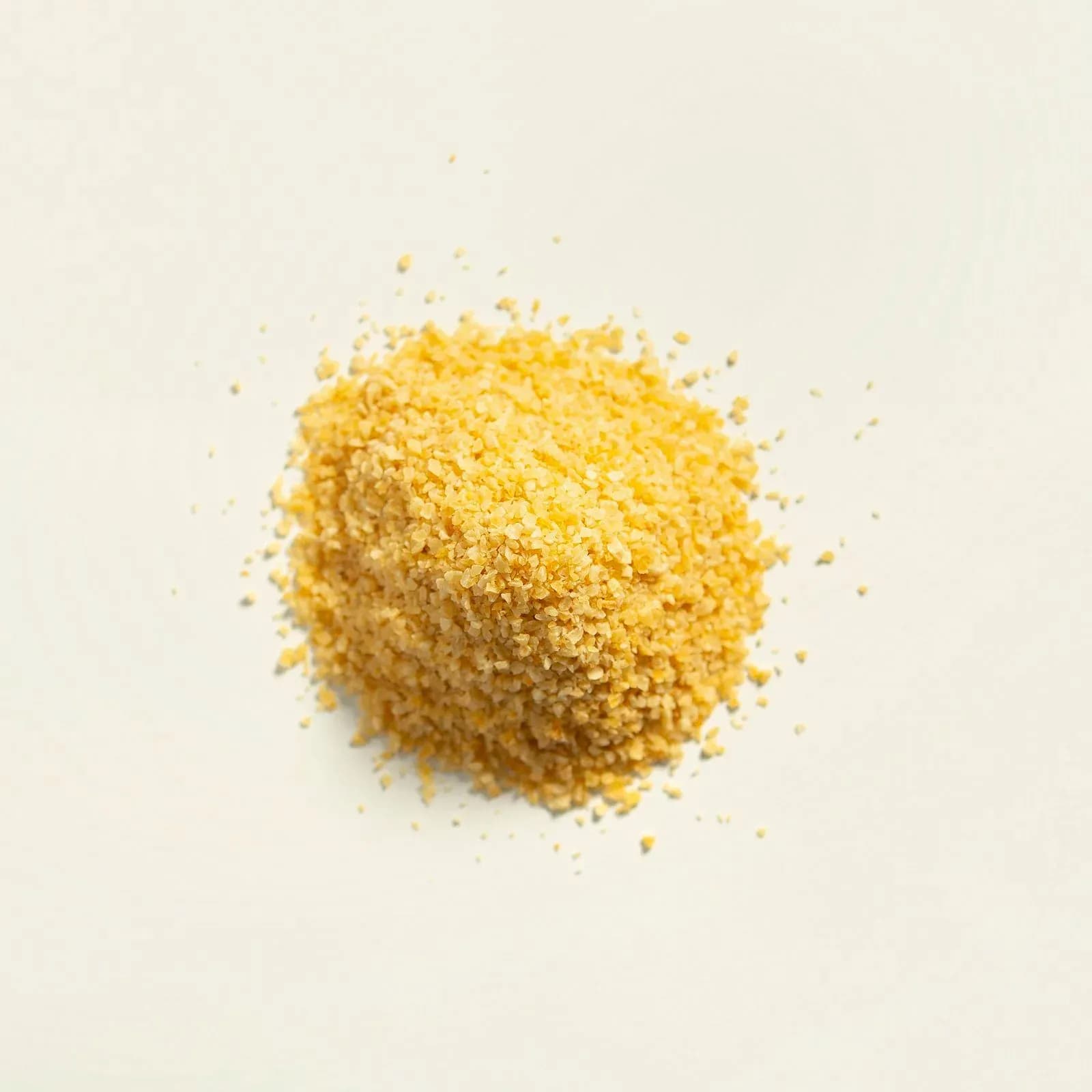
The difference is straightforward: coarse potato grits at 1.5-2.5 mm (bulk density 670 g/l) bind water in the dough and release it slowly, and the particles stay visible after baking - hence the character of a potato roll. Potato powder up to 0.5 mm gives a moist, even crumb throughout the loaf with no visible particles. In a moist bread, specks are unwanted, so the choice between the two forms is a question of the cut surface rather than of quality. The details are in the guide Gnocchi dough from potato semolina.
The full selection table and a description of both cases are on the dehydrated potato for bakery page.
Dosage: why there is no single number
Dosage depends on the product and on the crumb moisture you want, so we set it together with a technologist during a test bake - we do not publish one figure "for bread", because there is none. What can be said in advance concerns how it goes in, not how much:
- dehydrated potato is added to the flour at the mixing stage, not later,
- only the water changes - the rest of the process stays as it is,
- the hydration parameters of a specific item are in its specification,
- if you work with potato flakes today, powder replaces them 1:1 at the same dosing stage.
So the addition level is settled in a trial rather than in a guide. It works the same way elsewhere: in dumpling masses and in fillings the fraction is confirmed by a technologist, with the selection tables as the starting point.
The test bake step by step
- Settle the form and fraction. You describe the product and what you use today; the technologist names grits or powder. When the choice is close we send two fractions for the same recipe.
- Bake a reference batch. With the current raw material, on the same day and the same shift as the trial batch. Without a reference there is nothing to compare the crumb against.
- Bake the trial batch. Dehydrated potato in place of the current material, 1:1 dosing, the same mixing stage.
- Judge the crumb the next day. That is the right moment - moisture on the second day is what the customer buys. Fresh from the oven, both batches look similar.
- Adjust the water and record it. Both bakes go into the trial protocol: reference batch, dosing, water correction, assessment.
A technologist is available throughout the trial, from choosing the fraction to the assessment on day two; if the structure comes out differently than expected, a different fraction or a hydration adjustment is usually enough.
What else belongs in the protocol
Two bakes side by side carry more information than is usually taken from them. Four points are worth recording, because they come back in the conversation with the technologist when the result is not clear-cut.
Water in the dough. The amount added to each batch and when it went in. It is the only parameter you deliberately change, so recording it decides whether the next trial is repeatable.
Dough behaviour during shaping. Whether it was stickier or drier than the reference; with coarse grits, also whether the particles interrupt the structure when the dough is stretched.
The cut surface after baking and after a day. A photograph of both batches taken under the same conditions. Judged from memory, the difference between "similar" and "better" disappears within days.
Behaviour in the shop. How the bread looks and slices the next day - the very reason dehydrated potato enters a bread recipe at all. We go into more detail in the guide Choosing the particle size.
What stays the same in the bakery
Dehydrated potato changes nothing in the process: no new equipment, no extra stage, no recipe change beyond the water. It does not lengthen the label either - the dehydrated line has one entry: 100% dried potato, with no preservatives, emulsifiers or SO₂, and the recipe contains no allergens from Annex II to Regulation (EU) No 1169/2011. In bakery, where the label is short, that counts.
The rest applies across the line: shelf life of 12 months from production in closed packaging, storage in a dry room up to 30 °C at a recommended relative humidity of 75%, paper bags of 10, 15 and 25 kg or big bags, orders from a single bag and a standard lead time of 14 days. How milled dried potato differs from flakes is covered in What are potato flakes. A separate guide covers Glossary of dehydrated potato terms.
Frequently asked questions
Potato bread is bread whose dough carries a share of potato, in industrial baking usually as milled dried potato rather than boiled potatoes. It goes into the flour at the mixing stage and only the water is adjusted, so the process stays as it was. Potato powder of 0.01-0.5 mm gives an even, moist crumb; coarse grits of 1.5-2.5 mm leave visible potato particles.
The point is the crumb: the potato share binds water, which is what bakers are after in a potato roll, and it adds one line to the declaration, potato. Dosage depends on the product and the crumb moisture you want, and it is set with a technologist during a test bake. The material is available 12 months a year, so the recipe does not have to move with the season.
Dosage depends on the product and the crumb moisture you want, so it is set with a technologist during a test bake. What is fixed in advance is only how it goes in: to the flour at the mixing stage, with the water adjusted. Hydration parameters are in the item specification, and the sample parcel includes the specification / TDS and a technologist's contact details.
Coarse grits where you want visible potato particles and the character of a potato roll; powder where an even, moist crumb is what matters. Grits are 1.5-2.5 mm at 670 g/l, powder 0.01-0.5 mm at 930 g/l, which also changes the doser setting. The choice is confirmed in a test bake, usually with both fractions on the same recipe.
No. It goes into the flour at the mixing stage and only the water is adjusted; no extra equipment and no extra step are needed. Hydration parameters are in the item specification, and the dosage is set during a test bake. The ingredient list gains a single item: potato, with no preservatives, emulsifiers or SO₂.
With potato powder: it goes in 1:1 in place of the flakes, at the same mixing stage, with the water adjusted after the first bake. For rolls with visible structure and a moist crumb, coarse grits at 1.5-2.5 mm are the better choice. The 1:1 replacement trial protocol is available in Downloads, for filling in next to a reference bake.
Run two batches on the same day: one to your current recipe, one with the dried potato dosed in place of the previous ingredient, with the water adjusted. Record the dough hydration, the crumb moisture and the look of the crumb against your reference. That is usually enough to decide whether only the water needs resetting or whether a coarser fraction fits the product better.
Want to check this on your own bake? Request a free sample - when the choice is close we send grits and powder for the same test bake.