Conditions to maintain
| Condition | Requirement |
|---|---|
| Temperature | up to 30 °C, no refrigeration |
| Relative humidity | 75% recommended |
| Room | dry, free of foreign odours |
| Packaging | closed; after opening protect from moisture and seal tightly |
| Instant mixes | dark as well |
| Shelf life | 12 months from production in unopened packaging |
No cold store is needed - dried potato keeps because its water content is reduced rather than because of additives; the dehydrated line's ingredient list is a single entry: 100% dried potato, with no preservatives, emulsifiers or SO₂. A dry store at ambient temperature is enough, and that is one reason dehydrated potato replaces a chilled raw material in kitchens and plants. The details are in the guide How dehydrated potatoes are made.
Two conditions weigh more than the table suggests. The first is humidity: above the recommended level a bag takes up water faster than it releases it, the material loses flowability and cakes - and where dosing is volumetric, the mass in the hopper changes. The second is the absence of foreign odours: dried potato absorbs aromas, so a store shared with cleaning agents, fuel or strong spices is poor company.
Batch records and the order of issue
Every bag label carries the batch number, and that number carries the raw material supplier and the intake date. It is worth using in the warehouse even when your procedure does not require it:
- Issue by the production date on the label, not by what stands nearest the door. With deliveries every few weeks the date is never the bottleneck - the problem is the bag that sits at the back of the pallet for three quarters.
- Record the batch number when material goes into production. If a recipe behaves differently, the batch number is the first thing we will ask for; we then hold the remainder of the batch until the cause is established.
- Keep documents with the batch, not in a separate folder. The certificate of analysis is created with the goods and concerns that one delivery - the documents available to download describe the product, not the batch.
- Note the date a bag was first opened. We publish no separate "after opening" period, because it depends on conditions at your site; if your procedure needs one, set it from your own measurement.
Pack size and the number of openings
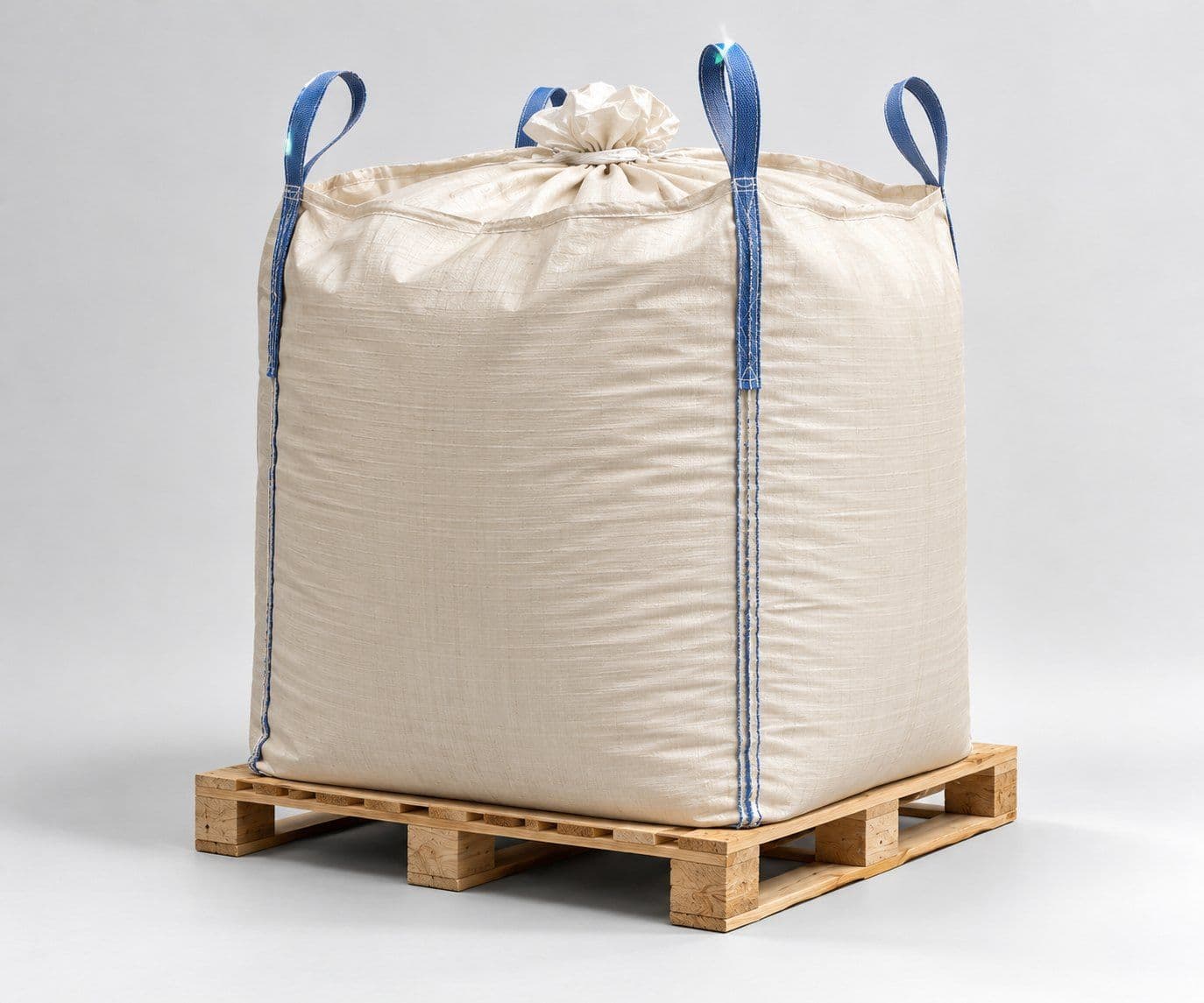
The pack is chosen for the dosing point rather than the price per kilogram - packaging cost is included in the price of the goods anyway. With manual dosing several times a day a 10 kg bag means fewer openings per kilogram than a 25 kg bag, and every opening exposes the material to the air of the hall. With hopper dosing or continuous production the opposite applies: a 25 kg bag or a big bag, because openings are few and continuity of feed is what counts.
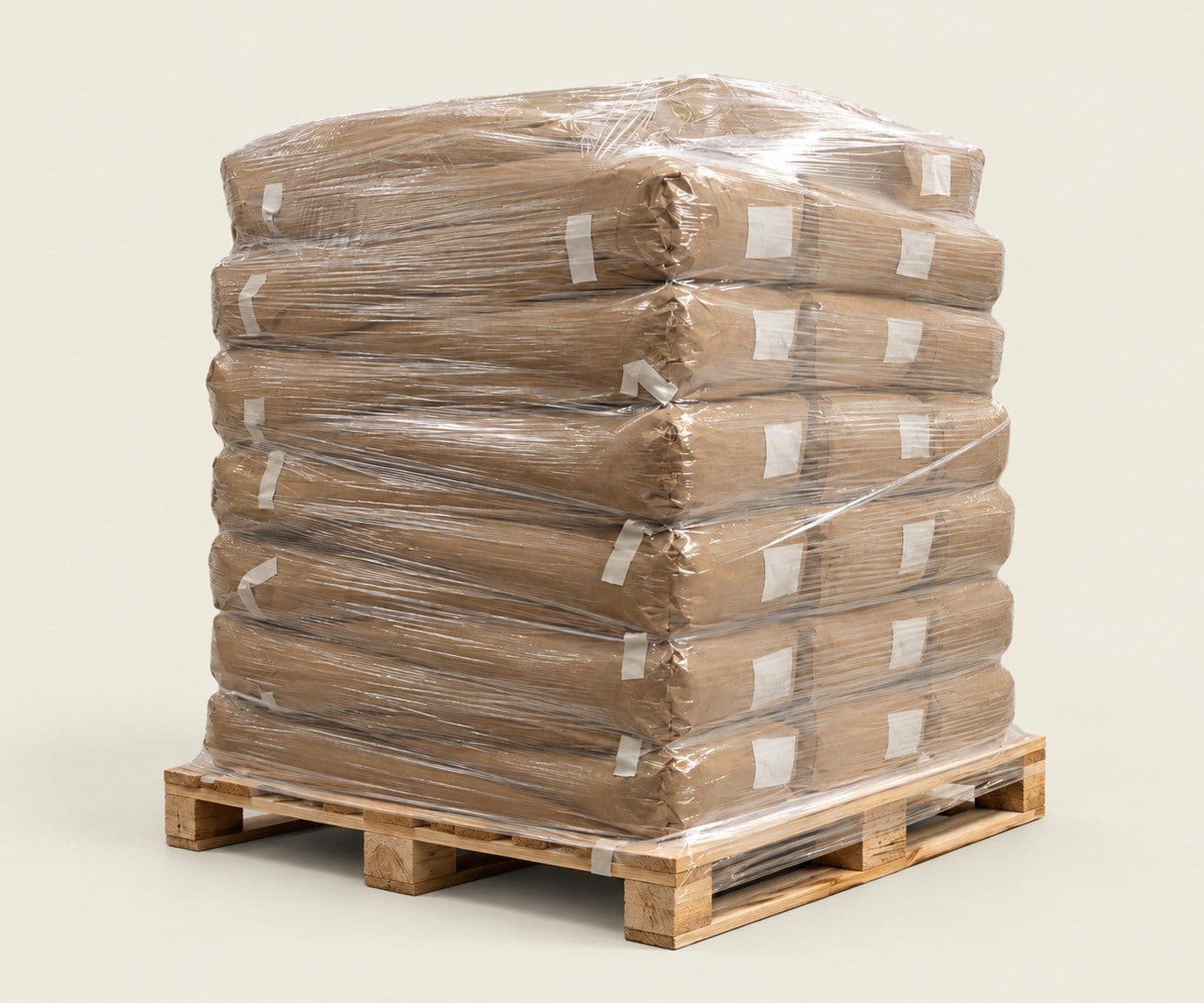
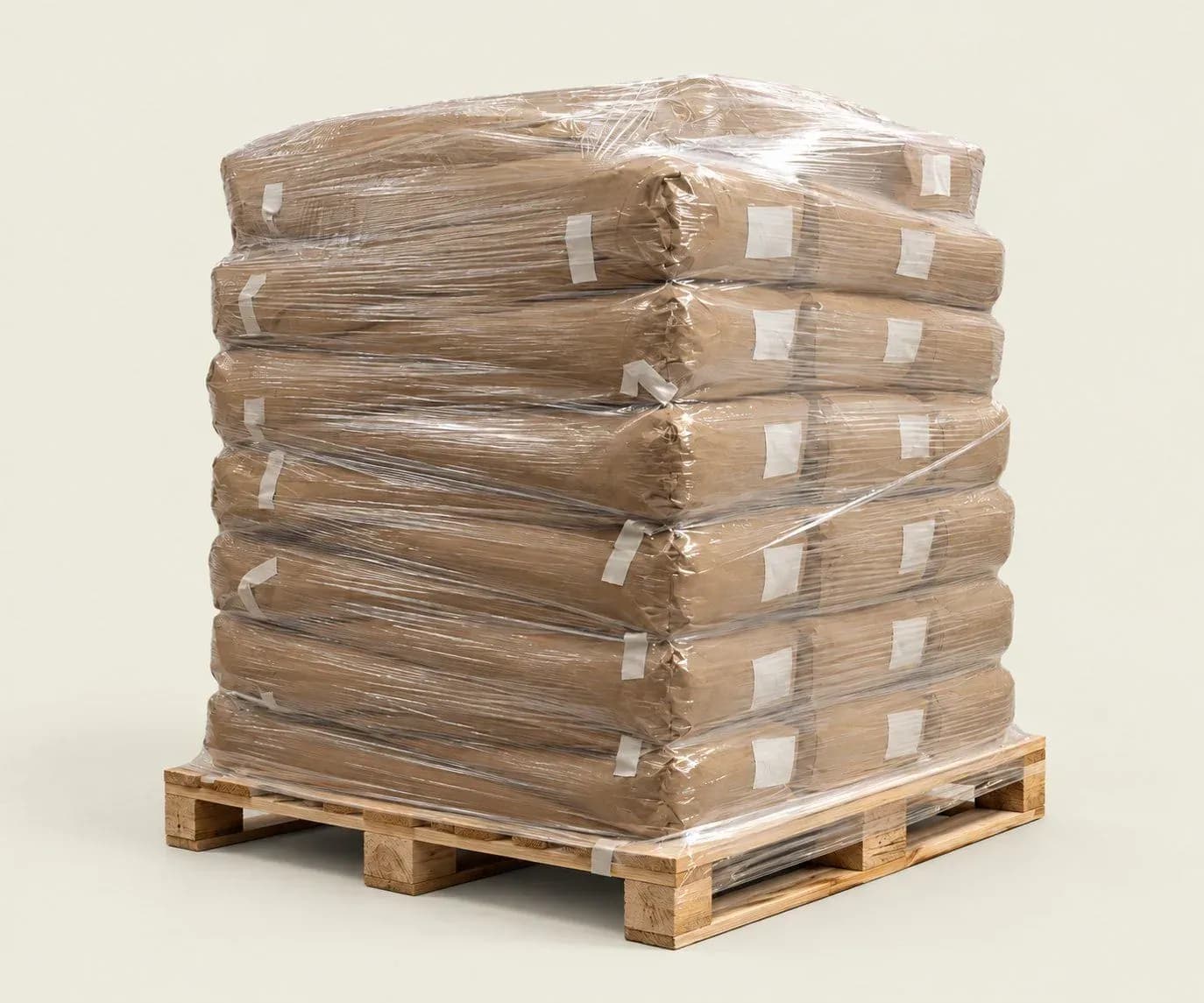
Available packs are paper bags of 10, 15 and 25 kg plus big bags; a pallet of 120×100 or 120×80 cm holds up to 1000 kg. Instant mixes come in foodservice packs, and the potato sausage and gnocchi mixes in a 10 kg pack. The overview of packaging and delivery terms is on the logistics and export page.
What to watch in the warehouse
Beyond the data sheet conditions, three things decide the condition of stock that no specification can describe, because they depend on the warehouse.
Where the pallet stands. Bags should not sit against an external wall, under a window or in a passage where an outside door opens daily - that is where humidity and temperature swing most. A pallet inside the hall, on a base and accessible from two sides, also makes issuing by date easier.
The state of the packaging at intake. A paper bag damaged in transit stops protecting the material from day one; that is the moment for a decision, not two months later. At intake it is also worth checking that the batch number label is legible on every bag on the pallet.
Neighbours in the store. Keep dried potato and mixes away from strongly scented raw materials, even when both are free-flowing. It is the one condition that cannot be fixed later - an absorbed smell stays in the material. We go into more detail in the guide Ordering dehydrated potato.
Checking stock condition can rest on two observations at every withdrawal: flowability and smell. Both can be judged without instruments, and both catch a problem earlier than the date on the label.
Kitchen and working stock
In foodservice and catering the stock is smaller but the conditions are the same: dry, cool and dark, free of foreign odours, with the pack sealed after every use. The mixes are dry and take no space in a chiller - instant mashed potatoes and the pancake, dumpling, gnocchi, sausage and cake mixes sit on a dry shelf and keep for 12 months in unopened packaging.
Two rules help at portioning. First, decant only as much as one shift will use and close the bag immediately - an open bag in a warm, humid kitchen works fastest against you. Second, do not decant into unlabelled containers; the batch number and production date stay on the bag, and a question about a specific delivery then has nothing to refer to.
The same applies to the piece forms: dehydrated potato cubes and sticks are portioned from the bag and kept at ambient temperature, with no cold store and no peeling waste. How the form fits the application is covered in What are potato flakes. A separate guide covers Coatings and toppings with potato grits.
Frequently asked questions
Store dehydrated potatoes in closed packaging in a dry room free of foreign odours, up to 30 °C, at a recommended relative humidity of 75%, with no refrigeration. Shelf life is 12 months from the production date in unopened packaging, and the date is on the bag label with the batch number. Humidity matters more than temperature here, because the material is hygroscopic.
Up to 30 °C, in a dry room free of foreign odours, at a recommended relative humidity of 75%, in closed packaging. No refrigeration is needed, which is the practical difference from fresh potatoes in a warehouse. The same conditions apply to the instant mixes, and the parameters for a specific item are given in its specification.
12 months from the production date in unopened packaging. The date for a batch is on the bag label together with the batch number, which is linked to the raw material supplier and the intake date. With a 12-month period and a 14-day standard lead time, smaller and more frequent orders are usually easier to plan than one large stock.
Protect it from moisture and seal it tightly, because powder and mixes are hygroscopic, and portion from the open bag as you go. An "after opening" period depends on your warehouse and is set from your own measurement rather than from the data sheet. Keep the bag label with the batch number, so the material in use can still be traced back.
No. They are dry and are kept in a dry, cool, dark place free of foreign odours, up to 30 °C, on the same shelf as the dehydrated forms. Shelf life is 12 months from production in unopened packaging. After opening, protect them from moisture and close the pack tightly, because the mixes are hygroscopic.
Record the batch number from the bag label at intake, with the production date and the quantity, and issue by first in, first out. The batch number is linked at our end to the raw material supplier and the intake date, so a query about any delivery starts from that number. The batch certificate of analysis arrives with the goods and belongs in the same record.
At intake, check the packaging for damage and damp, and record the batch number and the production date from the label. On the floor, keep the pallets off a wet surface, away from sources of foreign odours, and close opened bags tightly. Conditions to hold are a dry room up to 30 °C at a recommended relative humidity of 75%.
Need the specification with storage parameters for an item? Write to us - specifications and TDS go out by e-mail on request.